
Minimum order quantity is not a single number attached permanently to a factory. A garment workshop may accept a relatively small cut-and-sew run, while the desired fabric color, custom zipper, or wash recipe requires a different minimum. The practical task is to map each setup constraint. This companion guide focuses on the economics behind MOQ rather than repeating a general low-MOQ shopping list.
MOQ often comes from materials
Fabric mills, dye houses, rib suppliers and trim vendors have their own order constraints. A factory may be willing to sew 50 units but unable to purchase a custom-dyed fabric for that quantity. Ask whether the limiting factor is a fabric minimum, color minimum, decoration setup or production-line economics.
Ask for the mill's minimum for the selected fabric, width, and color. Dyeing a new shade can carry a minimum beyond the garment sewing quantity.
Production setup is not free
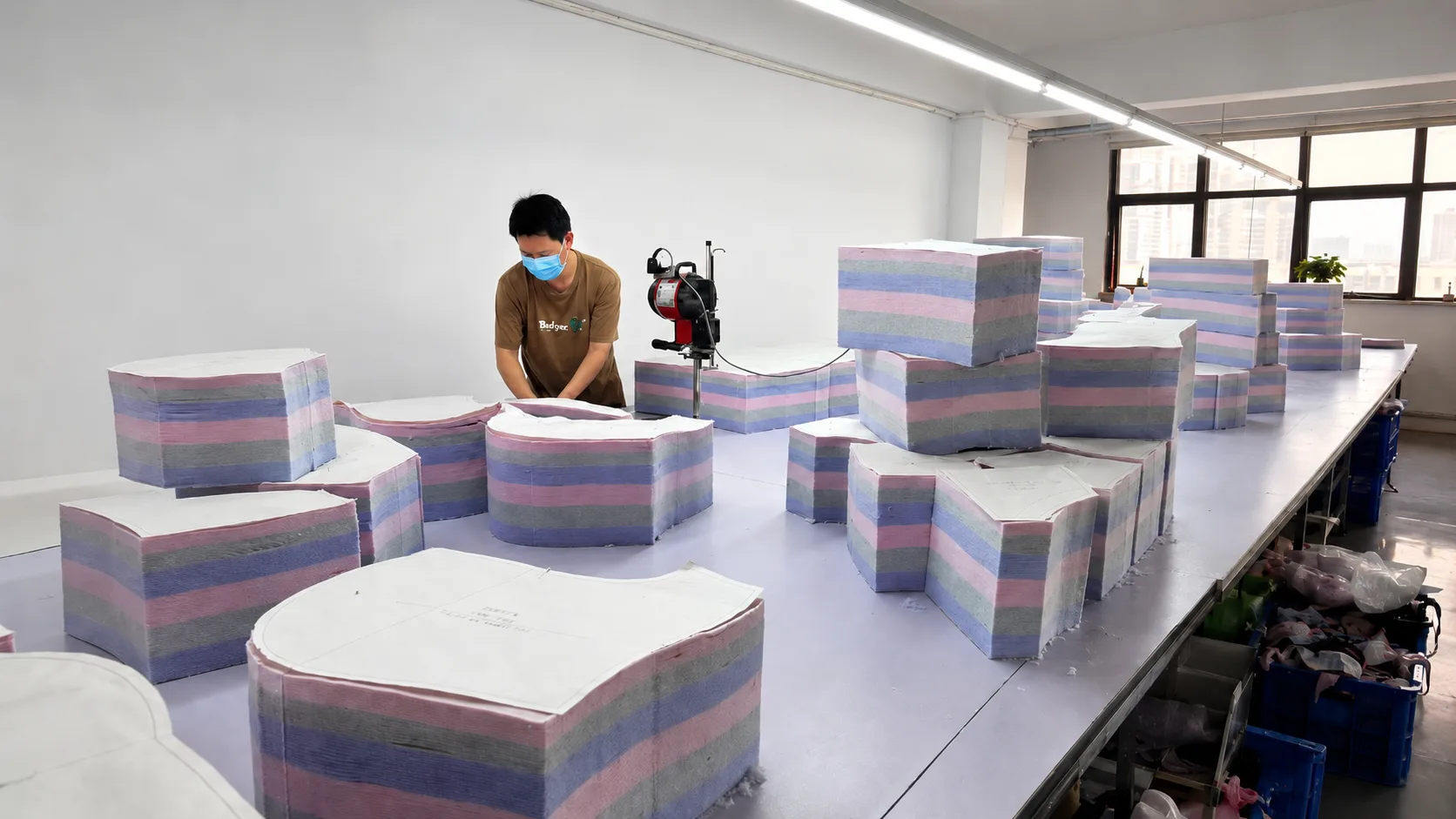
Pattern making, grading, machine adjustments, screen setup and line allocation have fixed costs. Small orders spread those costs across fewer garments. That is why the same product can carry different prices at different quantities without the factory changing its stated margin policy. Understanding setup costs helps buyers negotiate realistic options.
Cutting markers, sewing line allocation, print screens, embroidery digitizing, and wash trials all have fixed preparation work.
MOQ can be structured in several ways
One supplier may quote 100 pieces per style, another 100 per color and another 300 per fabric lot. Size assortments can have additional cut-ratio restrictions. Buyers should request an itemized MOQ statement for the exact design and ask whether related colors or styles can share materials or setup.
Clarify whether 100 pieces means 100 per style, per color, per size, or per print design. A mixed-size run is often different from mixed-color or mixed-fabric production.
Lower MOQ without creating waste
Consider existing fabrics, standard trim colors, fewer SKUs, simplified artwork and shared construction across styles. These strategies reduce the number of small sourcing lots. Buying surplus materials without confirming quality or availability may create future reorder problems, so any alternative must be tested.
Available stock materials and concentrated colorways can ease the constraint; they do not eliminate quality approval or the need for a viable production plan.
Know when a larger quantity makes sense
A higher order can improve unit economics, but only when demand and cash flow justify it. Compare the extra inventory carrying cost with manufacturing savings. A business that buys twice as much as it can sell has not necessarily negotiated well. MOQ should fit the brand launch strategy rather than dictate it.
A higher quantity may lower unit cost but can raise inventory risk. Compare likely sell-through and reorder speed before committing.
What to include in the supplier brief
Map MOQ constraints by production stage. One worksheet column can identify the sewing minimum; others record fabric mill quantity, custom color dye requirement, print-screen setup, special trims and finishing batch size. A supplier may support 50 garments in stock jersey but need larger material quantities for a special weave or bespoke color. The distinction is valuable when a buyer wants several styles in one capsule. Ask which colorways can share fabric and which require separate setup. Do not assume small quantities can always be combined when construction or material differs.
Factory-side controls and approval
Negotiating MOQ works best through design changes that are commercially sensible. Consolidate two prints on one base color, use available rib and standard zipper sizes, or phase a custom dye until demand is proven. Compare the new unit price, sample cost, launch timeline and surplus material liability with the original design. Check whether a shared fabric can be reserved for reorders; stock availability may change. The existing MuseArk low-MOQ guide covers 50–100 piece planning broadly; this article should teach buyers how to diagnose the specific stage setting their minimum.
Production decisions to document
| Decision | What the buyer should verify |
|---|---|
| Fabric minimum | Mill stock vs custom knit/weave or dye lot |
| Decoration minimum | Screen, embroidery, transfer or wash setup |
| Factory run | Cutting and line changeover requirements |
| Commercial decision | Unit cost versus stock and reorder risk |
Illustrative production scenario
A label requests 60 cargo trousers in three custom colors. The sewing workshop may be able to cut 60, yet the supplier of the selected stretch twill may require a substantially larger dye lot per color. Changing to available black and stone fabric may solve the material constraint while preserving the pocket design. The right MOQ answer identifies which stage sets the limit.
Buyer checklist
- Ask which specific input causes the minimum.
- Confirm if MOQ is per color, style or total order.
- Explore stock fabrics and shared trims.
- Compare savings against unsold inventory exposure.
Two mistakes to avoid
- Presenting a single factory-wide MOQ for every product.
- Splitting a small order across many colors without checking mill availability.
Frequently asked questions
Can sizes be mixed?
Often, but the permitted ratios depend on the cutting plan.
Why is custom dye MOQ higher?
Dye lots and color setup require minimum material volumes.
Will MOQ drop on reorders?
Possibly for available materials and repeat patterns, but confirm with the supplier.
Discuss your project with MuseArk Studio
List each style, color, fabric, logo method, and planned quantity. We can identify which stage is likely to determine the practical MOQ.
Request a Custom Apparel Production ReviewRelated MuseArk resources
- What 50–100-piece MOQ really means
- Production capabilities
- How our development process works