
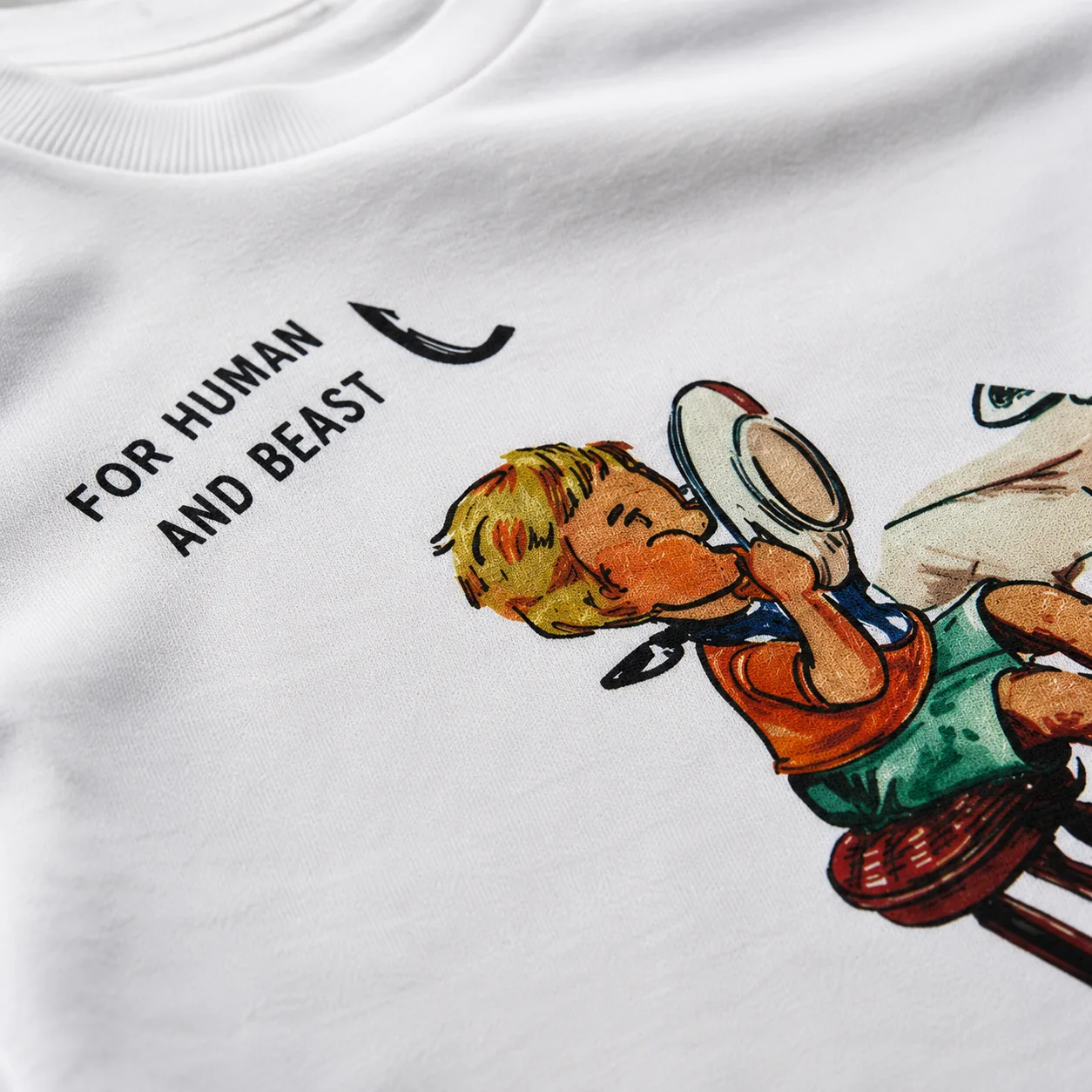
A streetwear print method should suit the artwork, garment fabric, quantity, desired hand feel, and intended care. Screen printing, direct-to-garment printing, and direct-to-film transfers solve different production problems. No method is universally the most durable or premium: ink system, pretreatment, curing, fabric, and laundering all affect performance. Brands should compare physical test pieces before choosing.
Screen printing: repeatability at volume
Screen printing pushes ink through a prepared stencil and can be efficient for repeat artwork in suitable quantities. Setup costs depend on colors and screens, while specialized inks can create tactile effects. It is well suited to many bold graphics, but extremely complex photographic artwork may require additional planning. Test the ink on the exact base garment and approve the hand feel.
Screen printing is well suited to repeatable graphic runs, but screen preparation and each ink color can add setup. Ask about base layers and fabric compatibility.
DTG: detailed artwork on suitable garments
Direct-to-garment printing applies ink digitally to fabric, typically with pretreatment and curing requirements. It can support detailed multicolor images without a separate screen for every color. Output depends heavily on garment composition, pretreatment, color management and equipment. Compare wash tests and color consistency rather than assuming a digital file guarantees a perfect match.
DTG can reproduce complex artwork on suitable garments; pretreatment, dark-fabric underbase, and curing determine quality.
DTF: transfer-based flexibility
Direct-to-film printing produces a design on film that is then transferred to a garment with heat and adhesive. It can accommodate different fabrics and detailed artwork, but the print can have a distinct surface feel. Transfer durability depends on material, application parameters and care. Test stretch, edges and wash behavior on the chosen fabric.
DTF transfers can help with mixed designs and placement flexibility, but film feel, stretch, edge behavior, and wash performance need approval.
Choose for your graphic and order mix
For a small run with photographic detail, digital methods may reduce setup complexity; for recurring bold designs at volume, screen printing may have attractive economics. Size, position, number of designs and garment colors also matter. Ask for a comparison using the same artwork, quantity and base garment.
Evaluate art size, color count, run quantity, print location, and whether the tee will undergo garment washing.
Quality approval is essential
Check sharpness, color, opacity on dark fabric, flexibility, hand feel and after-wash performance. Confirm how prints are positioned across sizes and what variation is acceptable. Digital mockups should be treated as placement previews, not proof of finished print quality. Retain a physical printed sample for bulk inspection.
Request a finished sample and a controlled wash/stretch check. Approve both visual result and hand feel, not just a digital proof.
What to include in the supplier brief
Ask the decorator to quote the actual artwork under the proposed production conditions. Screen printing may need screens for each ink color and test pieces for base and curing; DTG may require pretreatment, particularly on dark cotton; DTF adds transfer film and adhesive behavior to evaluate. Compare expected appearance, edge definition, opacity, touch, stretch, wash response and setup cost at the planned quantity. The correct choice can differ between a one-color chest logo and a full-color oversized back graphic, even on the same T-shirt.
Factory-side controls and approval
A physical trial should use the actual fabric, garment color and post-print finishing route. Record the printing method, file version, dimensions, placement from seams, color standard and drying or curing conditions. If the garment will be pigment-washed or distressed, test whether printing happens before or after those processes. After an agreed wash test, inspect cracking, adhesion, color loss, deformation and hand feel. Treat durability statements as product- and process-specific, not fixed rankings among screen, DTG and DTF. A print that looks beautiful before laundering is not yet a validated bulk finish.
Production decisions to document
| Decision | What the buyer should verify |
|---|---|
| Screen print | Repeat runs and spot colors; setup matters |
| DTG | Detailed graphics; pretreatment and curing matter |
| DTF | Transfer flexibility; stretch and hand feel matter |
| Approval | Same base fabric, actual art and wash test |
Illustrative production scenario
A graphic tee features a large photo-like back image and a small one-color chest mark. A single print process may not be the best decision for both placements, particularly if the garment is washed afterward. Compare actual hand feel, edge definition, and laundering on the chosen 220 GSM jersey before accepting the production route.
Buyer checklist
- Share vector or high-resolution artwork and actual dimensions.
- Compare method-specific sample prints on real fabric.
- Test wash, stretch and tactile feel.
- Get price at the real quantity and artwork count.
Two mistakes to avoid
- Selecting a print method only from a computer mockup.
- Assuming one durability ranking applies to every ink and fabric.
Frequently asked questions
Which method has the best durability?
Proper process control matters more than choosing a method by name alone.
Can DTG print on dark garments?
Yes with appropriate processes, though cost and results vary.
Does DTF feel like screen printing?
Often not; evaluate the transfer hand feel before approval.
Discuss your project with MuseArk Studio
Send the artwork, intended fabric, number of colors, quantity, and whether the garment will be washed. MuseArk can review suitable print trials.
Request a Custom Apparel Production ReviewRelated MuseArk resources
- Custom T-shirts and jerseys
- More manufacturing guides
- Factory and sample evidence