
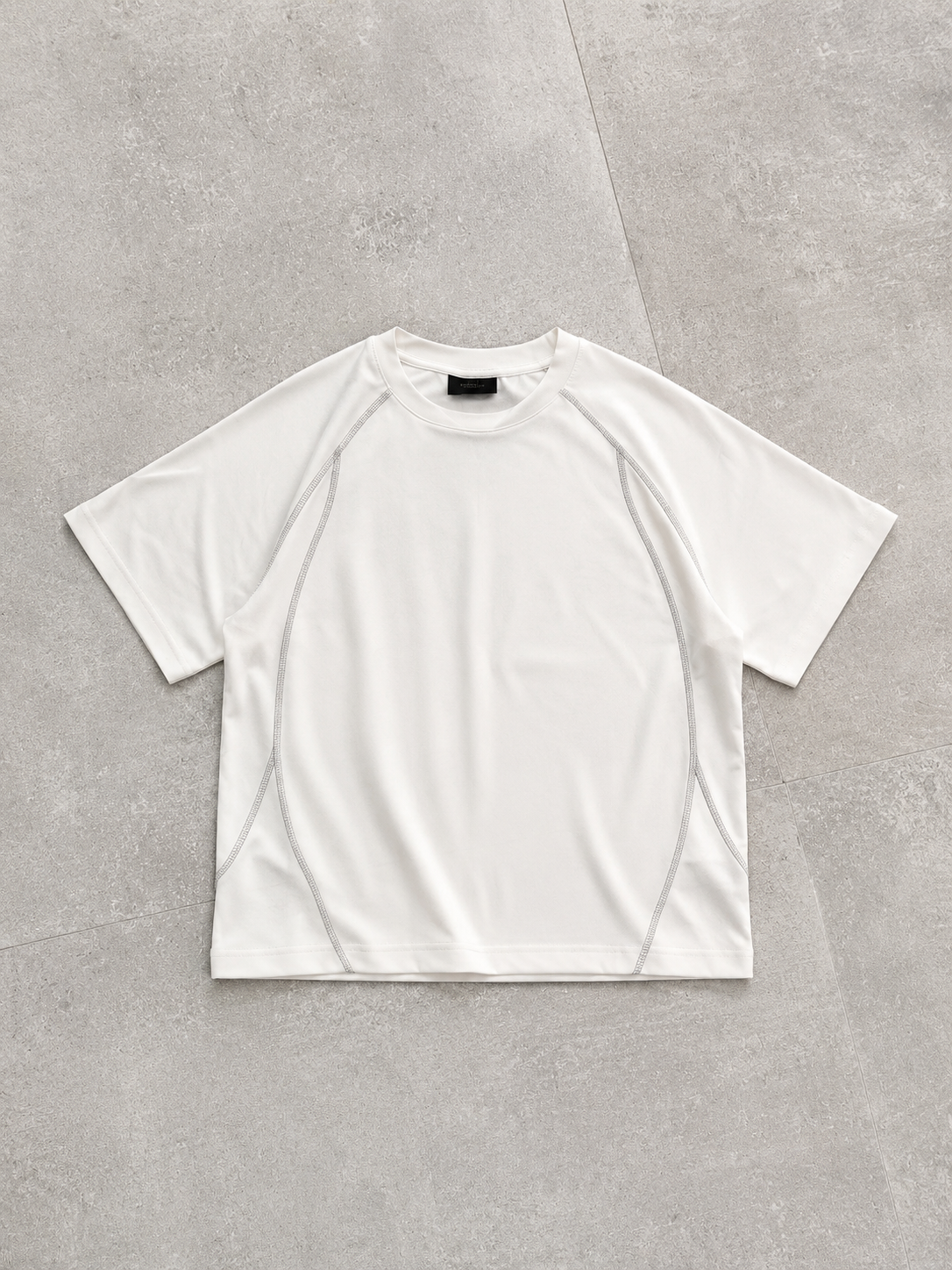
A startup asking for a low MOQ clothing manufacturer may actually be choosing among three different production routes: decorating existing blanks, customizing a proven factory pattern, or developing a new cut-and-sew garment. Those routes have different costs, creative limits, and replenishment risks. This article compares the options so a founder can select a viable first capsule without mistaking a small order quantity for guaranteed low cost.
What low MOQ actually means
Minimum order quantity can refer to pieces per style, per color, per fabric lot or even per print artwork. A quotation for 100 pieces might still require a minimum number in each color. Ask the supplier to break down these conditions. Small runs use the same pattern setup, fabric procurement and production planning steps as larger runs, so the fixed costs are spread over fewer garments.
Ask whether the quoted MOQ is calculated per style, per color, per fabric, or per print setup. A 100-piece total split across five colors may not meet a fabric supplier's minimum.
Choose stock materials strategically
Using in-stock fabric and standard colors often reduces sourcing delays and minimum fabric purchases. Many new brands overspend on exclusive dye colors before validating product demand. A stock fabric can still deliver a distinctive product through fit, labels, construction or decoration. Confirm whether the exact stock material will remain available for reorder, and obtain a swatch or sample rather than relying on a screen color.
Stock jersey and common rib colors can reduce mill setup work. Confirm that the available fabric has the intended composition, hand feel, shrinkage behavior, and repeat-order availability.
Limit styles before reducing quality
A launch with three silhouettes in two colors is usually easier to control than a large collection with tiny quantities per SKU. Fewer variations simplify pattern approvals, grading, trims and quality checks. Select one hero product, then add a complementary style only if your budget supports proper sampling. Avoid lowering fabric or sewing standards solely to hit a theoretical unit cost; dissatisfied first customers are expensive to recover.
Limit the first launch to a clear silhouette and one or two designs. This protects size coverage and allows a useful test of sell-through instead of scattering units across many weak variants.
Compare sampling options
Sampling is an investment in fit and product clarity. Ask whether a sampling charge includes one revision, what changes trigger an additional fee, and whether approved charges can be credited against a qualifying production order. Keep revisions controlled: approving a new fit while also changing the fabric and wash makes it difficult to identify the cause of problems. Document the approved sample and grading before placing a small run.
An existing blank is fast but may not deliver a proprietary fit. A modified block or full pattern development provides more control but needs sample reviews and grading decisions.
Model the total landed cost
At low volume, freight, duties, labels and packaging can represent a meaningful share of the landed cost. Compare a smaller air-shipped order with a slightly larger consolidated shipment, including lead time and inventory risk. Factor in sample iterations, payment fees, defects and potential returns. Lower MOQ is valuable when it limits unsold stock without creating an unsustainable retail margin.
Budget for the total route: sample charge, decoration setup, labels, packaging, QC, freight, import costs, and contingency. A cheaper unit can still be more expensive to launch.
What to include in the supplier brief
Build an option sheet for the same first product. Option A can be a decorated blank with fixed dimensions; option B, an existing manufacturer pattern using available jersey; option C, a new pattern with custom fabric or finish. Compare each route by changes allowed to body shape, fabric composition, artwork location, neck labels and packaging. Ask which costs are one-time development charges and which recur on every purchase order. For a 60-piece order divided into three colors, request the exact per-color feasibility instead of assuming that total pieces satisfy every supplier minimum.
Factory-side controls and approval
Do not allow an attractive small-run quote to crowd out the buyer's own launch plan. Reserve funds for an approved physical sample, color and sizing reviews, photographs of the final product, returns, duties and a possible corrective sample. A lean capsule can use one material and a controlled size scale while still delivering strong branding. If the first order sells, record the fabric source, pattern version, print settings, trims and shade standards. Reorder risk is part of low-MOQ planning: an available stock fabric today might not be obtainable in the same hand feel or color six months later.
Production decisions to document
| Decision | What the buyer should verify |
|---|---|
| Decorated blanks | Fastest route; fixed fit and fabric choices |
| Modified factory block | More silhouette control; check pattern rights and sample cost |
| New cut-and-sew | Highest design control; needs fabric and grading approvals |
| Custom-dyed fabric | Color exclusivity; separate dye-lot minimum may apply |
Illustrative production scenario
A new brand wants two graphics on an oversized T-shirt. It could choose existing blanks with printed labels, an available 220 GSM jersey on an adjusted pattern, or a custom-dyed 260 GSM fabric. The creative freedom increases across these routes, but so may the minimum quantity, lead time, and testing burden. The founder should request comparable sample and bulk scopes rather than one generic 'low MOQ' price.
Buyer checklist
- Ask for minimums by style, color, size and technique.
- Choose stock fabric and limit the first color range.
- Build a landed-cost model, not just a unit-price comparison.
- Reserve budget for sampling, photography and replenishment.
Two mistakes to avoid
- Counting all colors together without checking fabric or print minimums.
- Skipping a wear-and-wash test because the order is small.
Frequently asked questions
Can I order different sizes within one MOQ?
Often yes, but the supplier must confirm size ratios and any minimum cut quantities.
Does low MOQ always mean higher prices?
Usually unit costs rise as fixed costs are spread over fewer pieces; the amount depends on product complexity.
Can I reorder the same fabric later?
Only if its supply is confirmed; record the composition, weight and supplier reference.
Discuss your project with MuseArk Studio
Share the number of styles, quantity per color, intended fabric, logos, and launch window. We can compare practical low-MOQ development routes for that specific collection.
Request a Custom Apparel Production ReviewRelated MuseArk resources
- What 50–100-piece MOQ really means
- Custom T-shirts and jerseys
- How our development process works