
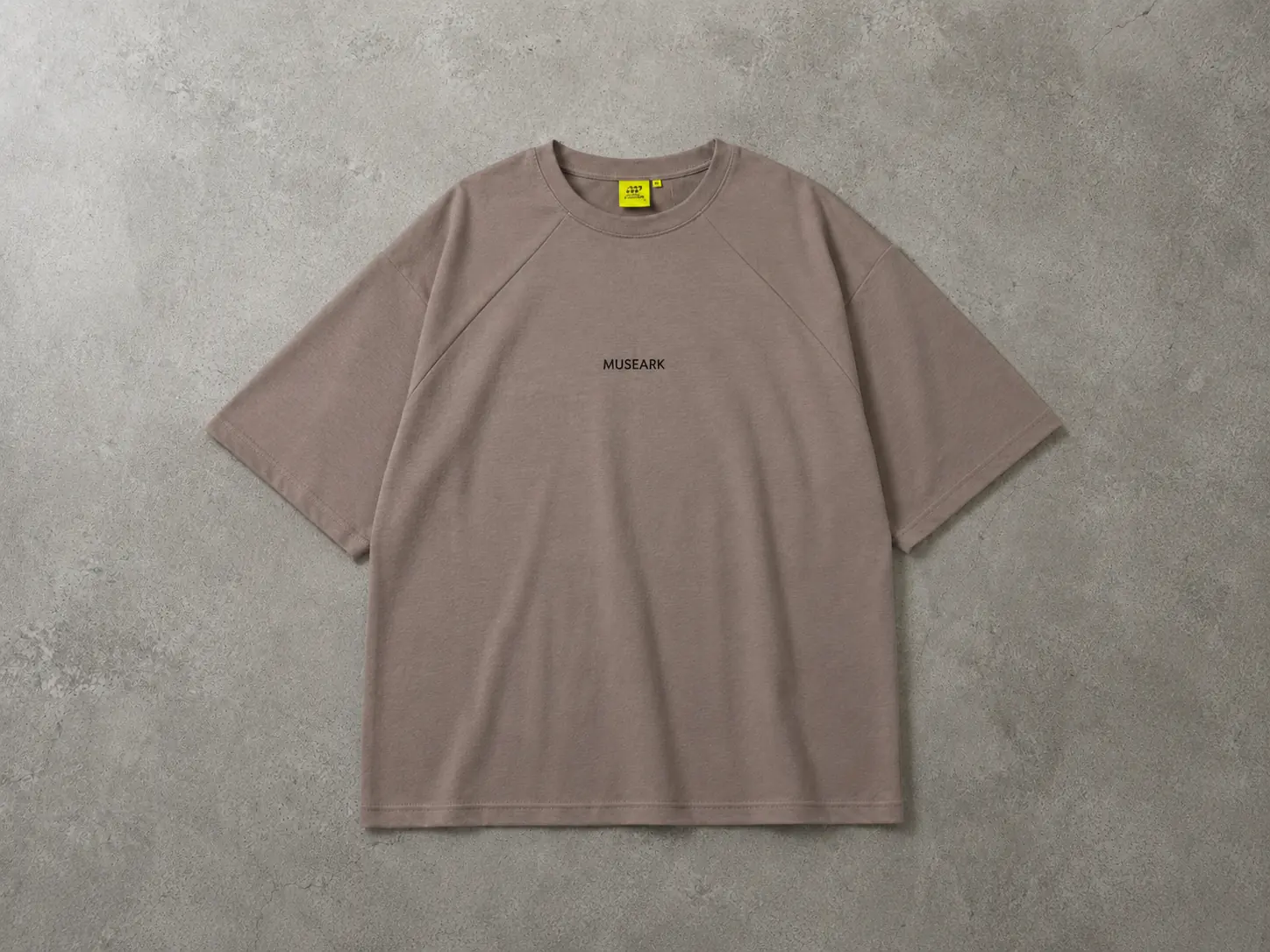
Cotton T-shirt shrinkage becomes a brand problem when finished garments no longer match the published size chart after washing. The result depends on knit structure, finishing, construction, and how the garment is laundered—not just whether the label says 100% cotton. A useful factory plan defines the wash conditions and acceptable dimensional change before production.
Understand why cotton changes size
Knit cotton fabric can retain mechanical tension from knitting and finishing. Washing and drying allow the structure to relax, producing length or width change. Different yarn, knit density and finishing methods affect results. A T-shirt that measures correctly before its first wash may not match the customer’s fit expectations afterward.
Ask whether the fabric has been compacted, pre-shrunk, washed, or otherwise stabilized. The word pre-shrunk is not a guarantee of zero movement.
Test the actual garment construction
Test fabric where appropriate, but also wash finished T-shirts with collars, seams and decoration. Measure chest, body length, sleeve length and other agreed points before and after specified wash cycles. Record both absolute measurements and percentage change. A neck rib may shrink differently from the main body and distort appearance even when body measurements are acceptable.
Record body length, chest width, shoulder, sleeve, and neck measurements before and after the same specified laundering method.
Specify the care conditions
Shrinkage results depend on wash temperature, agitation, detergent and drying method. Choose test conditions that reflect the care label and realistic customer behavior. The buyer and factory should agree the method before accepting a numerical shrinkage requirement. Avoid quoting a universal acceptable percentage without considering fabric type and product specification.
Set test cycles, washing temperature, drying method, and garment-conditioning procedure that fit the intended care instructions.
Manage washing and pre-treatment
Pre-shrunk fabric or controlled garment processing can reduce later changes, but neither guarantees zero shrinkage. Dyeing and garment washing can also affect dimensions. If the product is intentionally washed for a vintage finish, confirm measurements after the final wash and drying process, not just after sewing.
Printing, garment dyeing, enzyme treatment, and pressing can change dimensions. Test the actual finished product route rather than an unrelated fabric swatch.
Control the entire production lot
Fabric rolls from different lots can behave differently. Ask for sampling across material lots when the order is large enough to justify it. During bulk production, check dimensions after finishing and before packing. Keep production records so a complaint can be matched to fabric or wash batches rather than treated as an isolated mystery.
Agree on acceptable shrinkage limits and how the factory will sample bulk lots. If the target cannot be met, revise the material or pattern before scale-up.
What to include in the supplier brief
A shrinkage test needs a baseline. Measure the finished sample after the agreed conditioning period and mark critical POMs such as chest, body length, shoulder, sleeve and neckline. Use a documented wash temperature, detergent approach, drying method and cycle count compatible with the intended care label. Then remeasure under the same conditions. If the garment changes unevenly, inspect knit structure, cutting direction, seam tension and finishing. A single 'before and after' photograph can be illustrative but is not a substitute for a measurement record.
Factory-side controls and approval
The production team should decide how to respond if the result exceeds the agreed limit. Options may include alternative compacted jersey, fabric relaxation, revised pattern allowance, a different wash route, or a care instruction change that accurately reflects actual performance. Any adjustment needs another finished garment test. Avoid treating a larger initial pattern as an automatic fix, because width and length can change by different amounts. For bulk, keep the approved test conditions and monitor representative material lots. Brands should communicate realistic care information without promising no shrinkage.
Production decisions to document
| Decision | What the buyer should verify |
|---|---|
| Fabric state | Knit, GSM, composition and finishing history |
| Test method | Wash/dry conditions, cycles and conditioning |
| Measurement | Before/after POM by sample size |
| Acceptance | Approved change limits and lot sampling |
Illustrative production scenario
A 220 GSM oversized tee looks correct straight from sewing, but loses length after a warm wash. Rather than simply adding several centimeters to every pattern piece, compare the actual prewash and postwash POM data, then assess whether fabric stabilization or a different care route is more reliable. Publish the size chart for the delivered garment condition and customer care expectations.
Buyer checklist
- Specify wash-test method and number of cycles.
- Record before-and-after body and rib measurements.
- Approve final dimensions after all wash processes.
- Use consistent fabric and finishing controls in bulk.
Two mistakes to avoid
- Promising zero shrinkage for all cotton garments.
- Correcting size by guesswork without a repeatable test.
Frequently asked questions
Does 100% cotton always shrink?
Shrinkage behavior varies; test the actual material and finishing process.
Can pre-shrunk cotton shrink again?
Yes. Pre-treatment reduces risk but does not guarantee zero change.
Should I size up to compensate?
Use tested shrinkage and intended final fit, not a blanket size increase.
Discuss your project with MuseArk Studio
Share the jersey specification, intended care method, fit chart, and finished garment process. MuseArk can discuss shrinkage testing points before sample approval.
Request a Custom Apparel Production ReviewRelated MuseArk resources
- Custom T-shirts and jerseys
- Factory and sample evidence
- How our development process works