
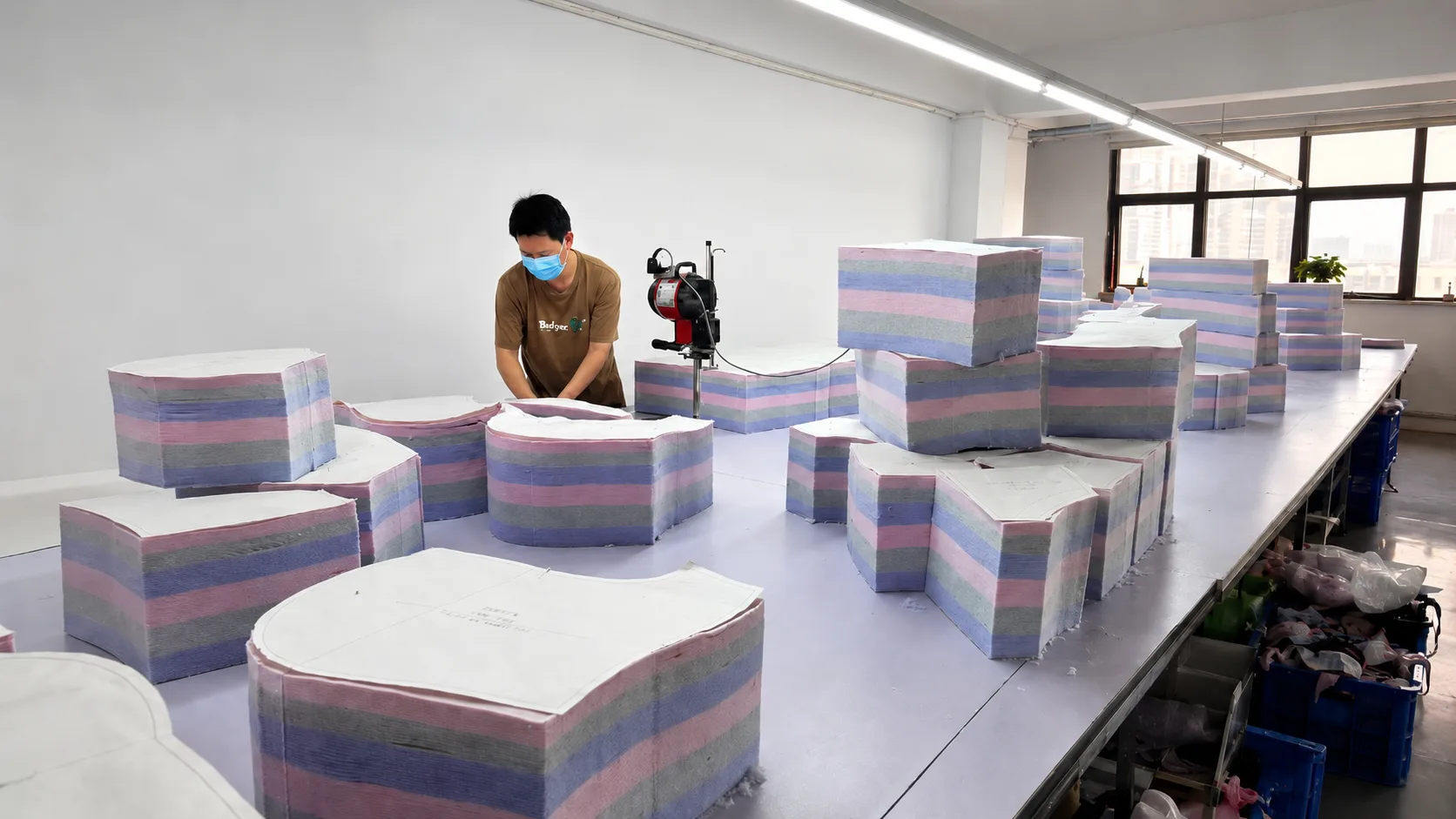
Choosing a clothing manufacturer in China is a verification exercise, not a contest to collect the lowest unit price. A streetwear brand may need reliable washed finishes and oversized patterns; a uniform buyer may prioritize repeatability and size consistency. The right supplier should explain what it produces, which specialist processes require partners, and how a sample becomes a controlled bulk order. This guide gives buyers a practical way to compare candidates before committing money or launch dates.
Define the type of manufacturing partner you need
A factory that produces basic promotional T-shirts is not automatically a good partner for washed denim or technical outerwear. Begin with your category, target retail price, intended order quantity, launch date and necessary customization. Identify whether you need pattern development, fabric sourcing, cut-and-sew, printing, embroidery, garment washing or simply private-label finishing. Narrowing the brief prevents conversations with suppliers whose capability looks broad in a catalog but does not fit your specific product.
Separate your must-have operations from optional finishes. A supplier confident in basic jersey may still need a verified partner for bonded seams, leather-like coatings, or complex denim washing.
Check production evidence rather than marketing claims
Request recent examples of garments with construction details comparable to your design. Ask to see seams, labels, inside finishing, fabric hand-feel and close-up workmanship, not only attractive model photography. A video showing cutting, sewing and finishing can help, but it does not replace a physical sample. For complex garments, ask who controls patterns, washing and quality inspection and which steps may be outsourced. Transparent answers matter more than a long list of generic factory certificates.
Ask for inside-out construction photographs, not only finished product shots. Check the exact garment category, the age of the example, and whether the supplier controlled sampling and bulk.
Evaluate sampling and communication
Send the same brief to a shortlist of suppliers. Compare how they interpret measurements, tolerance, construction details and potential production risks. A useful supplier flags ambiguous points before quoting or sampling. Agree which sample stage approves fit, fabric, color and workmanship. Record all changes in a revised specification so the approved reference does not depend on chat screenshots or memory.
Send identical briefs to two or three candidates. Compare the questions they ask about measurements, fabric availability, acceptable tolerances, and color approval, not just reply speed.
Understand the quotation and production schedule
An attractive unit price is incomplete without MOQ by style and color, size breakdown, trims, print and wash charges, packaging, inspection, payment milestones and shipping terms. Ask whether the quote is based on actual fabric availability or an estimate. Production lead time should start from a defined event such as deposit plus approved pre-production sample and confirmed materials, not from the first inquiry.
Request an itemized quote that states style and color MOQ, decoration, packaging, sampling, payment terms, and the delivery basis. A low EXW figure is not a landed cost.
Reduce first-order risk
Start with a representative sample and an order size appropriate to your launch. Set critical measurements and inspection criteria before cutting. Agree how defects will be handled and who bears remake or freight costs. Avoid promising your customers a launch date until sampling, material procurement and shipping buffers have been confirmed. A dependable manufacturing relationship is built on repeatable decisions, not a single impressive sales presentation.
For a first run, lock one reference sample and a measurable defect standard. Keep revision records and identify who approves substitutions before they reach cutting.
What to include in the supplier brief
A short supplier audit should cover identity, equipment and external dependencies. Request a business identity that matches the quotation, ask where cutting, sewing, embellishment and washing actually take place, and distinguish owned operations from specialist partners. A factory tour or current workshop photographs can support the review, but dates, sample workmanship and communication quality matter as well. For a complex product, identify who signs off the output of each process. If the factory has never worked with your chosen membrane, wash or hardware, a trial is more honest than an unconditional capability promise. Ask for the first-sample plan, not just a large catalog.
Factory-side controls and approval
Use a comparable-quotation sheet. Place the same approved fabric composition, finished GSM where relevant, size range, artwork, packing, order split and shipping term beside each supplier's response. Mark unknown items rather than treating them as included. Separate the date for material readiness, sample approval, bulk completion, final inspection and dispatch. Agree in writing how a rejected sample, fabric substitution, shade discrepancy or missed milestone will be addressed. An independent inspection can be worthwhile for a new partner or higher-risk order. The aim is a documented, reproducible production route—not a certificate collection.
Production decisions to document
| Decision | What the buyer should verify |
|---|---|
| Category fit | Recent examples in the same fabric, fit, and finish |
| Development control | Pattern ownership, measurement approval, sample rounds |
| Bulk control | Material lot, color standard, inspection checkpoints |
| Commercial scope | MOQ by style/color, Incoterm, packing, milestones |
Illustrative production scenario
Consider a brand requesting 120 washed oversized tees in two colors. One supplier quotes from an image; another asks for final measurements, fabric weight, desired wash effect, and the acceptable color range. The second proposal may take longer to prepare, but it exposes fabric and wash risks early. The buyer can then approve a comparable sample and evaluate the true scope of both offers.
Buyer checklist
- Create a one-page product brief with reference images, fabric and quantity.
- Request comparable production examples and process photographs.
- Compare sampling terms, quote inclusions and realistic lead times.
- Approve one controlled production reference and inspection standards.
Two mistakes to avoid
- Judging capability only by catalog breadth or lifestyle photos.
- Treating an estimated quote as a confirmed production commitment.
Frequently asked questions
Can I start with reference photos?
Yes. Photos can begin a development conversation, but dimensions, material and construction still require confirmation.
Should I choose the cheapest quote?
Not necessarily. Compare scope, quality controls, sampling and logistics on the same basis.
How do I verify a factory?
Review business information, obtain samples and use independent inspection where justified.
Discuss your project with MuseArk Studio
Send your garment category, reference images, target quantities, desired materials, and delivery destination. MuseArk can review the feasible development route and identify information needed for an accurate quotation.
Request a Custom Apparel Production ReviewRelated MuseArk resources
- Production capabilities
- How our development process works
- Factory and sample evidence