
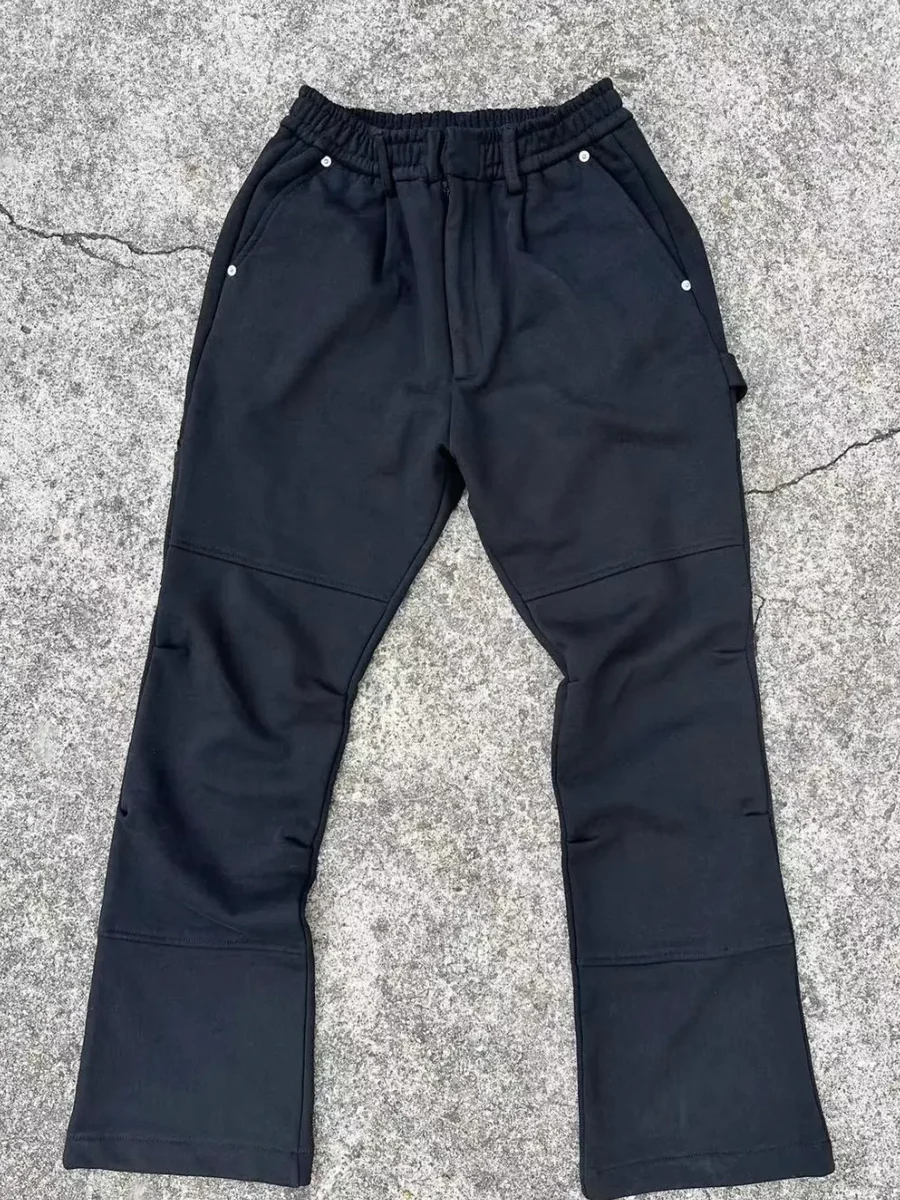
Denim sourcing adds risks that a normal woven trouser quote may miss. Fabric weight and stretch, shrinkage after washing, distress placement, hardware, and leg balance interact to create the finished silhouette. A buyer seeking a custom denim manufacturer in China should assess washed samples and measurement controls, not only unwashed jeans or attractive catalog photography.
Match the factory to your denim concept
Rigid jeans, stretch jeans, washed baggy denim and tailored denim each require different technical attention. Ask potential suppliers for styles with comparable pocket construction, weight, wash effects and fit. A sewing facility may outsource washing; clarify where responsibility lies for shade, measurement changes and finishing quality.
Ask for examples of your intended silhouette: straight, wide, baggy, flare, or carpenter. Pattern balance and rise shape are different across these categories.
Define denim beyond a photo
Specify cotton or blend composition, fabric weight in ounces, weave, stretch and recovery, intended hand feel and color. A dramatic vintage finish depends on indigo behavior and processing method. Test physical swatches and washing samples because digital photos are unreliable for exact indigo shade.
Confirm denim weight in ounces, blend, weave, stretch, shade, and available mill lots. Fabric stiffness changes the way a wide leg hangs.
Control fit and measurement points
Waistband, hip, rise, thigh, knee, leg opening and inseam determine how a jean fits. Baggy silhouettes depend on distribution of ease, not merely increasing waist size. Agree whether measurements are taken before or after wash and specify the same method across size sets. A fitting on the intended body type is essential.
Measure waist, hip, rise, thigh, knee, hem, and inseam after the selected wash. Grading should preserve the intended proportions across sizes.
Approve the wash standard
Stone, enzyme, bleach and other wash processes create different visual and mechanical effects. Distressing position should be controlled by a reference sample and annotated artwork. Ask how much variation is acceptable between pieces and batches. Confirm how shrinkage and seam puckering are checked before bulk acceptance.
Agree on shade range, abrasion points, distress depth, and pocket wear. A single art photograph is not a reproducible wash standard.
Build denim-specific quality checks
Inspect seam strength, bartacks, fly operation, rivets, belt loops, pocket alignment and shade grouping. Review color transfer and care instructions appropriate to the fabric and wash. A reliable supplier should be able to show how fabric, sewing and washing information is recorded for the next order.
Inspect zipper or button performance, bartacks, pocket alignment, seam torque, and exposed threads after wash and finishing.
What to include in the supplier brief
Prepare a denim specification with fabric weight in ounces, fiber blend, stretch and recovery, intended stiffness, base shade, hardware finish, seam construction and the target wash. The fit sheet should show waist, hip, front and back rise, thigh, knee, hem and inseam in finished condition, plus grading rules. If the brand wants a baggy leg, compare the rise and thigh balance of the reference; generic 'loose fit' wording is insufficient. A wash-house sample may require more than one round to reach both shade and finished measurements.
Factory-side controls and approval
The buyer should distinguish repeatable details from intentionally irregular distress. Pocket dimensions, fly operation, stitch tension, belt-loop attachment and bar-tack location should remain controlled. Fading or abrasion may vary within an approved visual range; unacceptable holes or exposed seam damage should not be hidden under 'vintage effect.' Ask the team to retain wash recipes and signed shade swatches while avoiding promises of exact photographic duplication. For first bulk checks, inspect at least early production output after washing, not only cut panels. Confirm who coordinates any external wash process and quality sign-off.
Production decisions to document
| Decision | What the buyer should verify |
|---|---|
| Denim selection | Weight, stretch, weave, shade and lot |
| Pattern | Rise, thigh, knee, leg opening, graded POM |
| Wash | Approved shade/rub range, distress position, shrinkage |
| Bulk evidence | Finished-size checks, hardware, pocket and seam QC |
Illustrative production scenario
A brand wants 12 oz baggy jeans with a faded black wash. The rigid fabric may support volume, but the finished waist and inseam can move after washing. The first approved unwashed construction sample should be followed by a finished wash sample and final size specification. A bulk color range should be approved rather than demanding an impossible identical fade on every piece.
Buyer checklist
- Ask for comparable denim and wash samples.
- Lock post-wash measurements for every size.
- Define shade range and placement of distressing.
- Inspect hardware, reinforced seams and dye transfer risk.
Two mistakes to avoid
- Approving size dimensions only before washing.
- Assuming every distressed jean can match a single photo exactly.
Frequently asked questions
Can denim washes match a photo exactly?
A photo is a direction; approve a physical wash standard and tolerances.
What does 12 oz denim mean?
It is a fabric-weight measure, but composition and finishing still matter.
Should I approve jeans before washing?
Approve fit and dimensions with wash shrinkage in mind; final acceptance is based on the agreed finished condition.
Discuss your project with MuseArk Studio
Send front/back references, intended fit, denim weight, wash finish, hardware, sizes, and quantity. MuseArk can review which development samples are needed.
Request a Custom Apparel Production ReviewRelated MuseArk resources
- Custom pants and denim
- Factory and sample evidence
- How our development process works