
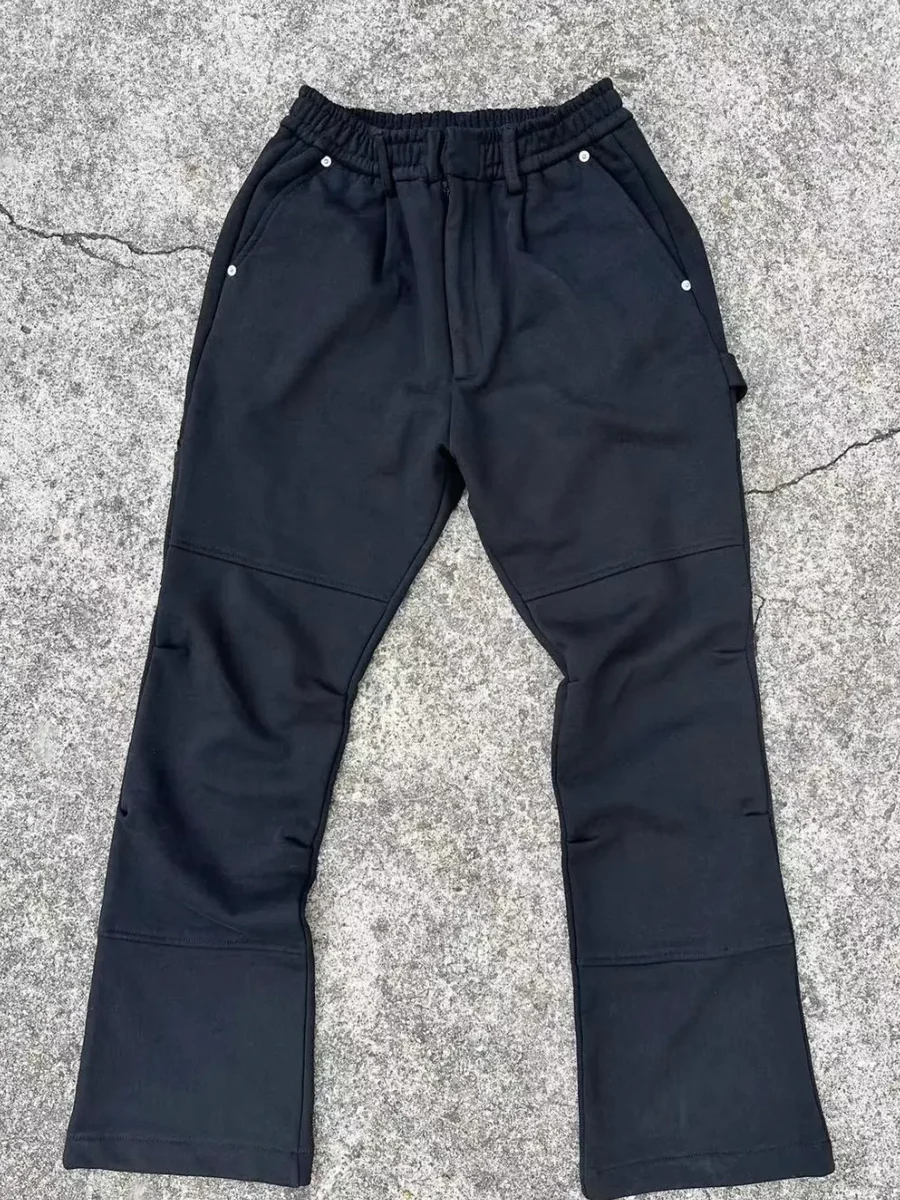
Cargo pants can look deceptively simple in a tech sketch, yet pocket capacity, flap angle, fabric stiffness, and hardware weight can distort the fit. A streetwear cargo and a functional outdoor cargo should not use the same assumptions. Good development begins by deciding what each pocket does, how the trousers should drape, and what the finished garment needs to withstand.
Start with intended use
Fashion cargos and functional utility trousers need different pocket security, abrasion resistance and weight. Define whether the pants are primarily for streetwear, travel or work-inspired styling. This decision guides fabric, pocket architecture, closure strength and movement allowance. A dramatic pocket layout that looks striking in photos may feel uncomfortable during daily wear.
Choose between structured cotton twill, ripstop, stretch woven, and other fabrics by intended use and silhouette. Ripstop weave alone does not mean waterproof.
Select the fabric for the silhouette
Cotton twill, ripstop blends, nylon and stretch-woven fabrics have different drape and durability characteristics. Test hand feel, surface noise, movement and care. A stiff fabric may make large pockets stand away from the leg; a soft fabric can cause loaded pockets to sag. Match the material to the pattern and pocket use.
Dimension pocket bags, gussets, openings, flaps, and internal reinforcement. Large pocket volume can pull the side seam out of balance.
Engineer pockets rather than decorate
Specify pocket dimensions, flap overlap, pleat depth, reinforcement, symmetry and closure method. Check whether pockets remain usable when the wearer sits or bends. Heavy cargo contents create stress at attachment points. Use mockups or prototypes to validate placement and avoid creating unnecessary bulk at side seams.
Specify relaxed or straight fit using rise, thigh, knee, hem, and inseam measurements. Test motion with loaded pockets if functional capacity matters.
Pay attention to fit and accessories
Choose rise, thigh ease, knee shape and leg opening deliberately. Drawcords, snaps, zippers, buckles and toggles should be tested for safe and reliable operation. Elastic components require consistent recovery. A change in pocket or accessory weight can affect drape and must be considered during fitting.
Confirm snaps, hook-and-loop, zippers, drawcords, and bartacks with actual hardware samples.
Control assembly and inspection
Inspect pocket symmetry, bartacks, seam strength and hardware attachment. Agree whether the garment will be washed or garment-dyed and check dimensions afterward. Create a photo-based defect reference for common issues such as uneven pockets, twisted legs or loose cord ends. The approved sample should guide sewing and final inspection.
Inspect pocket symmetry, attachment strength, flap alignment, and seam puckering before and after the intended finish.
What to include in the supplier brief
Cargo pocket engineering should specify function, not just appearance. Note whether pockets carry a phone, tools or are purely decorative, then define opening width, depth, gusset, flap, closure and reinforcement. Check how the filled pocket affects side-seam balance and walking movement. For streetwear cargos, a boxy leg and stacked pockets may be the goal; for functional outdoor trousers, abrasion resistance and fastening reliability could matter more. Ask for a sample that can be tested in realistic use with the selected fabric.
Factory-side controls and approval
Fabric structure must support the design without creating unnecessary bulk. Cotton twill can give a familiar hand; ripstop adds a reinforcing grid but does not create waterproof performance by itself; stretch woven materials change mobility and seam behavior. Check hardware finishes, snap strength, zipper function, drawcord paths and pocket bag fabric before release. At bulk inspection, measure pockets as well as the main trouser POMs, look for asymmetry and seam puckering, and confirm bartacks where loads concentrate. The final specification should show pocket positions from fixed reference points.
Production decisions to document
| Decision | What the buyer should verify |
|---|---|
| Material | Twill/ripstop/stretch, GSM and hand feel |
| Pocket system | Bag depth, gusset, flap, reinforcement |
| Fit | Rise, leg width, knee mobility, drawcord hem |
| Trims and QC | Fasteners, bartacks, pocket symmetry |
Illustrative production scenario
A brand designs wide-leg cargos with two stacked side pockets and hem drawcords. A thin lightweight fabric may let the loaded pockets sag, while a stiff twill may make the legs overly rigid. A sample should evaluate pocket weight distribution and movement with the chosen fabric before the design is approved.
Buyer checklist
- Define real pocket use and intended silhouette.
- Choose fabric based on drape and durability.
- Prototype pocket volume and attachment strength.
- Check closures, fit and reinforcement after washing.
Two mistakes to avoid
- Adding pockets without checking how they distort side seams.
- Calling ripstop inherently waterproof.
Frequently asked questions
Are ripstop cargos waterproof?
Not automatically. Ripstop describes reinforcement structure, not guaranteed waterproof performance.
Can I add many pockets?
Yes, but each pocket adds bulk, operations and cost.
What is the most common cargo issue?
Poorly balanced pocket placement or insufficient reinforcement.
Discuss your project with MuseArk Studio
Send the cargo reference, intended pocket function, fit, fabric, hardware, and quantity. MuseArk can review the construction challenges before sampling.
Request a Custom Apparel Production ReviewRelated MuseArk resources
- Custom pants and denim
- Factory and sample evidence
- How our development process works