
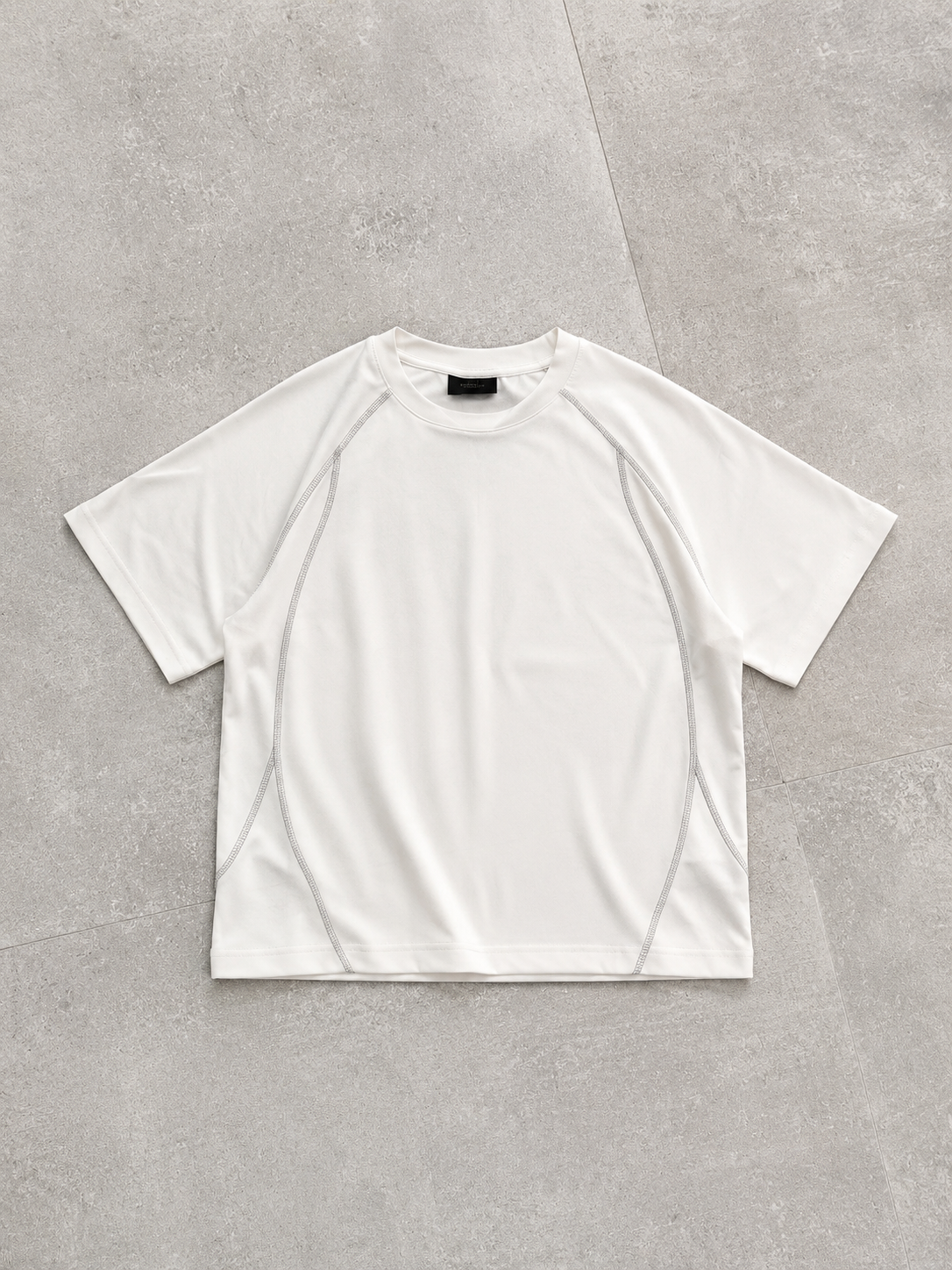
A T-shirt looks simple, but buyers notice poor neck recovery, twisted side seams, inconsistent chest width, and prints that fail after laundering. Choosing a custom T-shirt manufacturer therefore means evaluating jersey and construction as carefully as artwork. This guide focuses on practical checks for streetwear brands sourcing fitted, relaxed, or oversized tees rather than promotional blanks.
Compare knit fabric specifications
A cotton T-shirt is not fully defined by 100% cotton. Ask about GSM, knit structure, yarn quality, finish, stretch, shrinkage and colorfastness appropriate to the intended product. Examine actual swatches because identical stated weight can feel different. For garment dyeing or washing, discuss compatibility and expected dimensional change before selecting a base cloth.
Specify fiber composition, knitting structure, GSM, feel, opacity, and expected shrinkage. Two fabrics labeled 220 GSM may behave very differently after finishing.
Evaluate pattern and fit control
Oversized, boxy, regular and cropped fits need different shoulder, chest, sleeve and body proportions. Request a size chart with measurement points and tolerances. Confirm if the factory develops the pattern from measurements or modifies an existing block. A well-made sample in the wrong silhouette is still commercially unsuitable.
Compare shoulder drop, chest ease, body length, sleeve opening, and neck rib dimensions on a finished garment. A generic unisex chart rarely defines an oversized silhouette.
Assess print and embroidery capability
Artwork position and decoration durability influence how a T-shirt performs after washing. Specify print dimensions measured from consistent landmarks, such as the high point of shoulder or center front. Review actual print samples for edge definition, stretch and wash resistance. If several decoration methods are available, compare hand feel and acceptable detail size rather than selecting only by cost.
Test the planned print on the actual fabric and wash route. Artwork sharpness, stretch, hand feel, and laundering performance can differ among methods.
Examine stitching and finishing
Look at neck rib recovery, shoulder seam alignment, side seam twisting, hem consistency and loose threads. Ask whether garments are measured after any wash process. A collar that feels acceptable new but distorts after laundering can create high return rates. The supplier should explain how the agreed measurements are monitored during sewing and finishing.
Inspect collar attachment, topstitching, shoulder stabilization, hem consistency, and side-seam twisting. Ask for inside-out detail images and a physical sample.
Approve a repeatable production reference
Retain the final sample, measurement chart, fabric reference, print files, labels and packing instructions. For a reorder, verify whether fabric and dye lots have changed. Agree the inspection approach and acceptable tolerance before production. The best partner combines product development support with reliable repeatability.
Keep measurement tolerances and the finished pre-production sample as bulk standards. Reorders should confirm fabric lot and rib recovery.
What to include in the supplier brief
Request a sewn T-shirt sample with the intended neck rib and decoration, then run a consistent garment wash review. Measure chest, body length, shoulder, sleeve opening and neck after conditioning; inspect whether the side seams rotate and whether the collar waves. Compare print stretch and hand feel against the exact fabric, especially for heavyweight or washed jersey. If an oversized tee is meant to feel structured, confirm how the fabric falls at the shoulder and sleeve, rather than selecting 260 GSM by habit. Do not accept '100% cotton' as the entire material specification.
Factory-side controls and approval
Before bulk, approve the print color reference, artwork file version, dimensions, placement from fixed POMs, thread and label details, and size grading. Ask for first-production photos of collar seam, hem stitches, inside finishing, print registration and packing. A small defect in a neckline may be obvious to every customer, while a minor variation hidden inside the garment may not carry the same impact. Define unacceptable defects realistically. For a first order, request an inspection standard that is appropriate to the product and order size and preserves the same decisions for reorders.
Production decisions to document
| Decision | What the buyer should verify |
|---|---|
| Fabric | GSM, composition, knit, hand feel and shrinkage |
| Fit | POM chart, grading, sleeve and collar dimensions |
| Decoration | Artwork size, placement, method, wash result |
| Bulk QC | Neck recovery, twisting, seams, finished measurements |
Illustrative production scenario
A brand wants a 220 GSM heavyweight-feeling tee with a large back print. Compare an available compact jersey with a looser knit of the same GSM in the same pattern. After print sampling and laundering, the brand may prefer one for its neck recovery and print surface rather than its nominal weight. The approved result becomes the standard.
Buyer checklist
- Define intended fit and buyer measurements.
- Compare physical swatches, not only stated GSM.
- Approve print size, placement and wash performance.
- Set post-wash dimensions and finishing standards.
Two mistakes to avoid
- Selecting fabric on GSM alone.
- Approving artwork on screen without testing it on the finished tee.
Frequently asked questions
Which GSM should I choose?
It depends on climate, drape, opacity and silhouette; evaluate a sample on the target fit.
Is 100% cotton always best?
Cotton is common, but blends may offer different performance and care properties.
How do I avoid collar problems?
Specify rib construction, recovery and wash testing before approval.
Discuss your project with MuseArk Studio
Send your T-shirt reference, target GSM, size chart, artwork, color split, and quantity. MuseArk can review the fabric-and-fit route before quoting.
Request a Custom Apparel Production ReviewRelated MuseArk resources
- Custom T-shirts and jerseys
- Factory and sample evidence
- How our development process works