
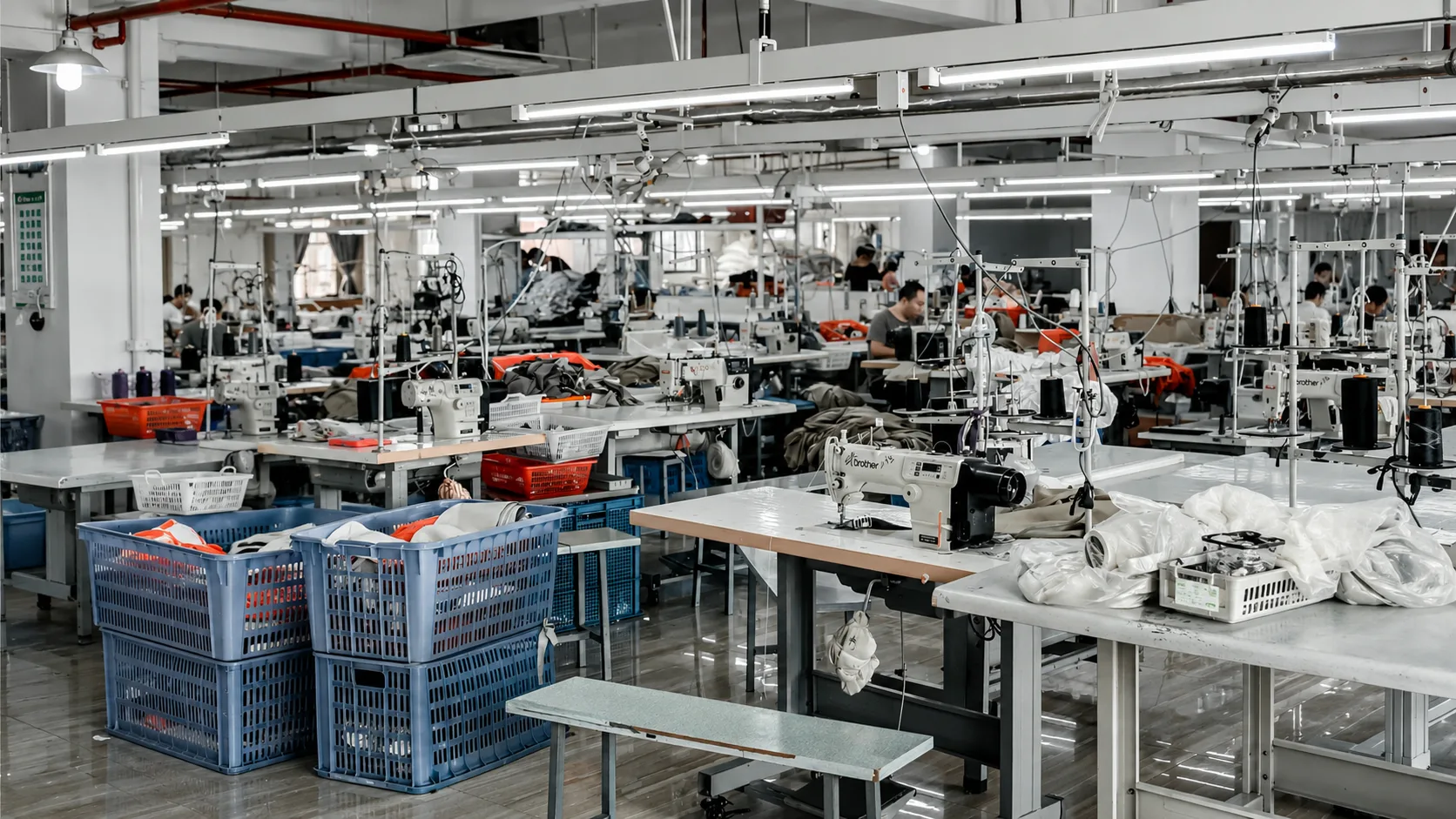
Streetwear production succeeds when the intended silhouette survives contact with actual materials, machinery, and bulk tolerances. An oversized cropped hoodie, baggy denim jean, and washed graphic tee are not interchangeable production problems. Brands need to evaluate pattern decisions, wash and print compatibility, and how a factory documents the look they approve. Here is what to settle before handing over a streetwear drop.
Streetwear production starts with silhouette
Oversized is not simply a larger standard size. Shoulder drop, chest width, sleeve volume, body length and hem shape work together. Compare measurements to a fit reference worn by your target customer. A sample that photographs well on one model may grade poorly across sizes if the design proportions are not established. Include both flat measurements and on-body fit notes in the brief.
Specify shoulder, chest, body length, sleeve volume, and hem behavior instead of relying on the word oversized. A reference photograph cannot define grading across sizes.
Fabric and wash drive the perceived value
Heavy jersey, compact fleece, loopback French terry and denim react differently to printing and laundering. Specify composition, GSM, surface texture, shrinkage tolerance and preferred finish. Pigment or garment-dyed effects may create intentional variation; decide which variation is acceptable. For wash treatments, the approved sample should define both visual targets and post-wash measurements.
Evaluate the garment after finishing. Pigment wash, embroidery, rib structure, and heavier fleece may change its drape and dimensions in ways a flat swatch will not show.
Decoration must survive production
Screen print, puff print, embroidery, appliqué and heat transfers have different limits in detail, stretch and placement accuracy. Print scale on an oversized back panel must be measured rather than guessed from a mockup. Confirm whether artwork is in vector format, identify Pantone or physical color references when needed, and approve strike-offs or embroidery sew-outs before bulk production.
Coordinate artwork with seams, pocket positions, and the intended wash sequence. A print approved on an unworn blank may respond differently after distressing or laundering.
Pay attention to small construction details
Rib recovery, coverstitch tension, pocket reinforcement, zipper weight and neck-tape quality can distinguish a premium streetwear product from a generic blank. Build a specification with visible and hidden details. A supplier should be able to explain the trade-off between the aesthetic and production reliability, especially with distressed edges, heavy trims or unusually dense embroidery.
Small decisions such as zipper tape shade, hood overlap, neck rib recovery, and pocket symmetry contribute strongly to the perceived quality of a collection.
Plan a repeatable release process
Streetwear brands often work to drops rather than continuous stock. Treat approvals as a critical path: prototype, fit approval, final materials, decoration approval, pre-production sample, bulk cutting and quality inspection. Reserve time for the sample to travel and for one controlled revision. A launch calendar that ignores these milestones creates avoidable pressure at the most expensive stage.
Retain the final approved sample, material references, artwork dimensions, and accepted shade range for repeat orders. Reorders need more than a remembered aesthetic.
What to include in the supplier brief
Create a streetwear-specific tech pack rather than a generic T-shirt template. Note whether the silhouette is cropped, wide, dropped shoulder or longline, and identify the precise finished POMs that produce that look. Document fabric face and back, GSM, rib behavior, print dimensions, wash level, hardware colors and internal finishing. Where several garments share a visual language, align labels, color references and graphic positioning across the capsule. A model image may communicate styling, but flat-front, flat-back and inside-detail references are necessary for sewing. Retain one signed physical standard for every distinct fabric and wash process.
Factory-side controls and approval
Plan manufacturing sequence early. If the design includes puff print, embroidery, distressing and garment dye, the order of operations can change both appearance and durability. Ask the supplier which processes require separate trials, where material or decoration may fail, and which test pieces should be approved before full sampling. At bulk stage, check critical style features in early output: body balance, sleeve size, print coordinates, wash variation and label execution. A fashion-forward design often has narrow aesthetic tolerances even when its style intentionally looks irregular. Define which irregularity is desired and which is a defect.
Production decisions to document
| Decision | What the buyer should verify |
|---|---|
| Silhouette | Flat measurements and graded size chart |
| Surface | Fabric hand feel and approved finish or wash panel |
| Artwork | Dimensions, color, placement, process sequence |
| Repeatability | Approved sample, trims, shade and inspection record |
Illustrative production scenario
Imagine a capsule with a boxy 400 GSM hoodie and a vintage-washed tee. Even if both use the same graphic, the print settings and wash sequence may differ. Approve one finished garment for each route; record the artwork placement from fixed garment points, not arbitrary distances in a photograph. This prevents two visually related items from drifting apart in bulk.
Buyer checklist
- Send front, back and detail references with target fit measurements.
- Approve fabric, wash and decoration separately where possible.
- Define acceptable variation for distressed or washed effects.
- Lock the final specification before purchasing bulk materials.
Two mistakes to avoid
- Treating visual references as production-ready specifications.
- Approving a wash effect without checking finished sizing.
Frequently asked questions
Can a factory copy a reference style exactly?
A reference can communicate intent, but original branding and protected design details require appropriate rights and product-specific development.
Which GSM is premium?
There is no universal premium GSM; weight must suit drape, season and pattern.
What is the most common approval mistake?
Approving a photograph without confirming measurements and construction details.
Discuss your project with MuseArk Studio
Send your streetwear references, target silhouettes, GSM direction, decoration, and quantity by color. MuseArk can review the sample sequence and likely production risks.
Request a Custom Apparel Production ReviewRelated MuseArk resources
- Production capabilities
- Factory and sample evidence
- How our development process works