
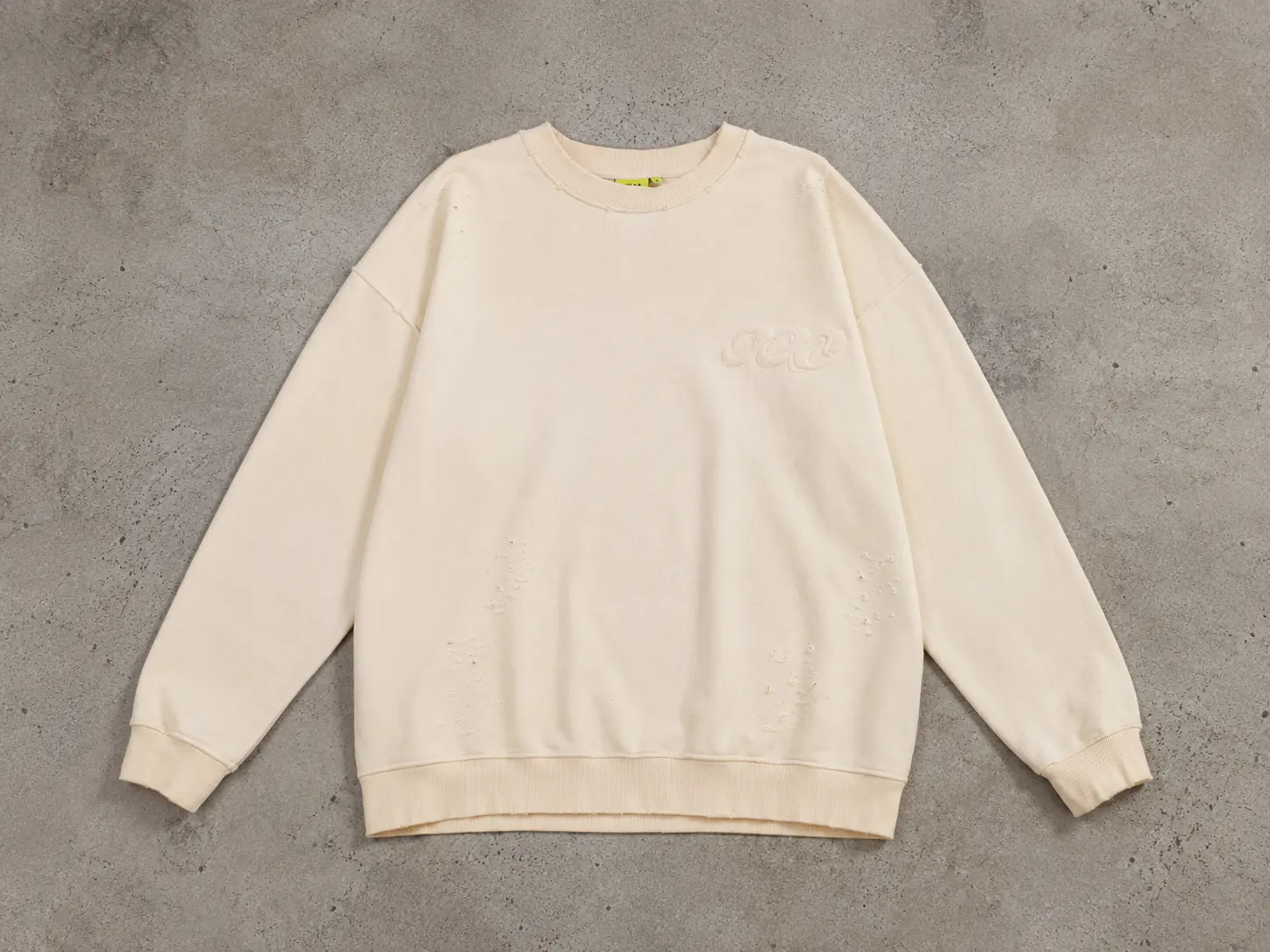
The right custom hoodie factory should reproduce a specific silhouette and finish, not simply offer a list of fleece weights. Hood balance, rib recovery, pocket construction, zipper quality, and finished dimensions all affect the product. For brands comparing manufacturers, the most useful questions reveal how a factory controls these details from development sample to bulk.
Begin with the hoodie structure
Pullover and zip-up hoodies require different pattern and trim decisions. Define hood shape, crossover or opening, neckline, cuff rib, waistband, pocket form and desired body volume. For oversized styles, shoulder width and sleeve proportions matter as much as chest width. Provide close-up reference images for construction choices.
Define pullover or zip-up construction, dropped shoulder, body width, hood volume, cuff shape, pocket geometry, and finished garment measurements.
Specify fleece or French terry correctly
Brushed fleece offers a soft interior and different warmth characteristics from unbrushed loopback French terry. GSM alone cannot communicate softness, recovery or shrinkage. Ask for fiber composition, construction and finishing. A heavier fabric may require adjustments to needle, seam allowance and rib to maintain stable sewing.
Check loopback French terry versus brushed fleece for climate, surface, warmth, shrinkage, and print or embroidery compatibility—not just GSM.
Consider decoration placement and support
Large embroidery designs can distort a soft knit if density, backing and placement are not engineered. Puff printing has its own curing and handling requirements. Confirm whether pockets, seams or zippers interfere with artwork. Approve an actual strike-off on the selected fabric, not a design rendered on a digital mockup.
Place artwork relative to the hood, seams, kangaroo pocket, and zipper. Large embroidery may require backing or fabric stabilization.
Check hood, rib and pocket quality
Uneven hood symmetry, pocket alignment and loose cuffs are visible defects in finished hoodies. Evaluate how the neckline sits when worn and whether the hood pulls backward. Test zipper operation and zipper tape waviness for zip-up styles. For heavy garments, confirm the hem and cuffs remain balanced after washing.
Review hood symmetry, drawcord channels, zipper operation, pocket alignment, and rib tension on a wearable sample.
Control size and wash consistency
Hoodies can shrink or relax differently across panels because rib and body fabrics behave differently. Approve an after-wash size chart and a measured tolerance range. Make sure bulk production uses the confirmed fabric, wash process and trim specifications. Reorders should compare against the approved reference, not only a previous invoice.
If garment-washed, measure after finishing and record the approved shade and surface range. Bulk checks must use finished—not prewash—dimensions.
What to include in the supplier brief
Compare at least one finished sample against the actual target retail use. The same hoodie pattern in 320 GSM loopback and 420 GSM brushed fleece can feel and sit differently; the hood may become bulky, cuffs may tighten, and the zipper may wave. Specify whether fleece weight is measured before or after finishing when relevant. Include rib fiber and stretch recovery in the brief, because rib that is technically the correct color may still look poor after repeated wear. Confirm the hood lining, drawcord, eyelets, pocket shape and hem tension together, not as isolated trim choices.
Factory-side controls and approval
A hoodie supplier should be able to explain how it checks the first production pieces. Ask for the approved measurement chart and tolerance, fabric lot, hood symmetry standard, decoration method, pocket placement, zipper function and wash result. If the order combines pullover and zip-up versions, treat them as separate constructions with separate fitting approvals. For embroidery, inspect puckering around the design. For a large printed panel, test feel and cracking after the proposed care cycle. Reorders should refer to the actual finished sample and its material version.
Production decisions to document
| Decision | What the buyer should verify |
|---|---|
| Pattern | Body, sleeve, hood, pocket, size grading |
| Fabric | Knit structure, GSM, face, back, recovery |
| Trims | Rib, zipper, drawcord and label specifications |
| Finishing | Print/wash sequence and final measurement standard |
Illustrative production scenario
An oversized zip hoodie may look right in a digital mockup but pull at the center front when thick fleece meets a lightweight zipper tape. Sampling should test the actual rib, zipper, fabric, and intended wash route together. Approve the finished hood shape and zipper lay before confirming the production pattern.
Buyer checklist
- Approve fleece type, GSM and rib construction.
- Define hood volume, body fit and pocket geometry.
- Sample decoration on the actual bulk fabric.
- Check after-wash measurements for both body and rib.
Two mistakes to avoid
- Calling every heavy fleece 'premium' without testing wearability.
- Approving a zip hoodie without checking front-edge distortion.
Frequently asked questions
Is heavier always better?
No. The appropriate weight depends on drape, season and customer use.
Can I customize zippers and hardware?
Usually, but availability, minimums and sampling requirements must be confirmed.
What matters most in a sample?
Fit, fabric, hood structure, decoration and post-wash stability.
Discuss your project with MuseArk Studio
Share the hoodie silhouette, fabric direction, trim details, decoration, and order breakdown. We can flag sample decisions that affect finished bulk consistency.
Request a Custom Apparel Production ReviewRelated MuseArk resources
- Custom hoodies and fleece
- Factory and sample evidence
- How our development process works