
A meaningful custom clothing manufacturing cost estimate starts with a garment specification, not a single photo. Fabric yield, sewing operations, decoration, washing, order size, and packaging all change unit economics. A brand comparing a 50-piece capsule with a 500-piece restock also needs to separate manufacturing price from landed cost. Use this framework to ask for transparent estimates and avoid comparing quotations that cover different things.
The major cost drivers
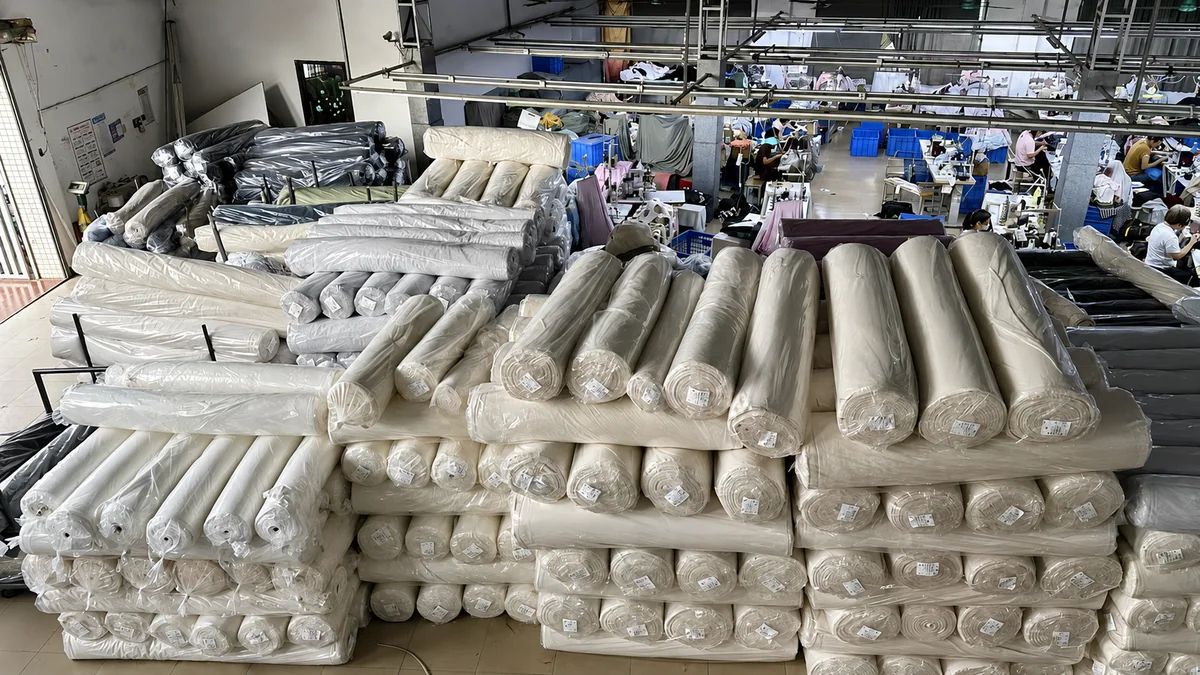
Manufacturing cost includes fabric consumption and waste, trims, pattern and grading work, cutting, sewing labor, decoration, finishing, packaging and factory overhead. A heavy oversized hoodie uses a different fabric yield from a fitted T-shirt, even if both use cotton. Zippers, lined pockets, washing and multiple artwork placements add operations. Ask suppliers which design choices materially change price.
Request material consumption and composition, not only GSM. Oversized blocks, wide hems, and directional prints can change fabric yield and cutting waste.
Why quantity changes the unit cost
Pattern preparation, color setup, print screens and production-line changeovers are partly fixed expenses. In a 50-piece run they contribute more per piece than in a 500-piece run. That does not mean a larger order is always more economical for the brand: excess stock can outweigh unit savings. Request comparable quotations at quantities you could realistically sell.
Fixed work includes patterns, grading, artwork screens, process tests, and line setup. Dividing those costs over more units can help, but unsold inventory remains a risk.
Fabric and artwork are separate decisions
Two garments with the same GSM can have different yarn quality, hand feel, shrinkage and prices. Screen printing may have economical unit costs at volume but setup costs for each design color. Embroidery price depends on stitch count and area. Garment washing introduces processing cost and dimensional risk. Specify construction first, then request a clear cost comparison for material or decoration alternatives.
Compare alternatives one variable at a time: available fabric vs custom mill color, one print placement vs two, ordinary dye vs post-sew washing. Record the effect on appearance.
Know exactly what the quotation covers
Clarify EXW, FOB or another Incoterm; currency; packaging; size mix; testing; sample fees; freight and import duties. An EXW unit price is not the landed price in your market. For international orders, use a freight quote based on estimated carton dimensions and gross weight. Import duties must be assessed for the actual product classification and destination.
Ask whether the offer includes trims, labels, inspection, export cartons, sample credit, and the chosen Incoterm. Confirm how size and color mixes affect the price.
Build a realistic margin model
Start with the retail price your market will support and subtract taxes, sales fees, marketing, fulfillment, expected returns and other operating costs. The remainder is not automatically the factory budget because a brand needs contribution margin. Run conservative scenarios at different order quantities and exchange rates. A good factory conversation is about design-to-cost choices rather than chasing an unverified rock-bottom number.
Build margin from realistic selling costs, duties, fulfillment, returns, and marketing. Do not treat a quoted EXW price as your entire per-garment cost.
What to include in the supplier brief
When building a costing brief, separate recurring material and labor costs from development and setup costs. For a printed tee, the cost drivers may be jersey consumption, rib, cutting, sewing, print screens, ink, curing, labels, packaging and QC. For a lined shell, the operation count also includes zippers, lining, pocket bags and technical seams. Ask for a quotation at quantities that are genuinely relevant to your first order and forecast. A factory may offer different prices for 50, 100 and 250 units, but these are not interchangeable without confirming fabric availability and color splits.
Factory-side controls and approval
The buyer's landed-cost worksheet should start with the quoted Incoterm and clearly add only costs not already included. Freight, insurance, destination duties, import taxes, clearance and final-mile transport vary by country and shipment. Avoid treating a freight estimate as a duty-paid guarantee. Then add the brand's expected sales fees, advertising, fulfillment, return allowance and necessary margin. If the numbers do not work, evaluate changes such as reducing print placements, choosing an available fabric or simplifying trims. Resample any alternative that changes fit, hand feel or customer-visible quality. Never publish an invented universal per-piece price as an actual factory offer.
Production decisions to document
| Decision | What the buyer should verify |
|---|---|
| Fabric and cutting | Composition, width, consumption, waste allowance |
| Make and decoration | Sewing operations, print/embroidery setup and size |
| Finishing and packing | Wash route, testing, labels, folding and cartons |
| Commercial basis | Currency, MOQ, Incoterm, lead time and freight exclusion |
Illustrative production scenario
Suppose an oversized tee is available in stock black jersey, but a brand requests a custom muted tone and a heavy distressed finish. The base sewing price may be similar, while dye-lot minimums, shrinkage tests, and wash yield change the result. Ask for separate indicative quotations for the stock-color and custom-finish routes, then confirm the chosen route after fabric and sample approval.
Buyer checklist
- Provide a detailed tech pack or annotated reference photos.
- Ask for quotations at two or three feasible quantities.
- Break out optional decoration and packaging charges.
- Calculate landed cost and margin before confirming the order.
Two mistakes to avoid
- Comparing EXW and DDP prices as if they include the same services.
- Publishing a universal unit-cost number for designs with different operations.
Frequently asked questions
Can I get a firm quote from one photo?
A photo supports an initial estimate; fabric, measurements, artwork and quantity are needed for a firmer price.
Is EXW the total cost?
No. Origin handling, freight, customs and destination costs may still apply.
Does heavier fabric always cost more?
Not always; composition, yarn, finishing and sourcing conditions also matter.
Discuss your project with MuseArk Studio
Send the product image or tech pack, intended quantity, colors, GSM, decoration, and destination. We can separate a preliminary cost range from a confirmed quotation after sample and material review.
Request a Custom Apparel Production ReviewRelated MuseArk resources
- How our development process works
- Production capabilities
- Factory and sample evidence