
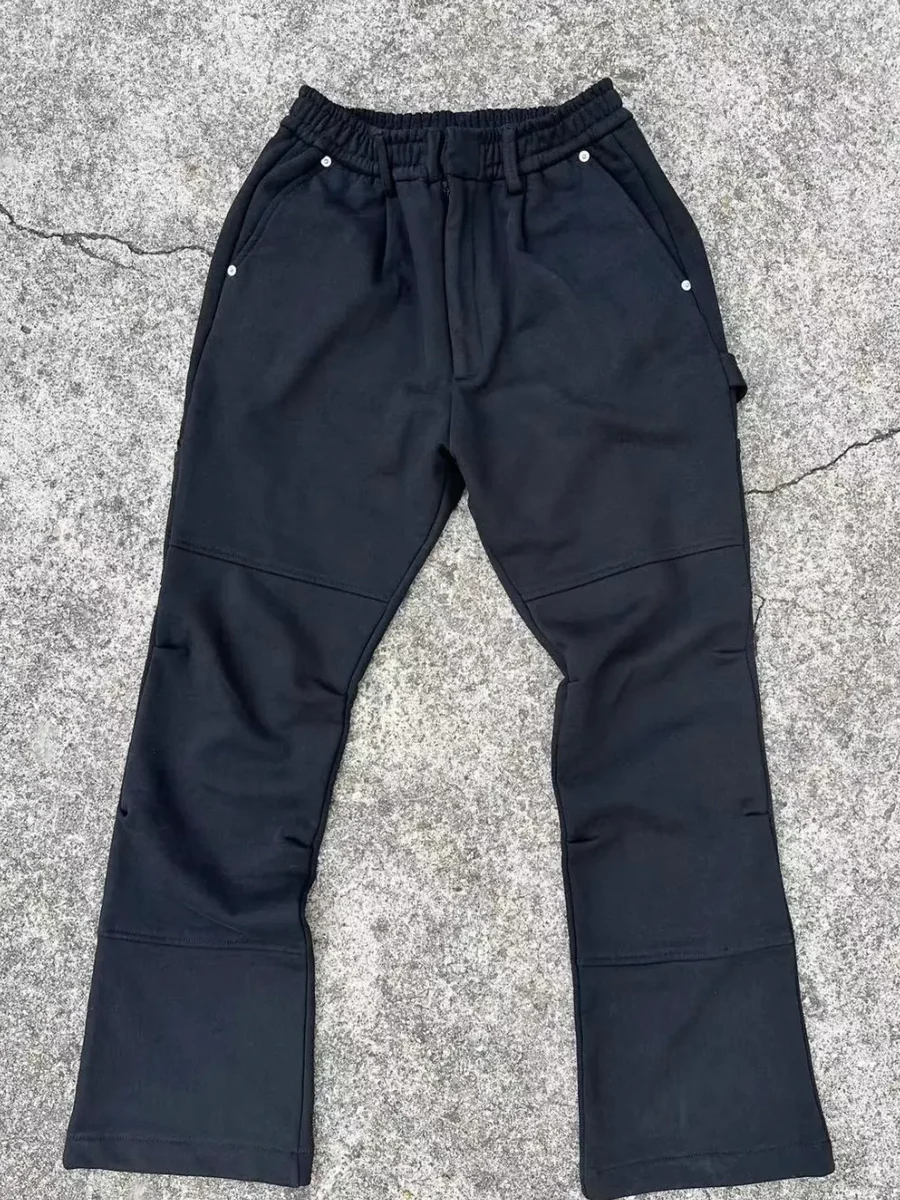
Baggy jeans should have deliberate leg volume and balance, not simply an oversized waist. Rise, hip, thigh, knee, hem, inseam, and the stiffness of the denim determine how the silhouette sits and moves. Washing can change the final measurements and seam behavior, so a supplier should develop the fit and finish as one system.
Define baggy fit beyond waist size
Baggy jeans require deliberate shaping through the hip, rise, thigh, knee and hem. Some styles have wide straight legs; others taper below the knee. Build a point-of-measure chart and show preferred proportions on a body. An oversized leg attached to an inappropriate rise often looks awkward rather than intentional.
Define baggy against a physical reference: low-rise relaxed, high-rise barrel, straight-wide, and skate-inspired shapes require different patterns.
Select denim weight and stiffness
Rigid cotton denim can hold a sculptural silhouette while stretch fabrics may follow the body more closely. Denim weight, finishing and weave influence drape and comfort. A heavy fabric may create bulk around the waist and pockets. Compare swatches and physical prototypes, then assess how the garment sits after washing.
Compare rigid and stretch denim for the intended leg structure. Weight in ounces alone does not determine how the fabric hangs.
Plan pockets, hardware and construction
Back-pocket size and position change the perceived proportions of wide jeans. Reinforce stress points with appropriate bartacks and examine zipper or button-fly operation. Decide stitch color, rivets, labels and waistband construction before sampling. These details should be documented because seemingly minor substitutions alter the finished product.
Confirm coin pocket, back pocket, fly, yoke, belt loop, and reinforcement details before sampling.
Approve wash and distress carefully
The chosen wash can soften the fabric, change shade and alter dimensions. Define exact target areas for whiskers, fading and abrasion if they are part of the concept. Use a physical wash standard and acceptable shade range. Check that distressed areas do not compromise the required strength.
Approve wash color, abrasion positions, and any distressing from a finished sample. Include acceptable variation in the wash specification.
Control finished fit across sizes
Measure after all washing and finishing. Grading should preserve the intended roomy look without creating excessive waist or rise distortion. For a broader size range, test multiple sizes and compare on-body fit. Preserve the pattern, grading, material and wash records for consistent reorders.
Measure postwash waist, rise, hip, thigh, knee, hem and inseam on representative sizes, then check mobility and leg twist.
What to include in the supplier brief
Build the fit specification around the desired leg line rather than a generic baggy label. Measure waist, seat, front and back rise, thigh near the crotch, knee, hem, inseam and outseam. Compare the shape with a reference worn from the front, back and side. Rigid denim may support wider legs, while stretch or softer fabric can collapse differently. Pocket position and yoke shape influence how the rear looks. A sample should be evaluated sitting and walking, not solely on a flat table or in a static photograph.
Factory-side controls and approval
Washing is part of the construction route, not a final decorative afterthought. Confirm the approved shade range, contrast, whiskering or abrasion positions, and any distressing depth. Measure the garment after washing and inspect seam torque, hem movement, pocket balance and hardware function. If the brand wants several colors, check whether each uses identical base fabric and whether the washing route changes final sizing. Keep the finished pre-production reference and grade chart for bulk; unwashed cut panels cannot prove that baggy proportions will remain correct after finishing.
Production decisions to document
| Decision | What the buyer should verify |
|---|---|
| Leg silhouette | Rise, thigh, knee, hem and inseam |
| Denim | Weight, rigidity, stretch, texture and lot |
| Details | Fly, yoke, pockets, bartacks and hardware |
| Wash | Shade, abrasion, shrinkage and final size |
Illustrative production scenario
Two baggy jeans may share a 12 oz fabric but look very different because one has a higher rise and narrower knee. A brand should mark the desired leg profile against a reference garment, then grade it across sizes. After washing, remeasure inseam and rise to confirm that the intended proportion remains.
Buyer checklist
- Measure rise, thigh, knee, hem and inseam.
- Compare rigid and stretch denim in actual samples.
- Approve pocket positions and hardware details.
- Confirm post-wash fit and distressing tolerance.
Two mistakes to avoid
- Making a regular jean baggy solely by increasing waist size.
- Approving distress placement without a finished wash sample.
Frequently asked questions
What denim weight suits baggy jeans?
Choose based on desired structure and comfort, not a universal ounces number.
Can I mix sizes in one order?
Often yes, subject to factory cutting and minimum requirements.
Why does baggy fit change after washing?
Denim relaxation and shrinkage can alter key dimensions and drape.
Discuss your project with MuseArk Studio
Send your baggy jean fit reference, denim direction, wash target, size range, and quantity. We can identify pattern and wash approvals for sampling.
Request a Custom Apparel Production ReviewRelated MuseArk resources
- Custom pants and denim
- Factory and sample evidence
- How our development process works