
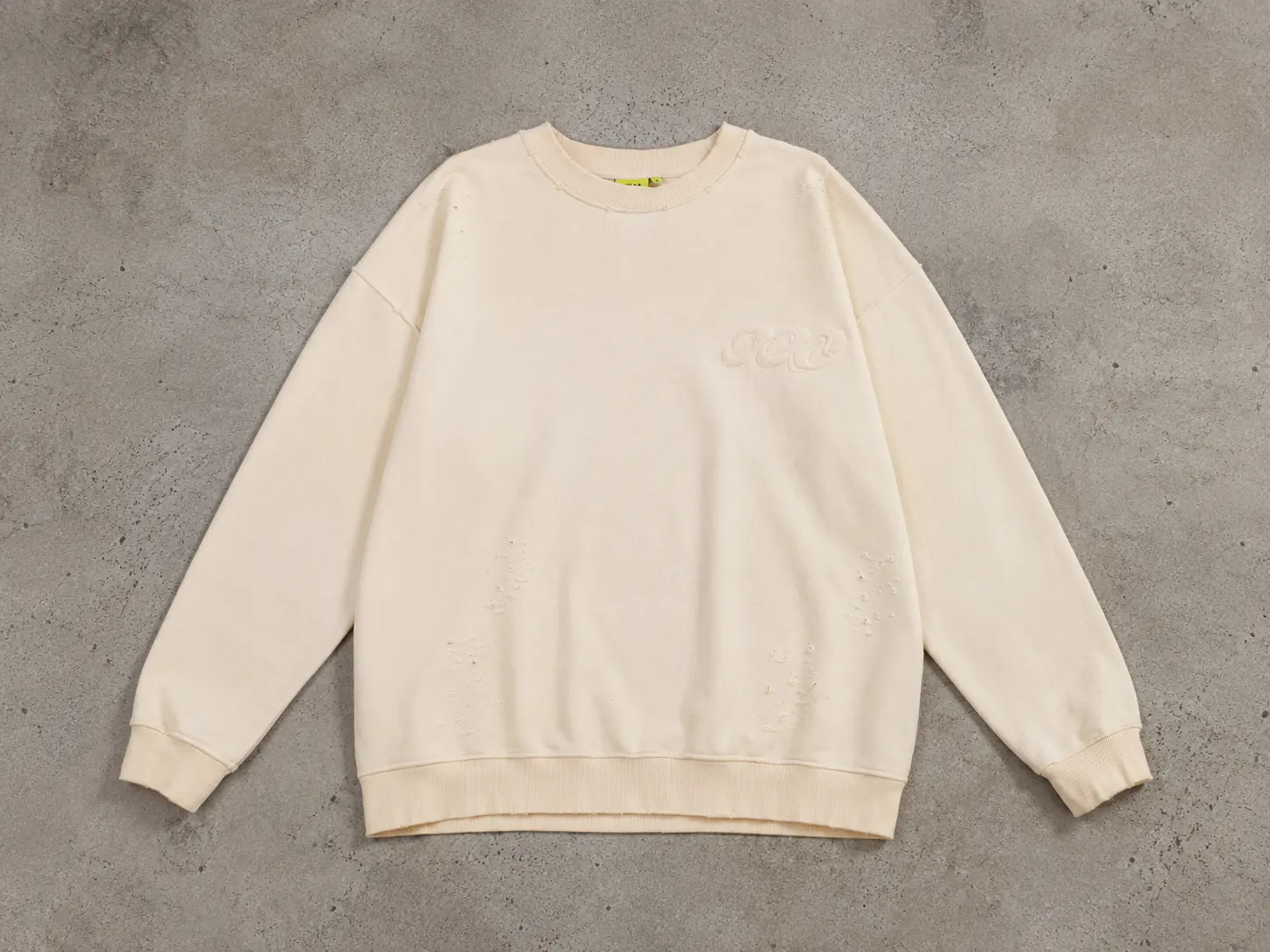
Most hoodie QC problems become visible at predictable locations: hood seam balance, rib attachment, kangaroo pocket corners, side seams, zipper edges, and decoration. Thickness alone does not protect a garment from poor construction. A useful inspection plan checks each vulnerable operation while it is still possible to correct it, then validates the finished sample after any wash or finishing process.
Prevent collar and hood imbalance
An asymmetrical hood, twisted neckline or uneven drawcord opening can spoil the entire silhouette. Define center points and key dimensions in the pattern. During sampling, check how the hood sits both up and down. The production line should receive clear construction instructions and inspection references for the neckline area.
Compare hood side panels and center seam symmetry with the garment laid flat and worn. Unequal tension can cause twisting around the neckline.
Control rib recovery and tension
Cuffs and waistband must suit body fabric weight and stretch. Excessively tight rib can create a balloon effect while weak recovery causes loose cuffs. Ask for rib composition and finished dimensions, then test the garment after washing. Compare the body-to-rib seam for puckering and unintended distortion.
Match rib recovery to the fleece body and cuff circumference. Rib that stretches poorly can flare, pull the sleeve, or lose shape.
Avoid pocket and seam defects
A kangaroo pocket should be level, centered and symmetrical. Poor reinforcement or inconsistent seam allowance can create durability issues. Check stitch density, seam quality, hem straightness and whether side seams twist after washing. Heavy fabric requires appropriate feeding and needle settings to maintain a clean seam.
Check pocket corners, bartacks, seam allowances, and stitch tension before the garment reaches finishing.
Test decoration before bulk
Large embroidered logos can produce puckering; puff printing may crack or deform if not executed correctly. The selected hoodie fabric, stabilizer and curing method affect results. Approve physical sew-outs or strike-offs and perform care tests appropriate to the design before authorizing the full run.
Sample large embroidery and raised decoration on the actual fabric. Backing, tension, and panel stability affect puckering and hand feel.
Use layered inspections
Inspect the first production units, then samples during sewing and after finishing. Waiting until packing to discover a systematic pocket-placement or collar issue is expensive. Retain defect examples and written acceptance criteria. Discuss how rework will be measured and verified, not just promised verbally.
Inspect fabric rolls, first-line garments, and finished washed pieces separately. Later inspections cannot always recover from an incorrect early operation.
What to include in the supplier brief
Build the hoodie inspection around vulnerable operations. During cutting, check fabric direction and panel symmetry. On the sewing line, inspect neckline stretch, hood seam balance, rib attachment, kangaroo pocket corners, side-seam torque and zipper or drawcord alignment. Before finishing, check thread tension and trimming. After wash, compare the garment with approved finished measurements and inspect print or embroidery performance. The strongest QC plan makes defects visible before the next operation conceals or compounds them. A final random inspection remains useful but cannot replace early process controls.
Factory-side controls and approval
Photograph and classify defects consistently. A pocket misalignment, twisted seam, print cracking or severe rib distortion should have an agreed acceptance rule; a tiny non-visible variation may warrant different treatment. Sample the actual fleece and rib together, because a reliable pattern on one material can behave poorly on another. If a problem appears repeatedly, review machine settings, fabric relaxation, stitching sequence and wash route rather than repairing individual garments indefinitely. The buyer and manufacturer should record changes to the operation standard before re-running production.
Production decisions to document
| Decision | What the buyer should verify |
|---|---|
| Hood and neckline | Symmetry, seam tension and opening balance |
| Rib and hems | Recovery, attachment tension and finished width |
| Pocket and seams | Corner strength, alignment, twisting and stitch quality |
| Decoration and wash | Puckering, placement, cracking and final dimensions |
Illustrative production scenario
A heavyweight pullover looks clean before washing, then the side seam twists and the pocket edges distort. The likely investigation should cover knit spirality, cutting direction, seam tension, and wash handling. Measuring only the chest width will miss the defects. The corrective action needs a confirmed cause and revised operation standard.
Buyer checklist
- Check hood symmetry and neckline balance on-body.
- Test rib fit, stretch recovery and washing.
- Measure pocket placement and inspect seam reinforcements.
- Approve decoration trials and inspect early bulk output.
Two mistakes to avoid
- Checking only overall fit instead of weak construction points.
- Using a different fabric for decoration tests.
Frequently asked questions
Why do hoodie side seams twist?
Fabric structure, cutting and finishing can contribute; investigate the actual lot.
Is thicker rib always stronger?
No. Recovery, composition and compatibility with body fabric matter.
When should defects be checked?
At sample approval, early production, in-line and final inspection.
Discuss your project with MuseArk Studio
Share hoodie construction photos, expected fabric, and the defects you want to prevent. We can discuss sampling checkpoints for your design.
Request a Custom Apparel Production ReviewRelated MuseArk resources
- Custom hoodies and fleece
- Factory and sample evidence
- How our development process works