
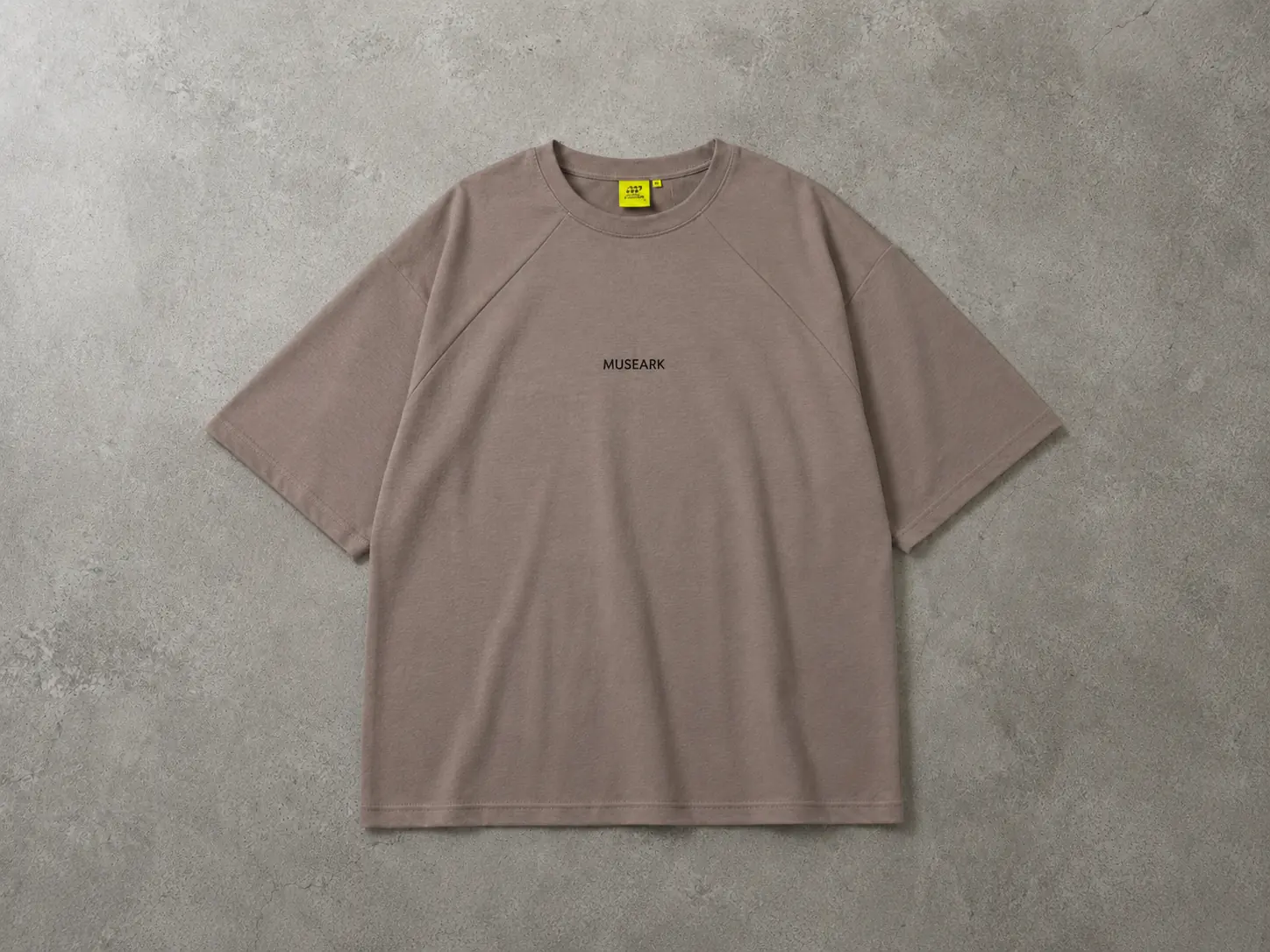
Choosing between 180, 220, and 260 GSM jersey is a design decision, not a numerical ranking of quality. GSM measures fabric weight per square meter; it does not reveal yarn quality, knit density, finishing, or shrinkage on its own. A loose summer tee, structured oversized tee, and heavy fashion blank may each benefit from a different material. Compare them in the intended fit and after laundering.
What GSM actually measures
GSM means grams per square meter of fabric. It describes areal weight, not yarn quality, durability or luxury in isolation. Two fabrics at 220 GSM can differ in fiber, yarn count, knit tightness and finishing. Compare swatches under similar conditions, then evaluate the material in a finished sample.
At approximately 180 GSM, evaluate breathability, opacity, drape, and print show-through. Fiber and knitting structure can matter more than the number.
When 180 GSM makes sense
Around 180 GSM may suit lightweight everyday tees or warmer climates, depending on knit structure and opacity. It can drape more freely than a heavier jersey. However, light fabrics may show the body or print-through more readily, and poor-quality fabric can distort after washing. Use an actual fit sample rather than inferring performance from a number.
At roughly 220 GSM, look for a balance of body, wearable weight, and surface stability; test collar rib and seam twisting.
Why brands consider 220 GSM
Around 220 GSM is a common direction for substantial everyday or streetwear T-shirts. It can offer a balanced sense of weight while remaining wearable in multiple seasons. The exact result depends on fabric structure and pattern proportions. Check collar support, sleeve shape and how the fabric hangs on an oversized cut.
At roughly 260 GSM, the fabric may support a boxier silhouette but can feel warmer and stiffer. Check pattern length, sleeve shape, and recovery.
How 260 GSM changes the garment
Around 260 GSM can support a more structured silhouette but may feel warmer and bulkier at the seams. Heavy jersey requires attention to needle choice, collar rib and sewing consistency. It is not automatically the best option for every brand or customer. Evaluate comfort, drape and laundering before choosing it simply for a premium marketing claim.
Compare all weights using the same garment shape where possible. Construction, yarn, wash, and finishing still affect the result.
Select weight by product intent
Start from climate, fit, retail positioning and intended wear, then sample two weights in the same pattern. Compare opacity, hand feel, wash movement, print response and cost. If a vintage wash is planned, test that finishing method on each weight. The right choice delivers the desired customer experience at a sustainable cost.
Approve artwork on the final jersey. Transfers, screen print, and DTG can feel or perform differently on thick and thin fabrics.
What to include in the supplier brief
Do not compare GSM figures without controlling other variables. Ask for fiber blend, yarn and knit structure, fabric width, finishing and actual measurements after relaxation or washing. An 180 GSM single jersey can be opaque and stable if constructed well, while a poorly made 260 GSM fabric can still twist or lose shape. For a useful evaluation, produce swatches and ideally a simple garment from the competing fabrics with the same base pattern. Judge comfort, silhouette, opacity, wrinkle behavior and print hand feel in the destination climate rather than announcing a universal winner.
Factory-side controls and approval
Set the garment's intended outcome before ordering samples. A warm-weather merchandising blank may emphasize breathability and drape; a premium-looking boxy tee may prioritize structure and a firm neck; a soft vintage style may need a fabric that responds well to garment washing. Test the collar, seam torque, shrinkage and decoration route for the selected GSM. When quoting, tell the factory whether the number means target greige weight or finished fabric weight. Record tolerances and fabric source so a later reorder does not silently shift to a different hand feel.
Production decisions to document
| Decision | What the buyer should verify |
|---|---|
| 180 GSM | Lighter direction; check opacity and cling |
| 220 GSM | Mid-heavy direction; balance drape and structure |
| 260 GSM | Structured direction; evaluate warmth and stiffness |
| All three | Verify composition, knit, finish and shrinkage |
Illustrative production scenario
A brand considering a 260 GSM tee for a summer launch may prefer 220 GSM after seeing the same oversized pattern worn and washed. Conversely, a structured boxy look might justify 260 GSM in a cooler market. Swatch labels alone cannot reveal that tradeoff: fit samples and actual care tests are more useful than an online 'best GSM' list.
Buyer checklist
- Request swatches at comparable compositions and finishes.
- Sample preferred weights in the same pattern.
- Check opacity, drape and post-wash dimensions.
- Choose for use case, not GSM alone.
Two mistakes to avoid
- Equating high GSM with superior yarn or durability.
- Changing fabric weight without checking the finished fit.
Frequently asked questions
Is 260 GSM always better than 180 GSM?
No. They serve different fit, climate and style needs.
Does GSM determine quality?
No. Yarn, knitting, finishing and quality control also matter.
Can the same print work on each weight?
Potentially, but validate placement and curing on the selected fabric.
Discuss your project with MuseArk Studio
Tell us the intended climate, fit, price positioning, print method, and order quantity. MuseArk can compare practical jersey options for a sample.
Request a Custom Apparel Production ReviewRelated MuseArk resources
- Custom T-shirts and jerseys
- Factory and sample evidence
- How our development process works