
What Makes a Hoodie Look Premium? Quick Answer
A premium hoodie is a controlled result, not a fabric label. It should feel substantial without becoming stiff, sit with a deliberate proportion on body, and stay stable after washing. For custom hoodie manufacturing, turn each quality cue into a sample approval point before production starts.
Quick checklist
- Fabric: composition, knit structure, GSM, hand feel and shrinkage
- Fit: shoulder, body width, length and sleeve volume
- Hood and rib: hood shape, cuff recovery and hem tension
- Construction: neckline, pocket corners, seam bulk and stitch consistency
- Finish: wash, measurement stability, labels and final QC
Fabric Weight, Density and Hand Feel
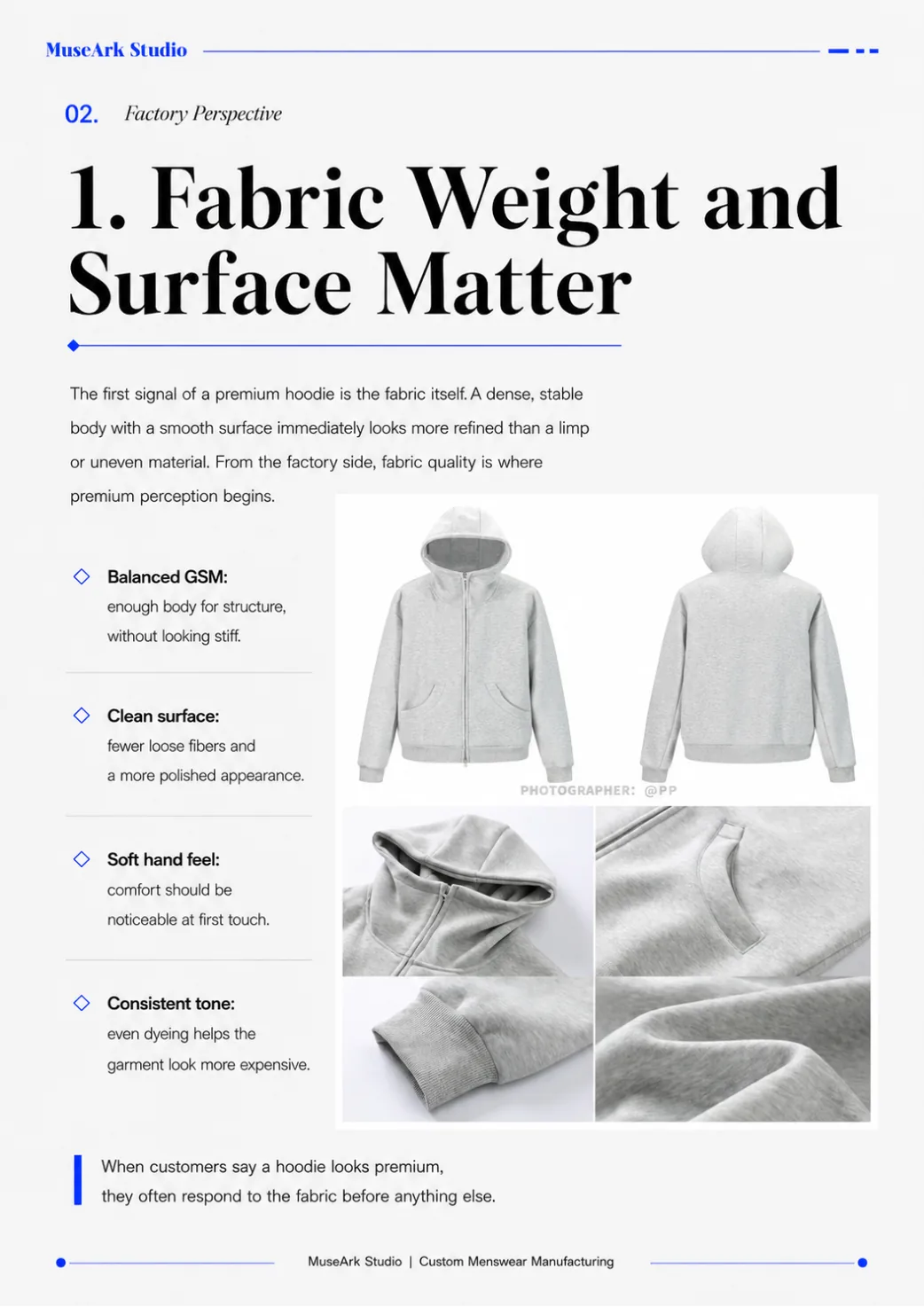
GSM is important, but it does not tell the whole quality story. Fabric composition, fleece or French terry structure, knit density and surface finish determine whether a hoodie feels substantial and holds its line. A heavier fabric with loose structure can still look soft or unstable, while a well-built midweight fabric can feel more refined.
Define the composition, knit, target GSM and hand feel together. To understand how weight changes the result, compare a 400 vs 500 GSM hoodie against the intended fit and season. On the sample, check the fabric before and after wash for shrinkage, pilling, surface consistency, color change and whether it drapes as intended.
Fit, Hood Shape and Rib Recovery
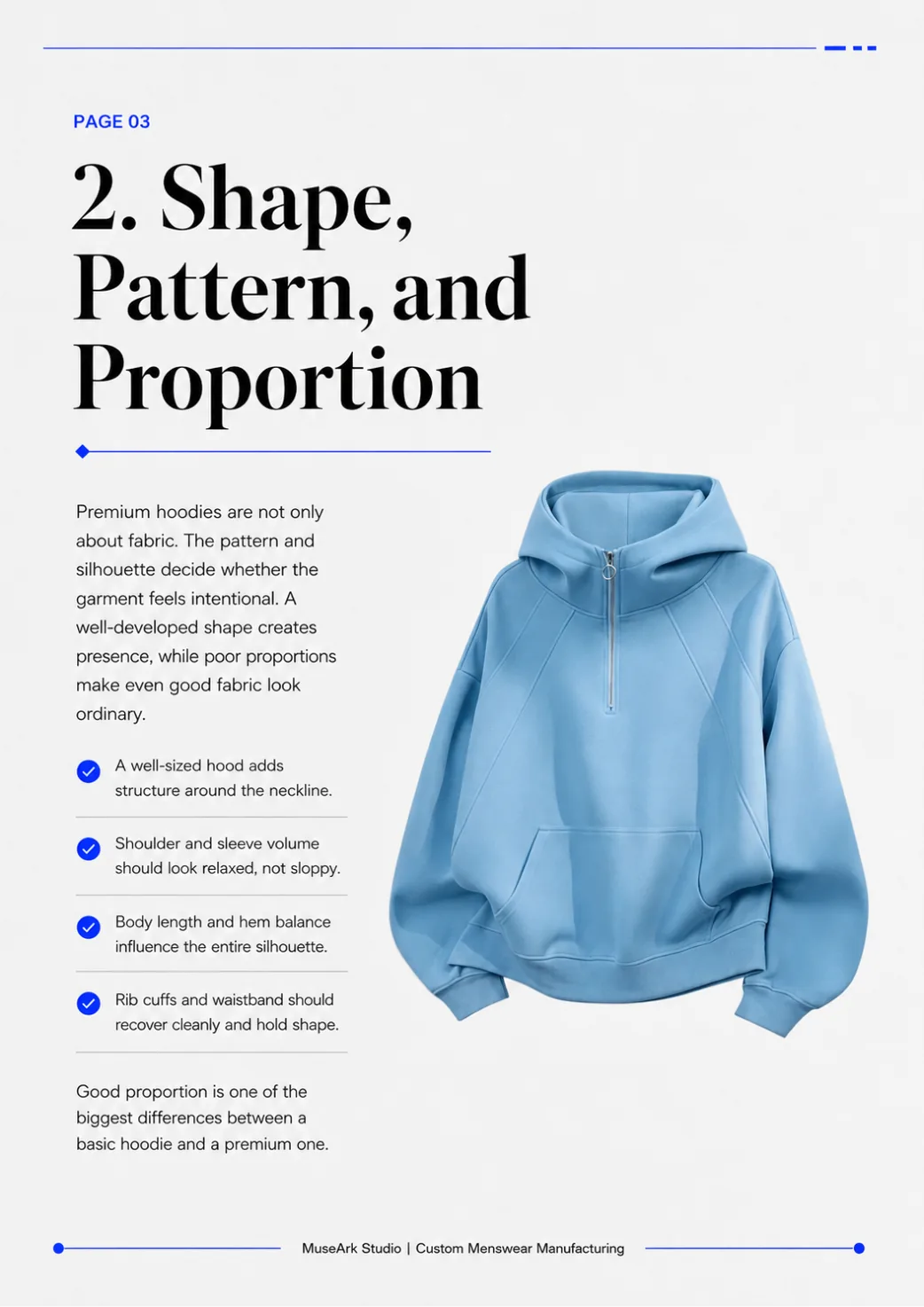
A premium hoodie has a balanced silhouette from shoulder to hem. Oversized can look premium when the shoulder drop, body width, body length and sleeve volume are designed as one proportion; it looks unfinished when the garment simply grows in every direction. Confirm the fit on body rather than relying only on flat measurements.
Specify hood volume and opening, rib height, cuff opening and hem tension with the pattern. On the sample, wear the hood up and down, stretch the cuffs and hem, then repeat after washing. The hood should hold a clean profile, while ribs should recover without becoming loose, wavy or restrictive.
Construction Details That Signal Quality
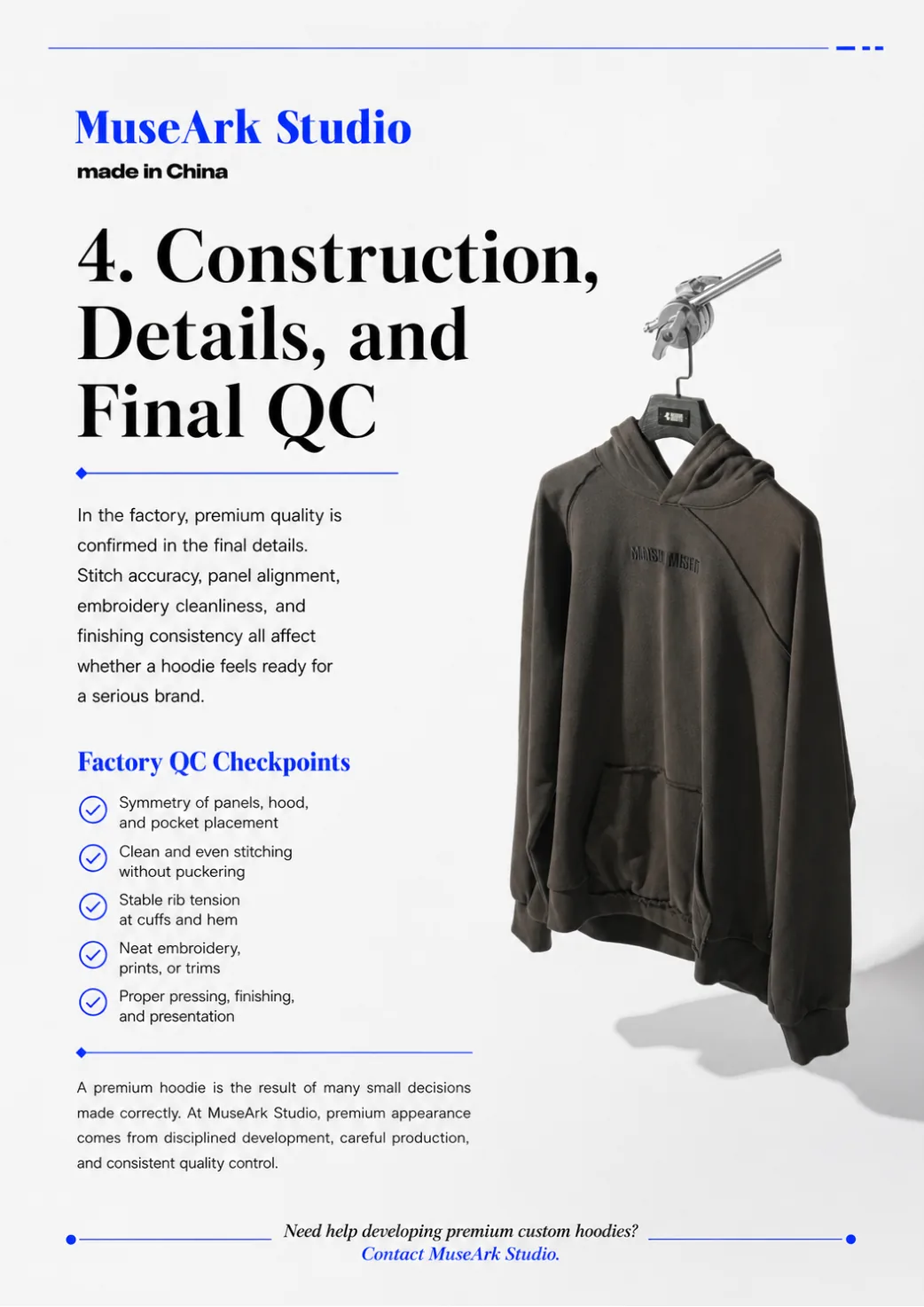
Near-view details make the garment read as premium. Review neckline joins, topstitching, pocket corners, sleeve seams and the bulk where fleece or terry layers meet. Clean and consistent stitches, a flat neckline and controlled seam thickness keep a heavy hoodie comfortable and visually precise.
On the sample, inspect the garment inside and out under normal light. Check that the pocket is level, corners stay square, seam allowances do not create hard ridges, and stitch density is consistent through thick intersections. Confirm drawcords, labels and other details through custom trims and finishing options before the pre-production sample is approved.
Wash Finishing and After-Wash Stability
Wash finishing changes both hand feel and proportion. It can soften the surface, reduce stiffness and create a worn appearance, but it can also introduce shrinkage, torque, color variation or inconsistent feel when it is not controlled. Choose the wash method for the product direction, not as an afterthought.
Review garment dye, pigment wash and enzyme wash options against the fabric and color target. Wash the full sample using the intended process, then compare chest, length, sleeve and hood measurements, side-seam twisting, color and surface feel with the pre-wash target. Approve only the complete washed result.
Premium Hoodie QC Checklist
Use the same acceptance table for the development sample, pre-production sample and final inspection. This gives the factory a clear approval standard and gives the buyer a practical way to verify that bulk production matches the intended product.
| Area | What to define | What to test on the sample | Why it matters |
|---|---|---|---|
| Fabric | Composition, knit, GSM, hand feel | Shrinkage, pilling, surface consistency | Determines substance and drape |
| Fit | Shoulder, chest, length, sleeve | On-body proportion and post-wash measurements | Controls the silhouette |
| Hood / rib | Hood volume, rib height, recovery | Hood-up shape, stretch and wash recovery | Prevents collapse and distortion |
| Construction | Neckline, pocket, seams | Seam bulk, flatness and stitch consistency | Determines close-up quality |
| Finish | Wash, pressing, labels, packaging | Garment hand feel, twisting and color variation | Ensures bulk matches the sample |
Record measurement tolerances, fabric lot approval, color standard and accepted wash result with the signed sample. Inspect front, back and inside views, then confirm that no loose threads, skewed pockets, seam puckering, label errors or finishing marks remain before shipment.
How to Brief a Factory for a Premium Hoodie
Give the factory a reference sample or clear visual direction, target fabric and hand feel, fit measurements, color, wash, trim details, size range, quantity and target price. A tech pack or reference photos establishes the target, but the approval sample turns it into production instructions.
Set the development sequence early: fabric and pattern review, fit sample, wash test, revised pre-production sample, then bulk. Use a hoodie sampling and production timeline to plan when each decision must be locked. The brief should identify what is non-negotiable, what can vary within tolerance, and who signs off each sample stage.
FAQ
What GSM makes a hoodie feel premium?
A premium hoodie does not require one fixed GSM. Choose a weight that works with the fleece or terry structure, intended fit, season and desired hand feel, then approve shrinkage, surface consistency and drape on the washed sample.
What hoodie fit looks premium?
A premium hoodie fit has a deliberate balance between shoulder, body width, length and sleeve volume. It can be relaxed or oversized, but the hood, cuffs and hem must support the silhouette instead of letting it collapse.
How do you prevent a hoodie from shrinking or twisting after washing?
Set the wash method and measurement tolerance before sampling, then wash the complete sample and compare shrinkage, twisting, color and measurements with the approved target. Bulk production should follow the same approved fabric and wash process.
Custom hoodie development
Need help developing a premium hoodie?
Send your reference sample, fabric direction, fit target, quantity, and target price for a production review.
Request a Premium Hoodie Review