
Private label streetwear production follows a controlled sequence: specification confirmation, sample approval, bulk material and pre-production confirmation, in-process quality control, then packing and shipment. At each stage, the brand approves a defined set of decisions, while the factory confirms how those decisions will be carried into the next stage. That shared record is what helps a private label streetwear manufacturer keep bulk aligned with the approved sample.
01 / Before Sampling: Tech Pack, References and Product Direction
Start with the category, target fit, fabric direction, color range, logo method, size range, quantity, and intended retail position. A heavyweight hoodie, washed T-shirt, zip jacket, or fleece set each needs a different production route. The brand should provide a tech pack where available, reference photos, artwork files, fit direction, and the details that cannot change. A factory needs to confirm which specifications are measurable, which materials or processes need testing, and which points still need a sample decision.
Reference photos are a useful starting point, but they are not a complete production instruction. Use our guide to tech packs versus reference photos to turn visual direction into a brief that can be sampled and reviewed. Without clear dimensions, material direction, and decoration notes, the sample can look close to the idea while leaving bulk-critical choices open.
02 / Build a Sample That Can Be Approved
The sample is a decision tool, not only a product preview. The brand should review the garment as a complete product: its fabric, dimensions, silhouette, decoration placement, trims, labels, and wash result. The factory should record the approved materials, construction, artwork application, and measurement points so that a later pre-production review has a specific reference. Any changes to fit, construction, or finish should be decided here, before bulk fabric is cut.
Sample Approval Checklist
Review the sample against the brief and document the result for each item. A conditional approval should identify exactly what must be revised before the next confirmation.
| Approval point | What the brand should review | What the factory should confirm |
|---|---|---|
| Fit | Silhouette, balance, ease, and how the garment sits on body. | The approved fit direction and the pattern changes needed to achieve it. |
| Measurements | Key points of measure across the sample size and size range. | The measurement specification, grading direction, and tolerance approach. |
| Fabric and weight | Hand feel, weight, stretch, color, and response after the intended finish. | The fabric construction and the approved material reference for bulk booking. |
| Artwork placement | Method, dimensions, color, placement, and scale on the garment. | The artwork file, placement measurements, and production method. |
| Wash | Color change, surface feel, shrinkage, twisting, and overall appearance. | The intended wash route and the measurements to check after washing. |
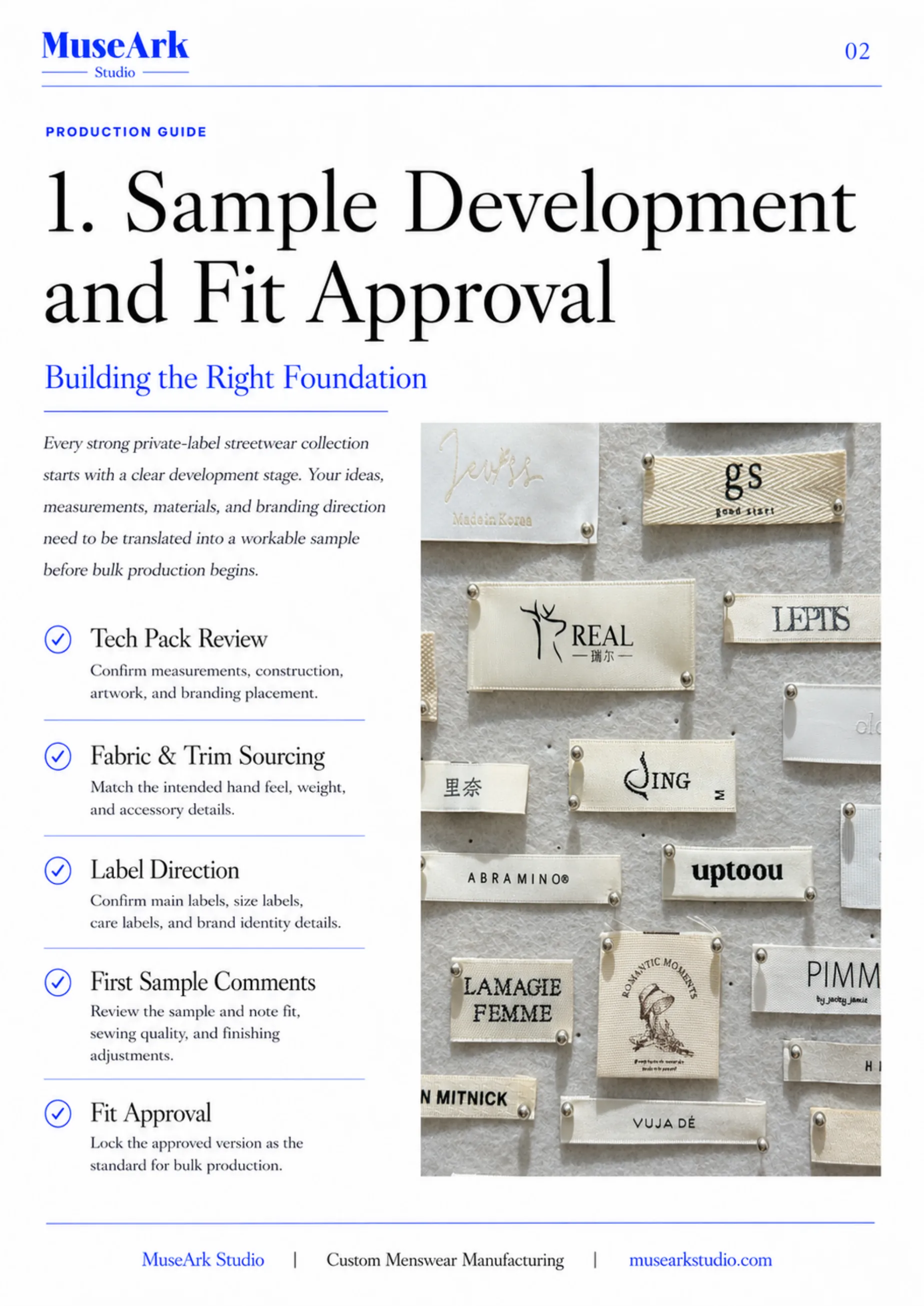
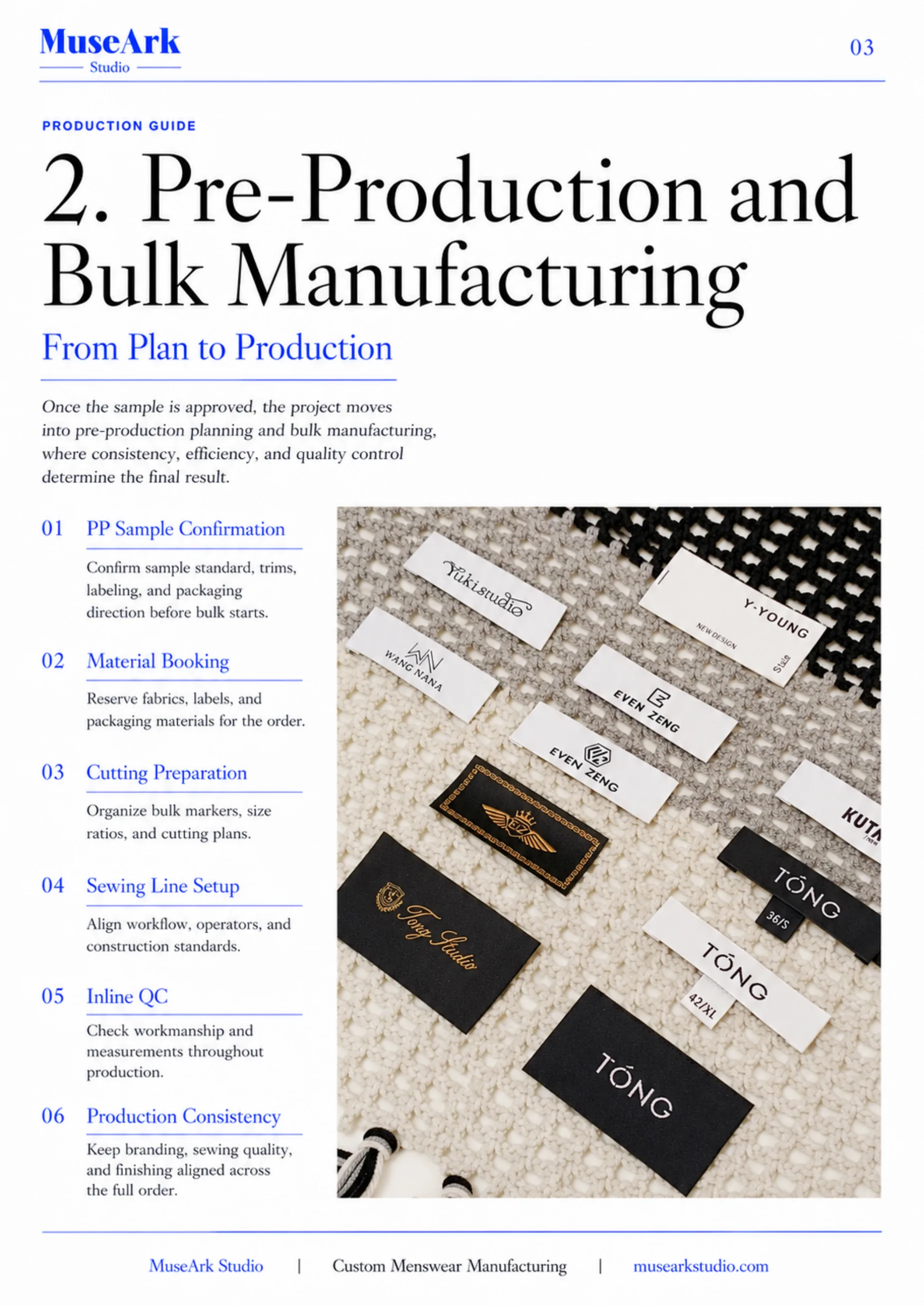
| Trims and labels | Drawcords, zips, patches, neck labels, care labels, and hangtags. | The approved trim specifications and placement instructions. |
| Packing | Folding, polybag presentation, sticker or barcode position, and carton information. | The packing instructions that will be used for final inspection and shipment. |
03 / What Must Be Locked Before Bulk Production
After sample approval, the factory aligns fabric, color, trims, grading, production quantities, artwork files, and packing requirements. Depending on the product, this stage can also include fabric inspection, shrinkage checks, color review, and a pre-production review. The brand should approve the final production-facing version of the measurements, materials, decoration, wash direction, labels, and packing instructions. The factory should confirm that the required materials and instructions match that approval before production proceeds.
For fleece and heavyweight styles, see our custom hoodie manufacturing program to consider fabric, construction, decoration, and finishing together. For brand identifiers and finishing details, review the available custom trims and finishing options. Leaving these details unresolved can produce a bulk order that is internally consistent but no longer matches the intended product.
04 / Bulk QC Checkpoints for Streetwear
Bulk production moves through cutting, sewing, decoration, washing where required, finishing, and inspection. Quality control is most useful when it is tied to checkpoints during the process, not only to a final table. The factory should compare the work in progress with the approved reference; the brand should know which visual and measurement points are being protected.
- Before and during cutting: verify the approved fabric, color, panel direction, and marker or size information.
- During sewing: check key measurements, seam quality, symmetry, and construction at stress points.
- During decoration and washing: check artwork placement, print or embroidery result, color consistency, shrinkage, surface effect, and distortion.
- At finishing: inspect labels, loose threads, stains, pressing, measurements, and the final visual standard before packing.
Decoration choices should be decided with the garment and intended use in mind. Our screen printing versus embroidery guide explains the tradeoffs to evaluate before artwork is released for bulk. For washed streetwear, compare garment dye, pigment wash, and enzyme wash before locking the finish, because the process can affect color, hand feel, and measurements.
05 / Labels, Hangtags, Polybags and Carton Packing
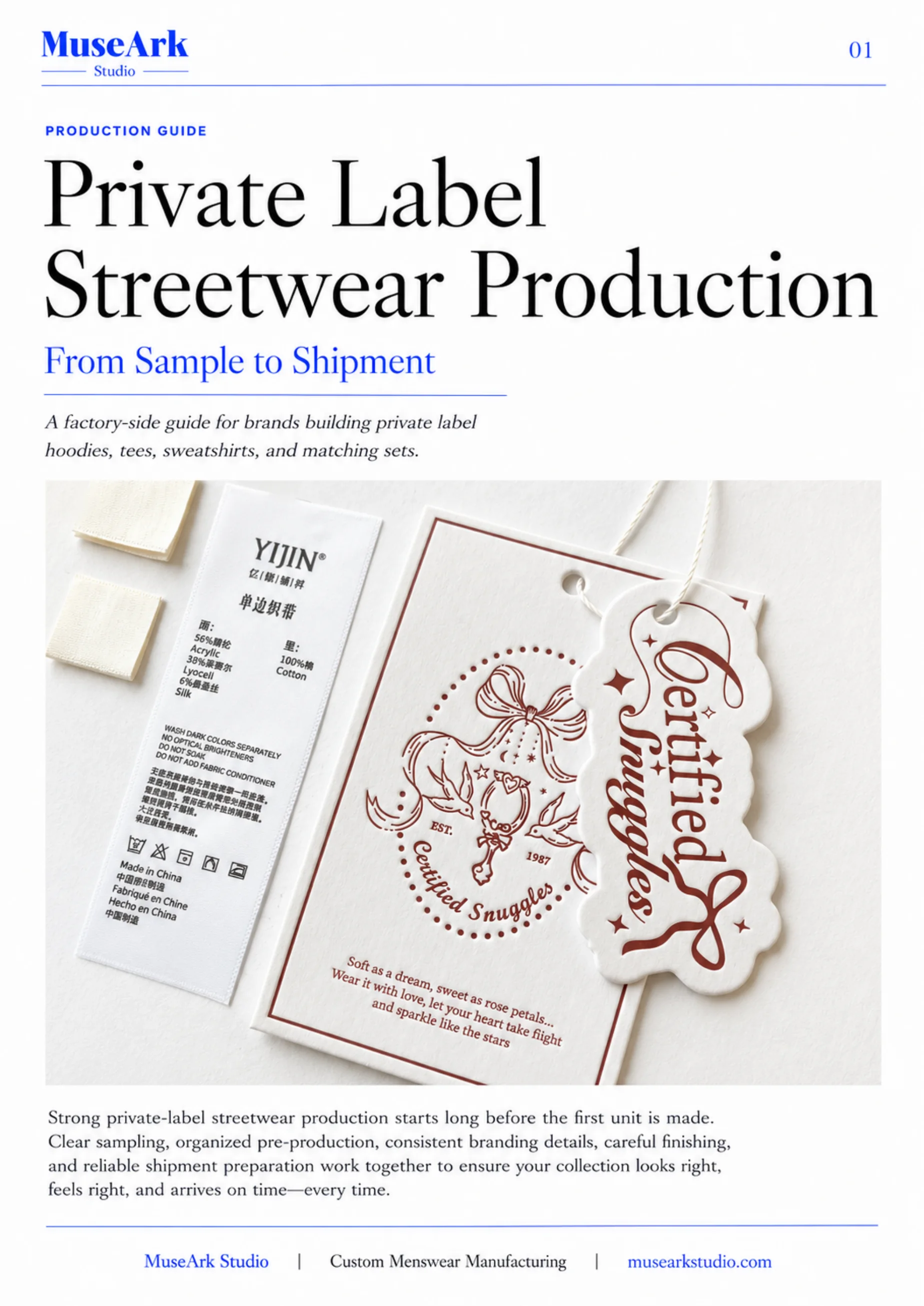
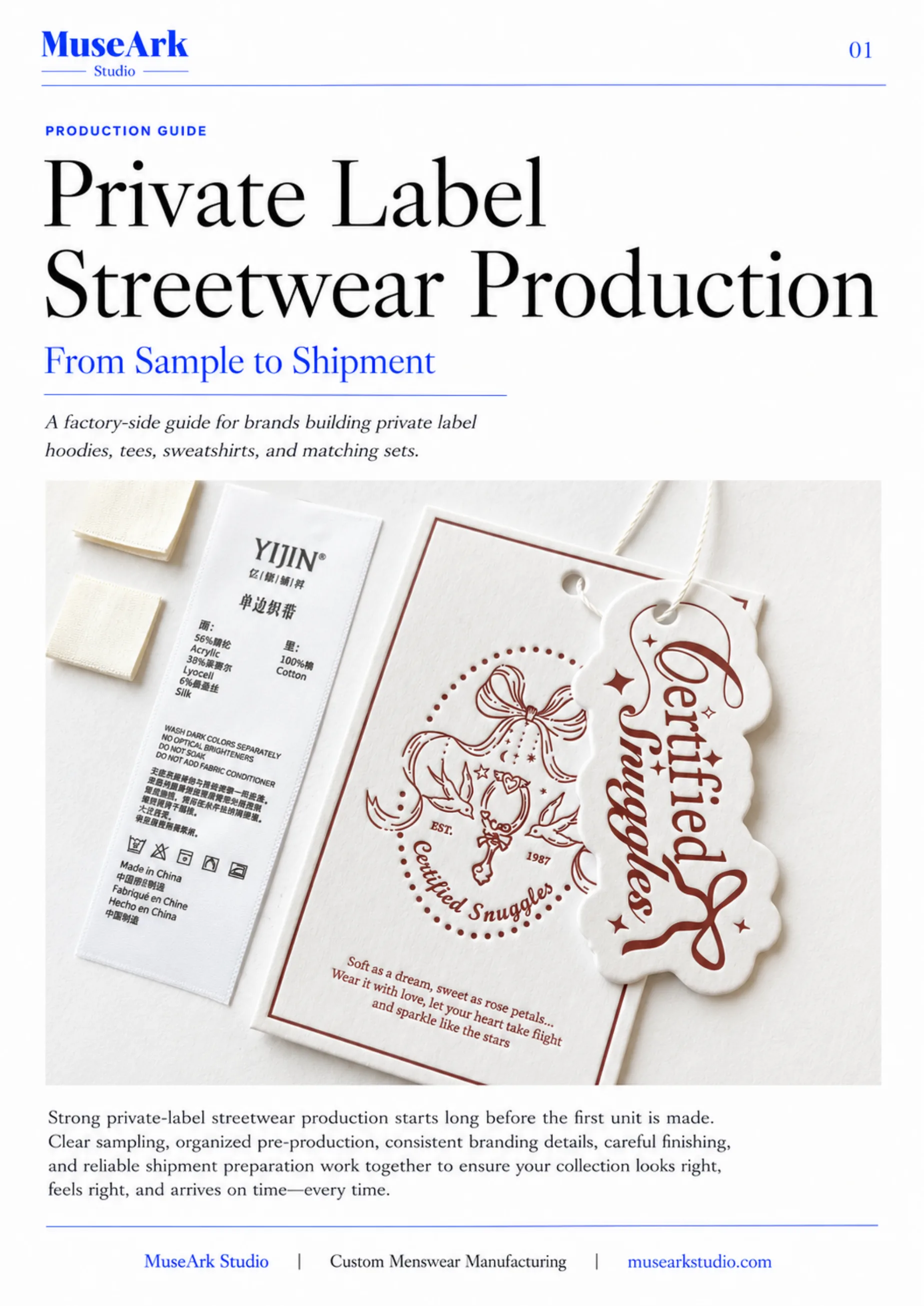
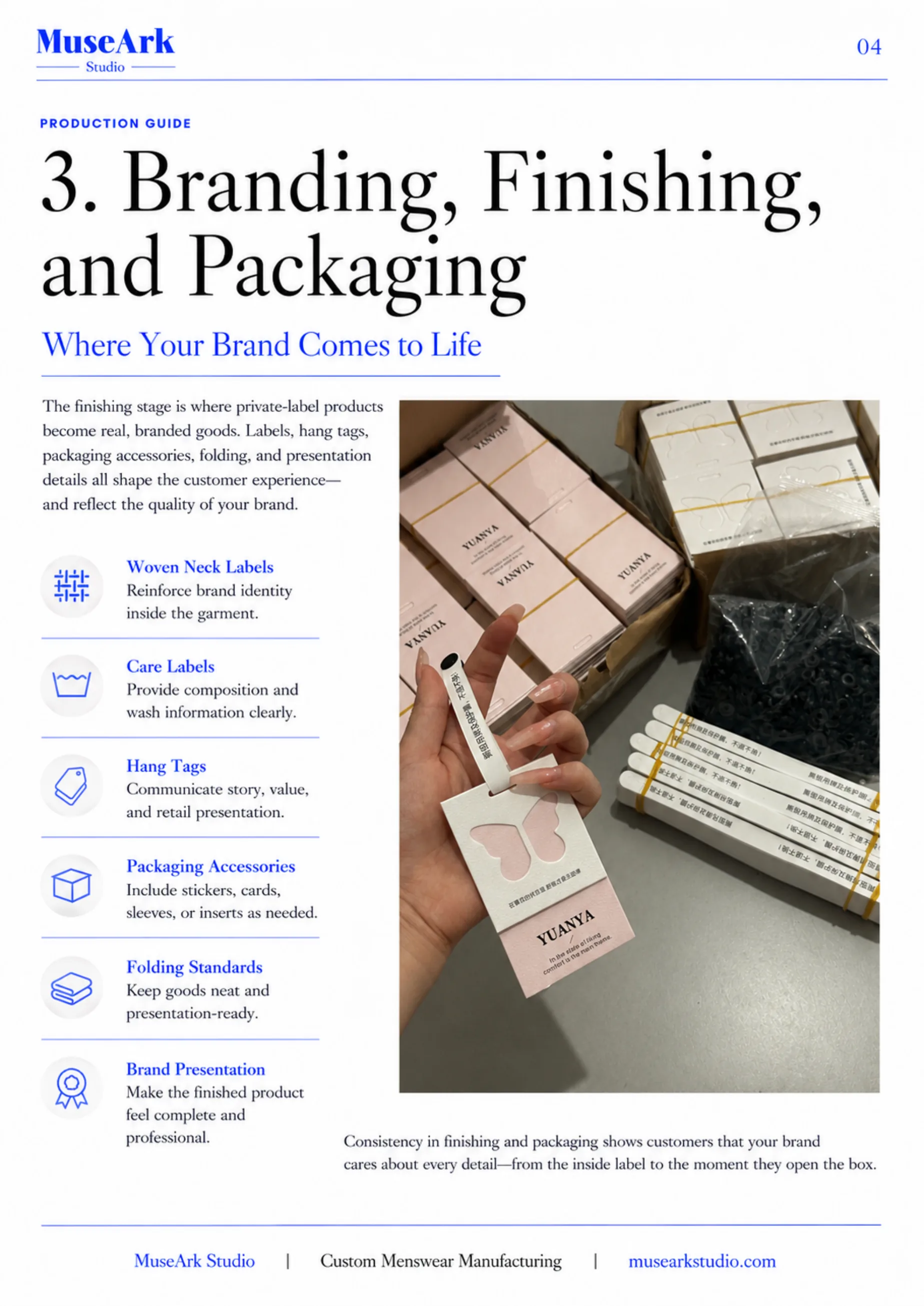
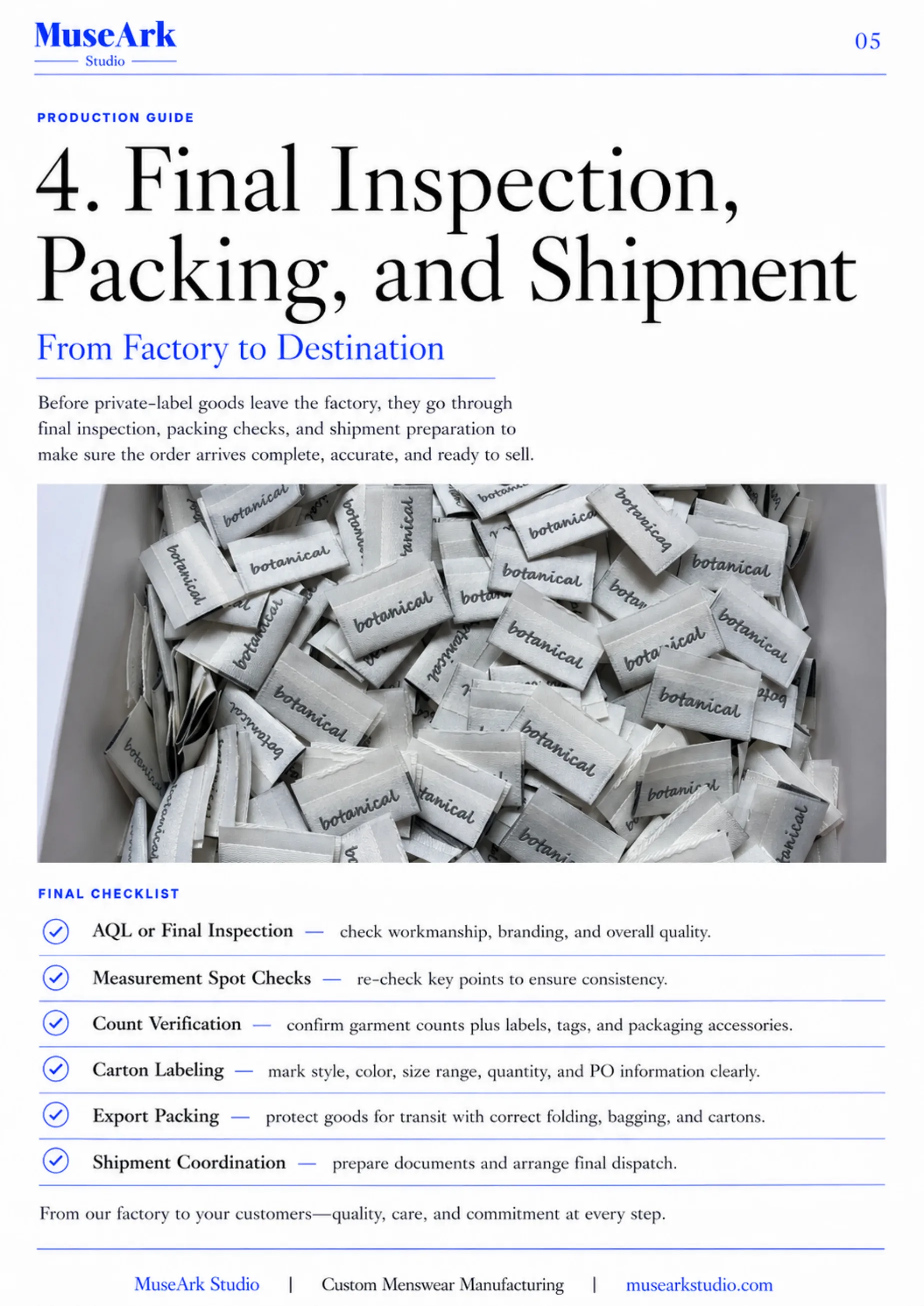
Private label clothing production is complete only when the goods are packed for the final delivery. The brand should confirm care and size labels, hangtags, folding method, polybag requirements, barcode or sticker placement, carton quantities, carton marks, and shipping documents. The factory should use the agreed packing instructions during final inspection so the packed order matches the approved presentation and shipping requirements. Confirming these details early prevents them from becoming late-stage surprises.
06 / What Changes After Sample Approval?
A change after sample approval can affect bulk consistency when it alters the pattern, fabric, color, decoration, wash, trim, label, or packing instruction. Small visual edits can also create a new placement, color, or construction decision that needs to be recorded. The practical response is to identify the affected specification, confirm whether a revised sample or pre-production review is needed, and update the production reference before the change is carried into bulk. For sequencing these decisions, see our hoodie sampling and production timeline.
Factory Takeaway
The most reliable private label streetwear production workflow is simple: make the product direction clear, approve the sample carefully, lock the bulk instructions, and use the approved reference at every quality and packing checkpoint.
Request a Private Label Production Review
Share your tech pack, reference photos, artwork, and product direction to review the sampling, bulk confirmation, and shipment-ready requirements for your streetwear order.
Request a Private Label Production ReviewFrequently Asked Questions
What should I approve before private label streetwear bulk production?
Approve the fit, measurements, fabric and weight, artwork placement, wash result, trims, labels, and packing instructions. The approved sample and written specifications should be the reference for the pre-production review and bulk quality checks.
Can I start from reference photos instead of a tech pack?
Yes. Reference photos can establish the intended look, but they should be converted into clear decisions on measurements, fabric, construction, artwork, trims, and wash before a sample is approved. A tech pack makes those decisions easier to review and repeat in bulk.
What packaging details should be confirmed before shipment?
Confirm the care and size labels, hangtags, folding method, polybag requirements, barcode or sticker placement, carton quantities, carton marks, and shipping documents. These details should be checked against the approved packing instructions before the order leaves the factory.