
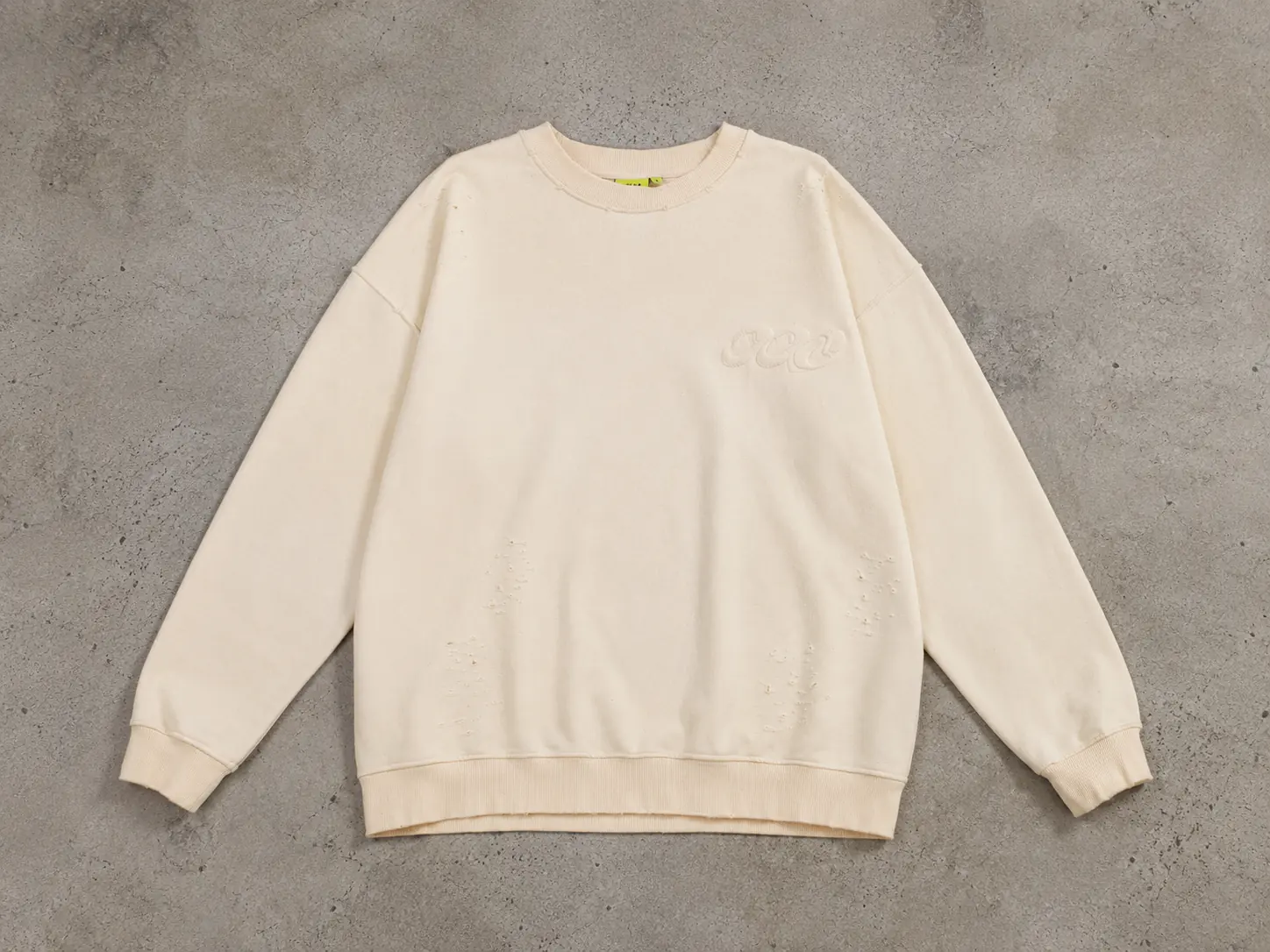
For most premium everyday hoodies, 400 GSM is the safest starting point. Move toward 300-320 GSM when the customer needs a lighter layer or the target price is tighter. Move toward 500 GSM when warmth, substantial hand feel, and a structured oversized silhouette are part of the product promise.
GSM means grams per square meter, but it is not a complete quality score. Fibre composition, knit construction, brushed or unbrushed finish, wash route, fit, and sewing details all change how the finished hoodie feels and performs.
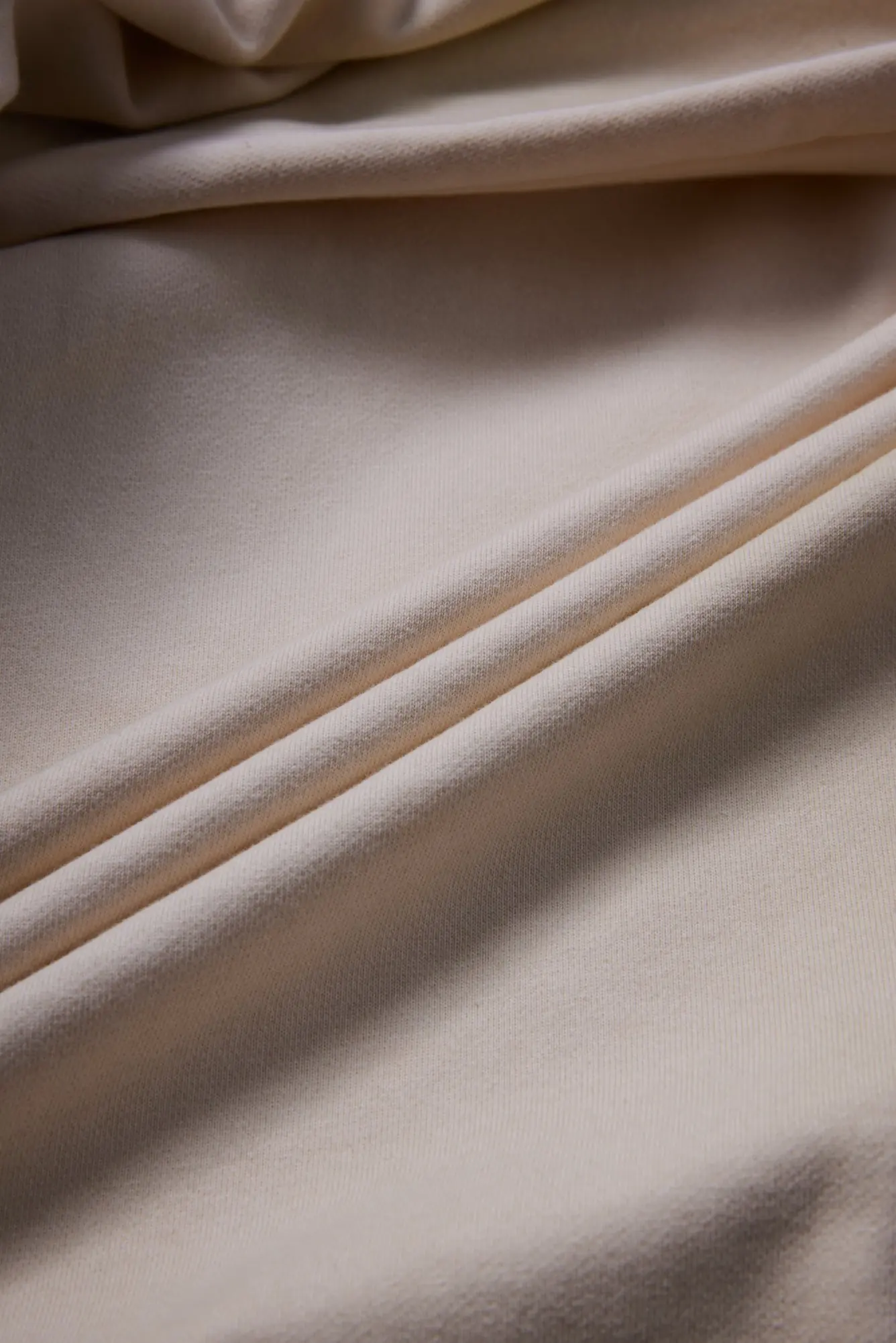
Hoodie GSM by Season, Fit and Budget
| Use case | Starting GSM | Fit direction | Budget position | What to expect |
|---|---|---|---|---|
| Transitional season or easy layering | 300-320 GSM | Regular, relaxed, or lighter oversized | Entry to mid | Less bulk, easier layering, and lower finished garment weight |
| Everyday premium streetwear | 400 GSM | Relaxed, boxy, or oversized | Mid | Balanced warmth, structure, hand feel, and broad seasonal use |
| Cold-weather heavyweight statement | 500 GSM | Oversized, boxy, or structured | Mid to premium | More substantial hand, warmth potential, and stronger body |
This is a starting recommendation, not a substitute for a fabric and fit sample. A dense 400 GSM French terry and a brushed 400 GSM fleece can feel very different, even before washing or decoration.
300/320 GSM: Lighter and Easier to Layer
300-320 GSM works well for spring, autumn, warmer climates, indoor wear, and collections where the hoodie needs to sit under a jacket. It generally creates a softer drape and lower shipping weight than a heavyweight fleece route.
This range can support regular, relaxed, and lighter oversized fits. It is usually the most forgiving option when the target retail price is constrained, but the final hand feel still depends on composition, yarn, knit structure, and finishing.
400 GSM: The Versatile Premium Starting Point
400 GSM is a strong default for a premium everyday hoodie because it can hold a relaxed or oversized silhouette without becoming as bulky as 500 GSM. It suits autumn, mild winter, and layered streetwear, with a useful balance between structure and comfort.
For a direct comparison of 400 and 500 GSM, see the 400 GSM vs 500 GSM hoodie guide. That article focuses on the differences between those two weights; this guide is about selecting a starting range for a product brief.
500 GSM: Heavyweight Structure and Cold-Weather Presence
500 GSM is for a product where weight, warmth, and a strong silhouette are visible parts of the value. This heavyweight hoodie fabric route can suit cold-weather capsules and oversized or boxy fits, but the pattern, hood, rib, seam construction, and finishing must support the extra fabric weight.
Heavier fabric can increase material use and shipping weight, and thick seam intersections need more construction control. A 500 GSM hoodie is not automatically a better product if the customer needs easy layering or a lighter target price.
How Fabric, Wash, and Print Change the Final Result
| Decision | How it changes the hoodie | What to approve |
|---|---|---|
| Fleece or French terry | Changes warmth, surface softness, drape, and recovery at cuffs and hem | Composition, knit structure, GSM, brushed direction, and hand feel |
| Garment dye or pigment wash | Can change shade, shrinkage, surface character, and final measurements | Wash test, color range, rub-off, before-and-after measurements, and hand feel |
| Screen print, puff print, or embroidery | Changes surface weight, flexibility, texture, and placement risk | Artwork scale, stitch or ink behavior, adhesion, distortion, and wash compatibility |
Review our custom hoodie manufacturing program when you need to choose the fabric, fit, decoration, wash, labels, and packaging as one production route.
What to Send Before Choosing a Hoodie GSM
Send the intended season and market, target customer, fit reference, target retail price, preferred composition, color direction, decoration, wash route, expected quantity, size range, destination, and delivery date. Those details let the production team recommend a workable GSM instead of quoting a number in isolation.
Typical Production Planning for This Hoodie Route
| Planning point | Typical range | What changes it |
|---|---|---|
| Typical MOQ | 50+ pcs for one focused hoodie style | Fabric availability, color split, decoration, wash, and custom trims affect the workable minimum. |
| Sample development | 7-14 days after the GSM, fabric route, fit, and decoration are confirmed | Custom fleece, washes, embroidery, special prints, and fit changes can add development time. |
| Bulk production after approval | 4-8 weeks after sample approval | Material preparation, process, order quantity, and final confirmation speed determine the working production schedule. |
These planning ranges depend on fabric, process, order quantity, and how quickly specifications and sample feedback are confirmed. The custom hoodie manufacturing program combines fabric, fit, decoration, wash, trims, and packaging into one route.
Choose a Hoodie Weight With the Product in Mind
Share your target fit, climate, budget, quantity, and reference images for a focused fabric recommendation before sampling.
Request a Hoodie Fabric and Sampling RecommendationHoodie GSM FAQ
What is the best GSM for a hoodie?
400 GSM is a versatile starting point for premium everyday streetwear. Choose 300-320 GSM for lighter layering and 500 GSM for a heavier, warmer, more structured product.
Is 500 GSM always warmer than 400 GSM?
Not automatically. GSM contributes to fabric weight, but warmth also depends on fibre content, knit construction, brushing, fit, layering, and finishing.
Does GSM decide the hoodie price?
No. Higher GSM can increase material and shipping weight, but composition, construction, decoration, wash, order quantity, and custom trims also affect the target cost.