
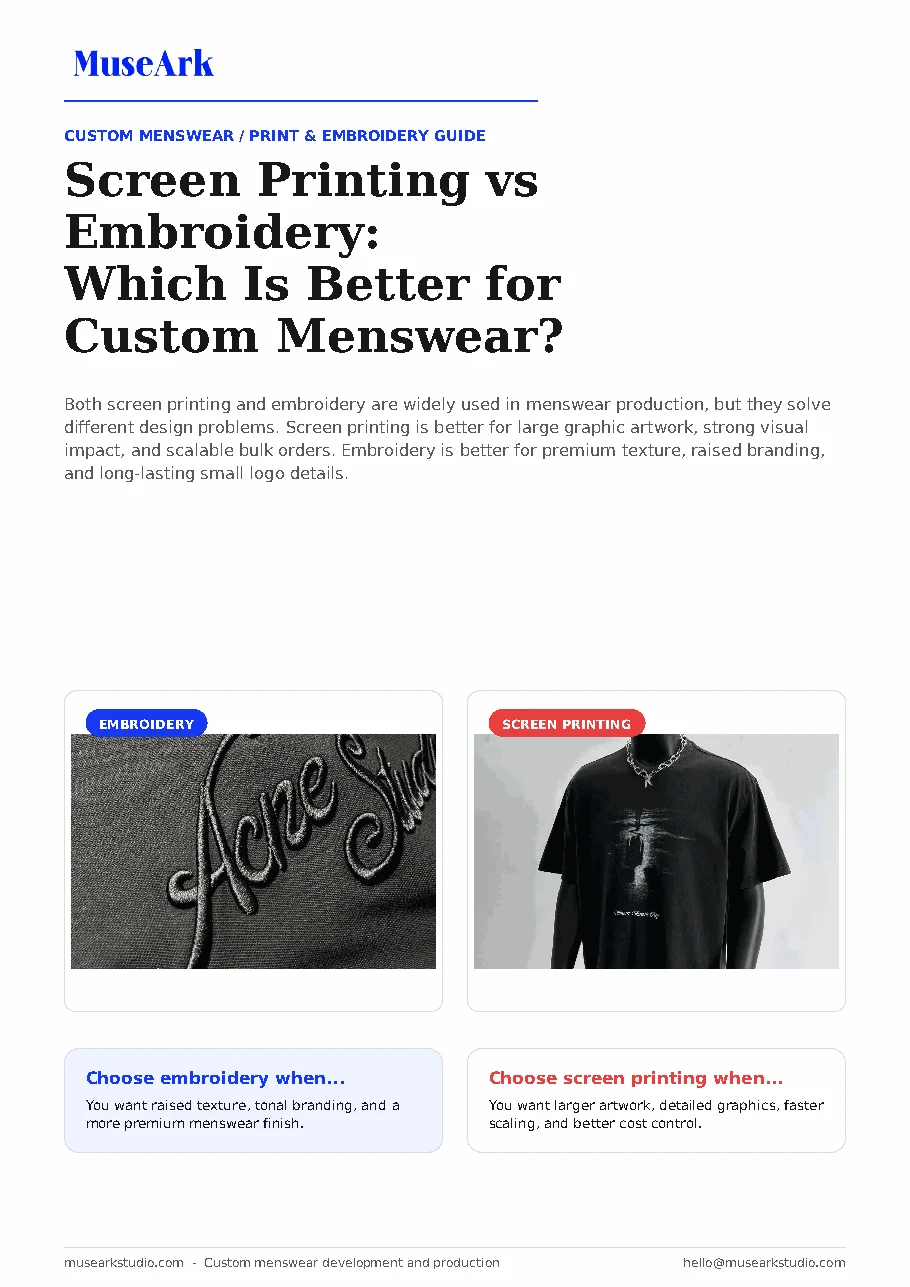
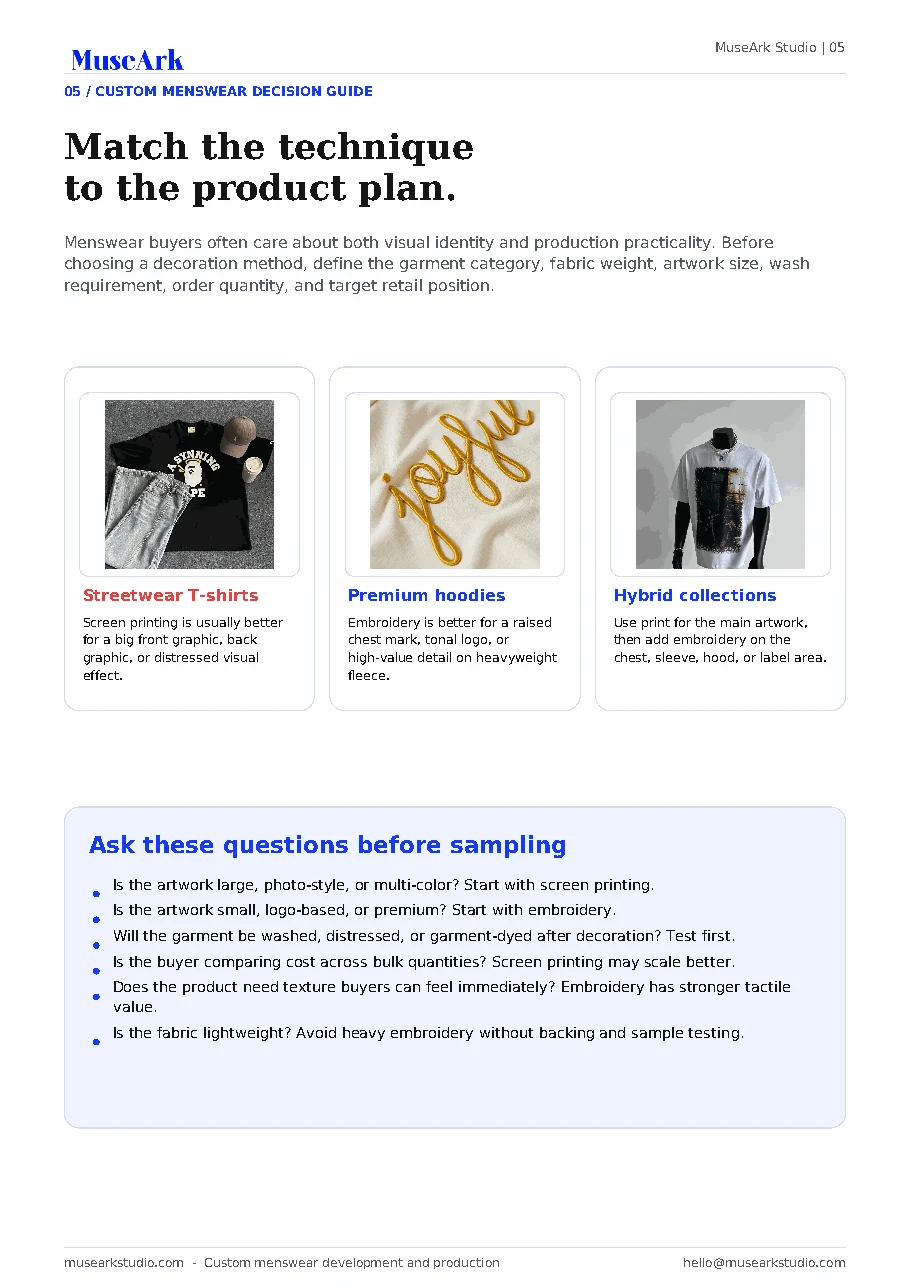
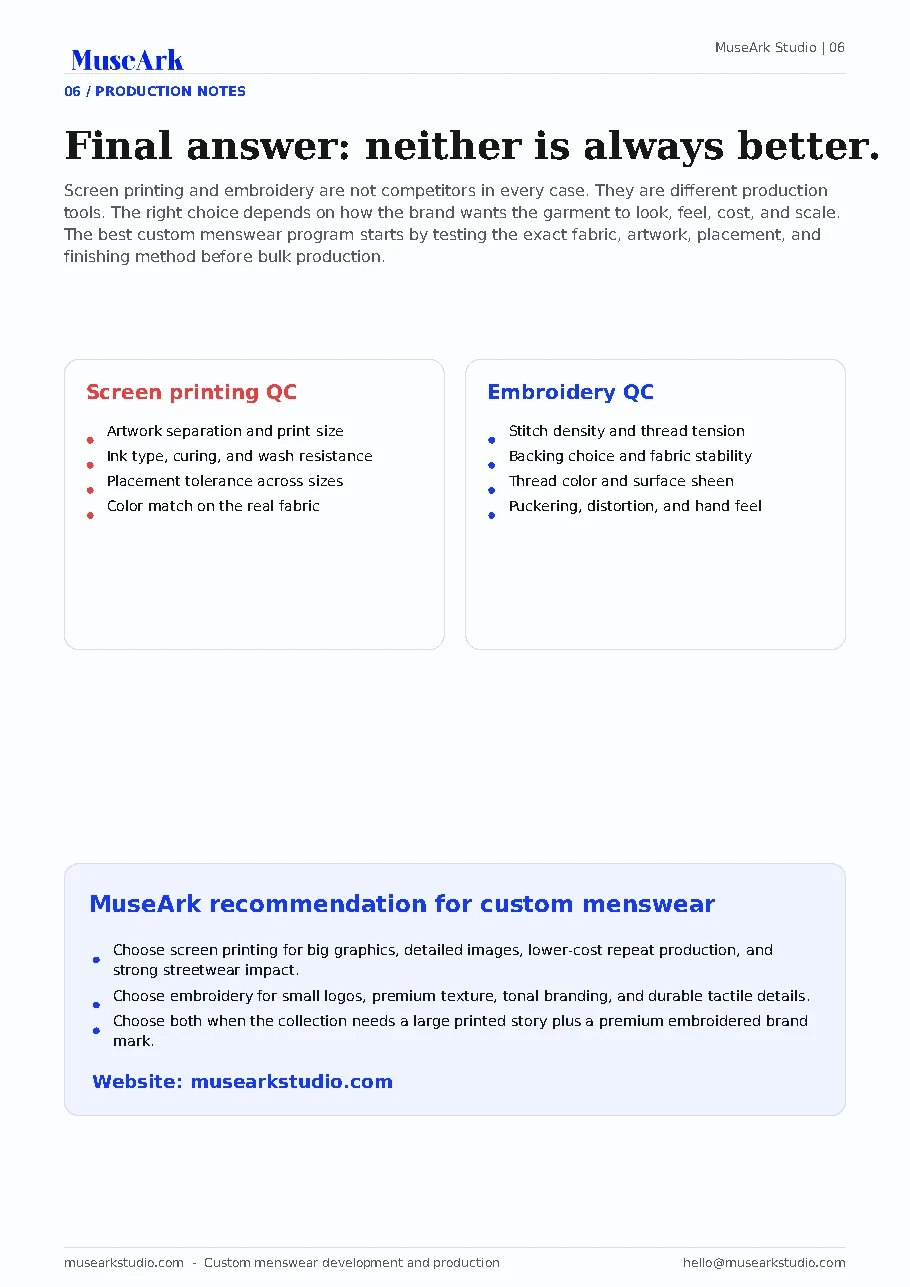
Screen Printing vs Embroidery: Quick Answer
Choose screen printing for large, colorful artwork, soft hand feel, and cost-efficient bulk orders. Choose embroidery for smaller logos, textured premium branding, and durable placement on heavier garments. The right option depends on artwork size, fabric weight, quantity, and target price.
Cost Comparison for Custom Orders
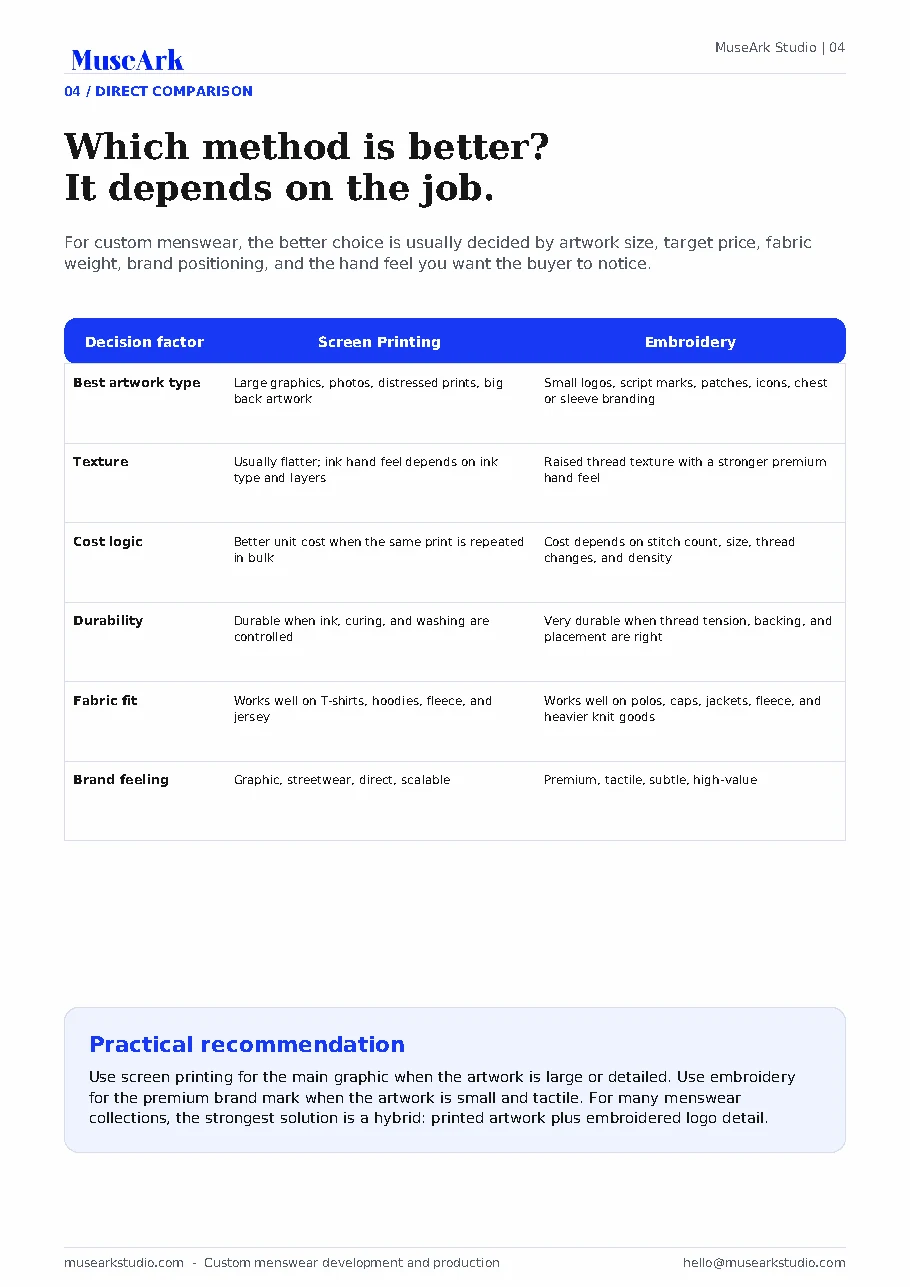
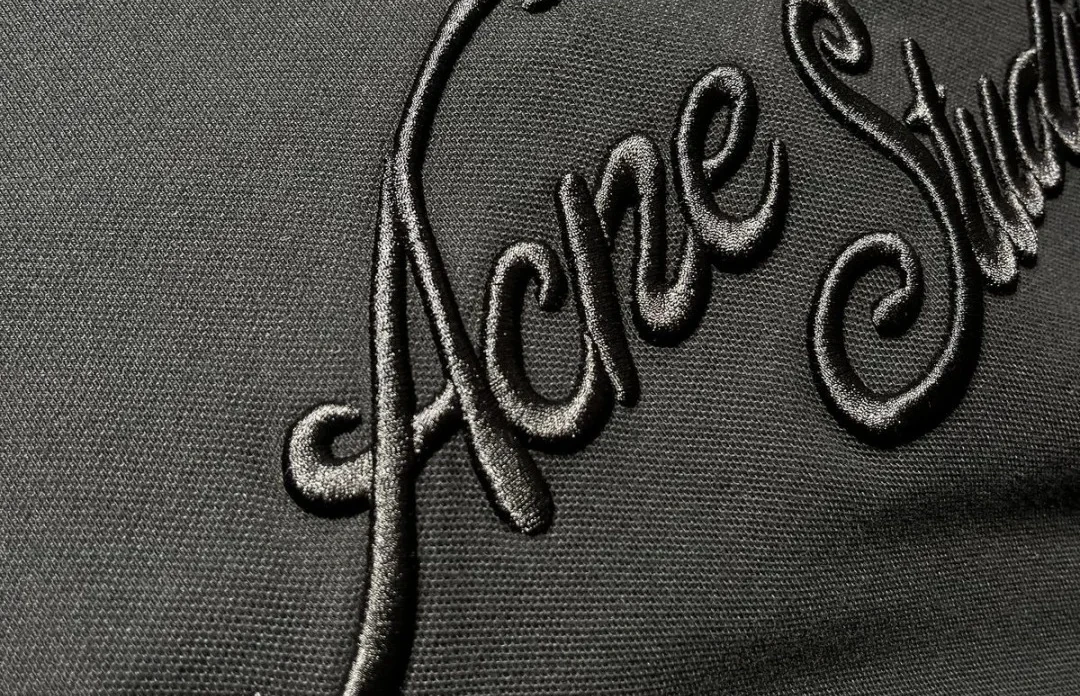
Screen printing usually becomes more cost-efficient as repeat quantity increases, while embroidery is often sensible for small logos but increases with stitch count, design size, and thread changes.
| Comparison | Screen Printing | Embroidery |
|---|---|---|
| Best for | Large artwork and multi-color graphics | Small logos and badge-like branding |
| Hand feel | Relatively flat; depends on ink and coverage | Raised texture and thickness |
| Cost | Usually more cost-efficient in bulk | Reasonable for small logos; large areas cost more |
| Artwork detail | Suited to gradients and complex graphics | Not suited to very small type or complex gradients |
| Fabric | Cotton, fleece, and knits need fabric-specific testing | Heavy fleece, wovens, and caps are generally stable |
| Risk | Large coverage can affect breathability | Large embroidery can pull, stiffen, or distort fabric |
The final method should be confirmed on a sample after reviewing the fabric, artwork size, stitch count or screen plan, and wash testing.
Durability and Wash Performance
Neither method automatically lasts longer. Screen printing can perform well when the ink system, curing, coverage, and wash test suit the garment. Embroidery can perform well when stitch density, backing, and thread tension suit the fabric. Poor setup can cause cracking in print or puckering and distortion in embroidery.
For washed or garment-dyed pieces, test the finished garment rather than assuming a standard recipe will behave the same way after washing, pigment treatment, or dyeing.
Which Artwork Works Best?
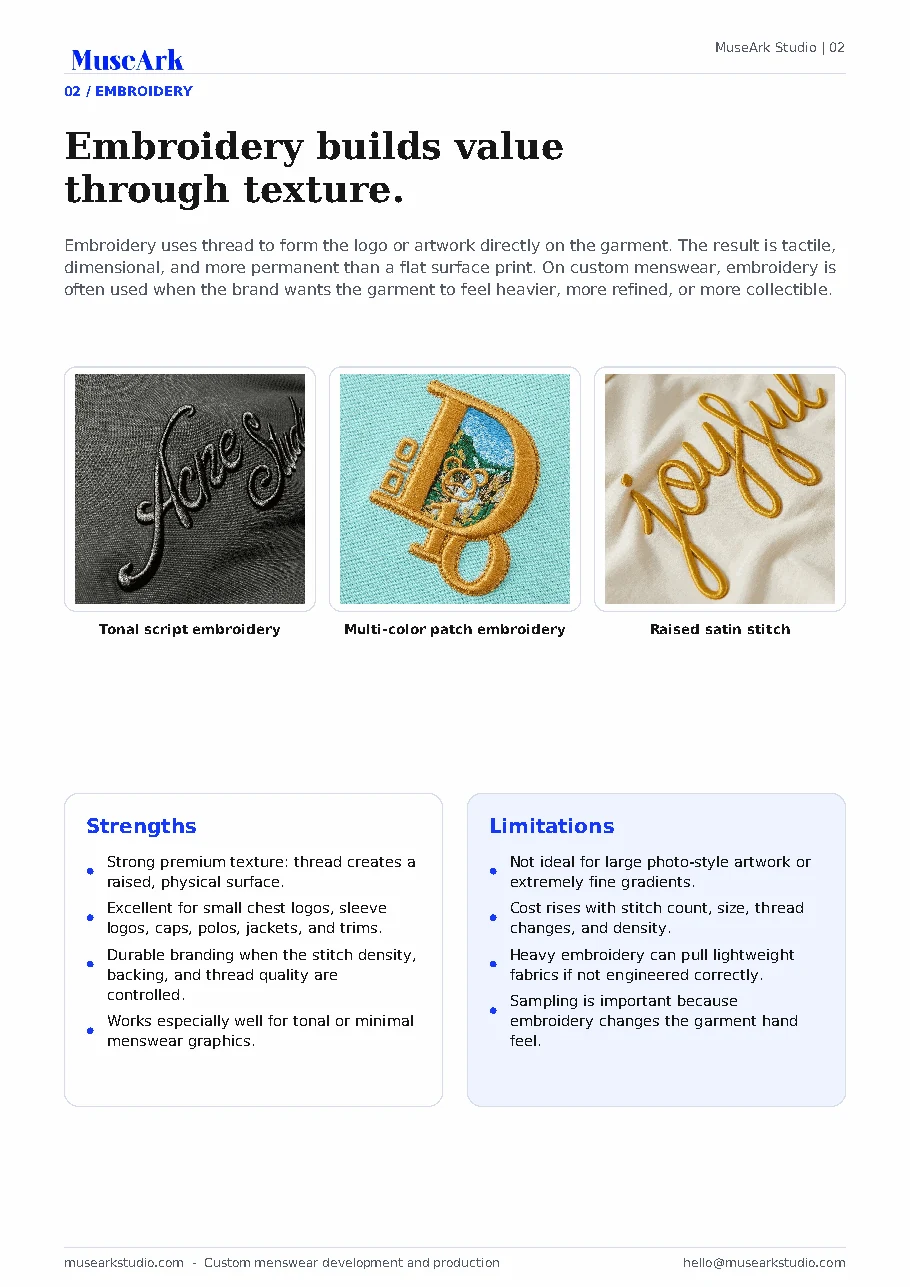
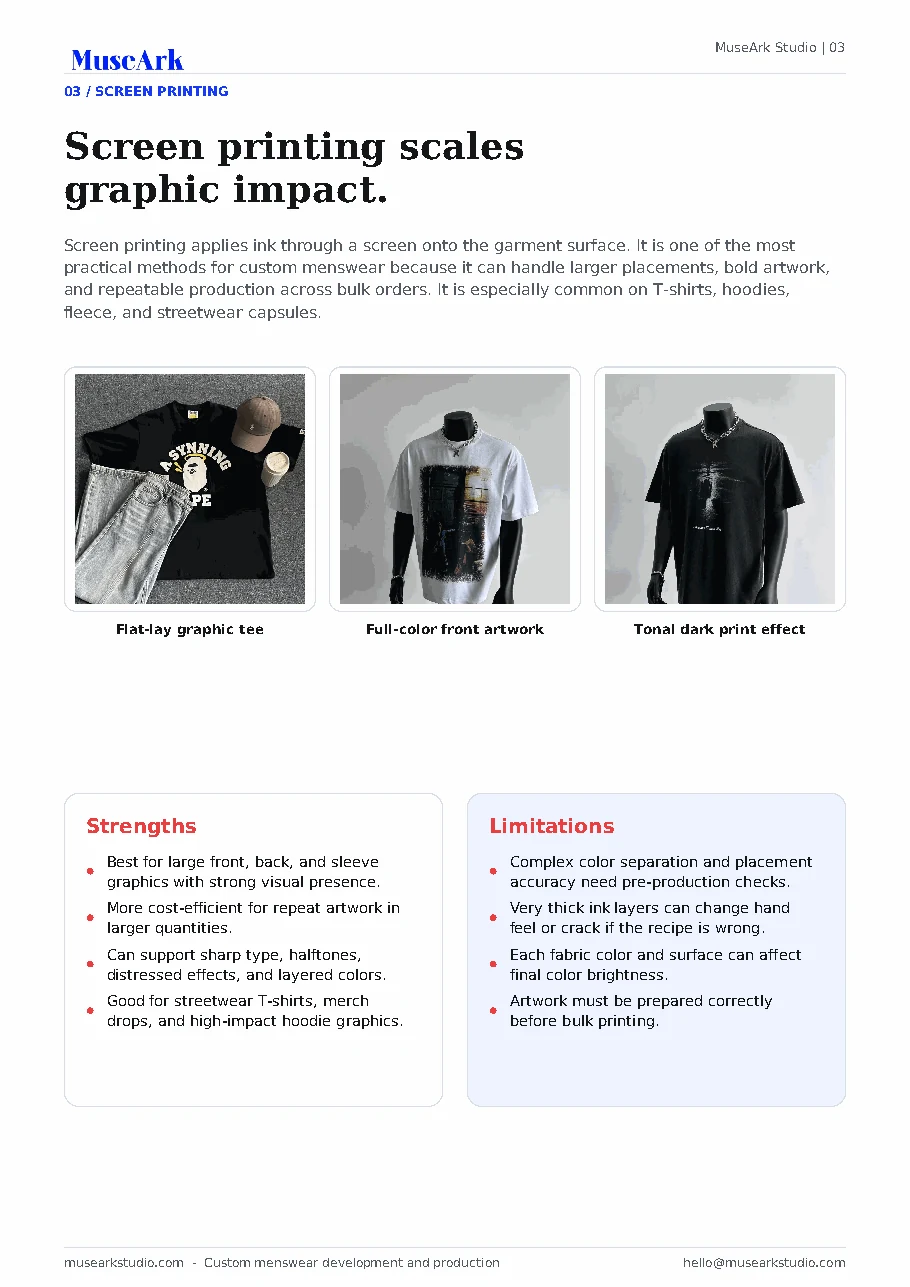
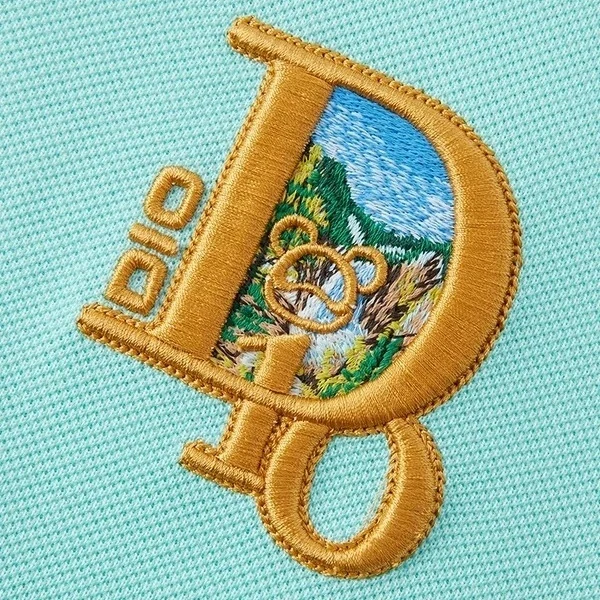
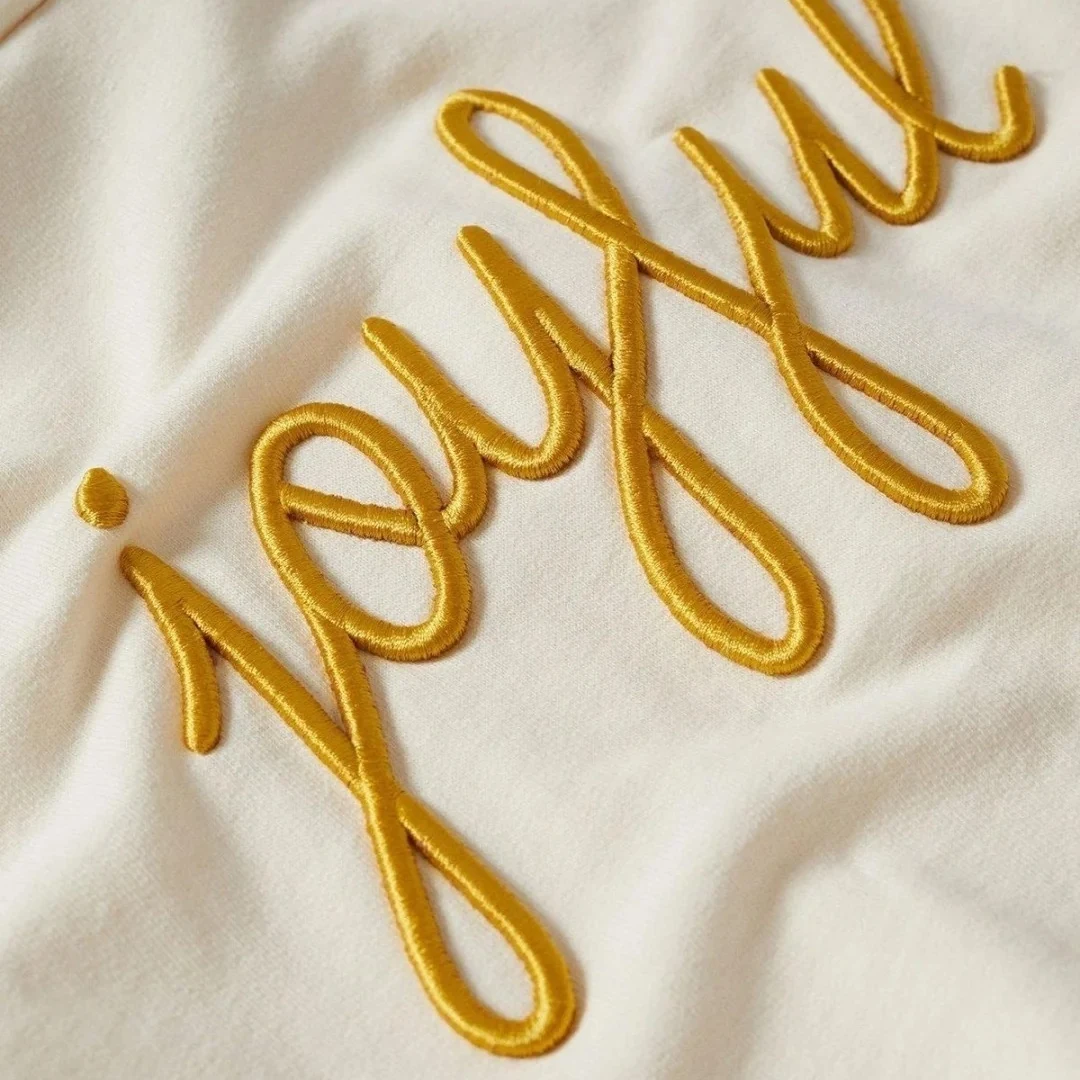
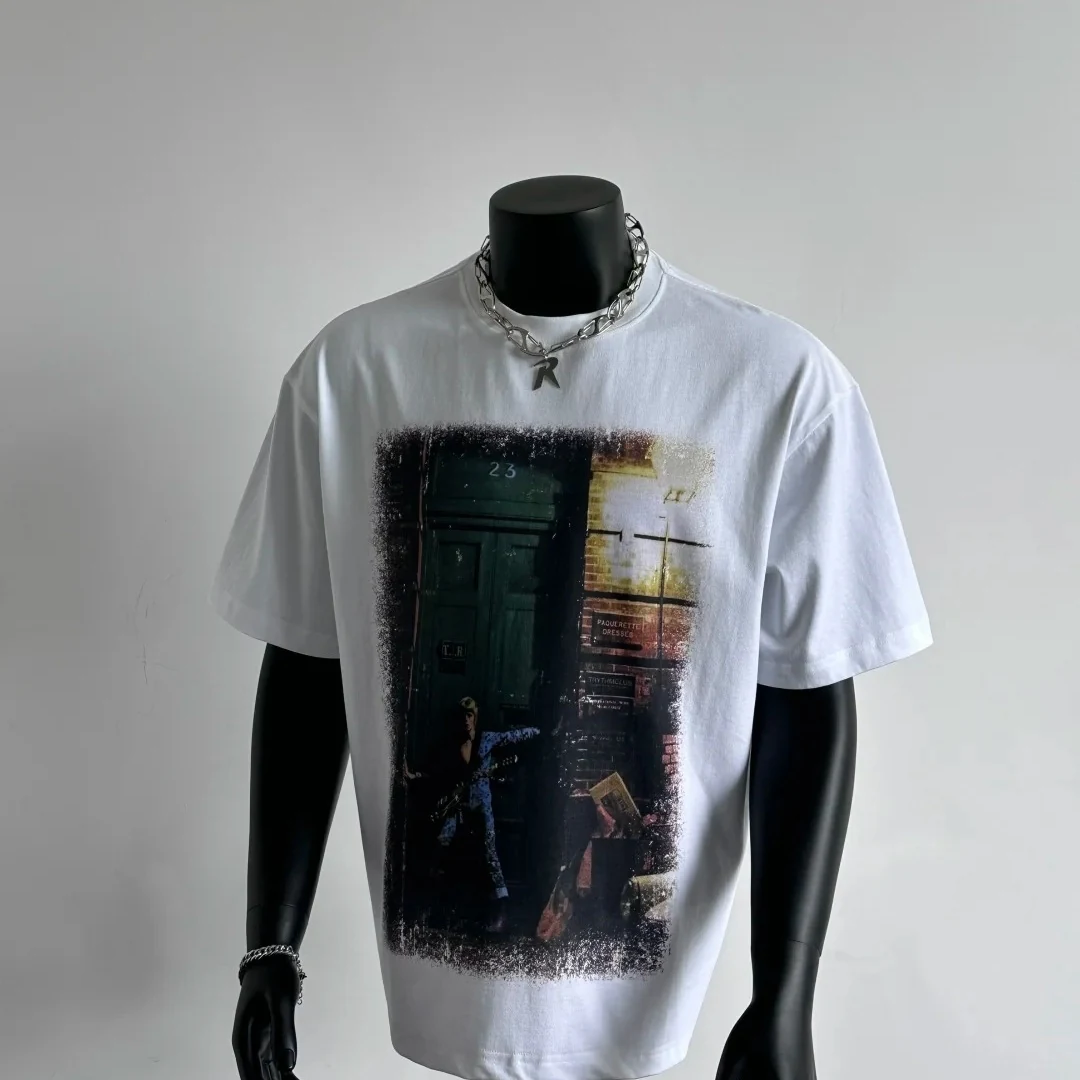
Screen printing is the practical choice for large front, back, or sleeve graphics, photo-style illustrations, gradients, sharp type, halftones, and layered colors. Embroidery is stronger for simplified marks, small chest logos, sleeves, caps, patches, and tonal branding that benefits from a physical texture.
Fabric and Garment Considerations
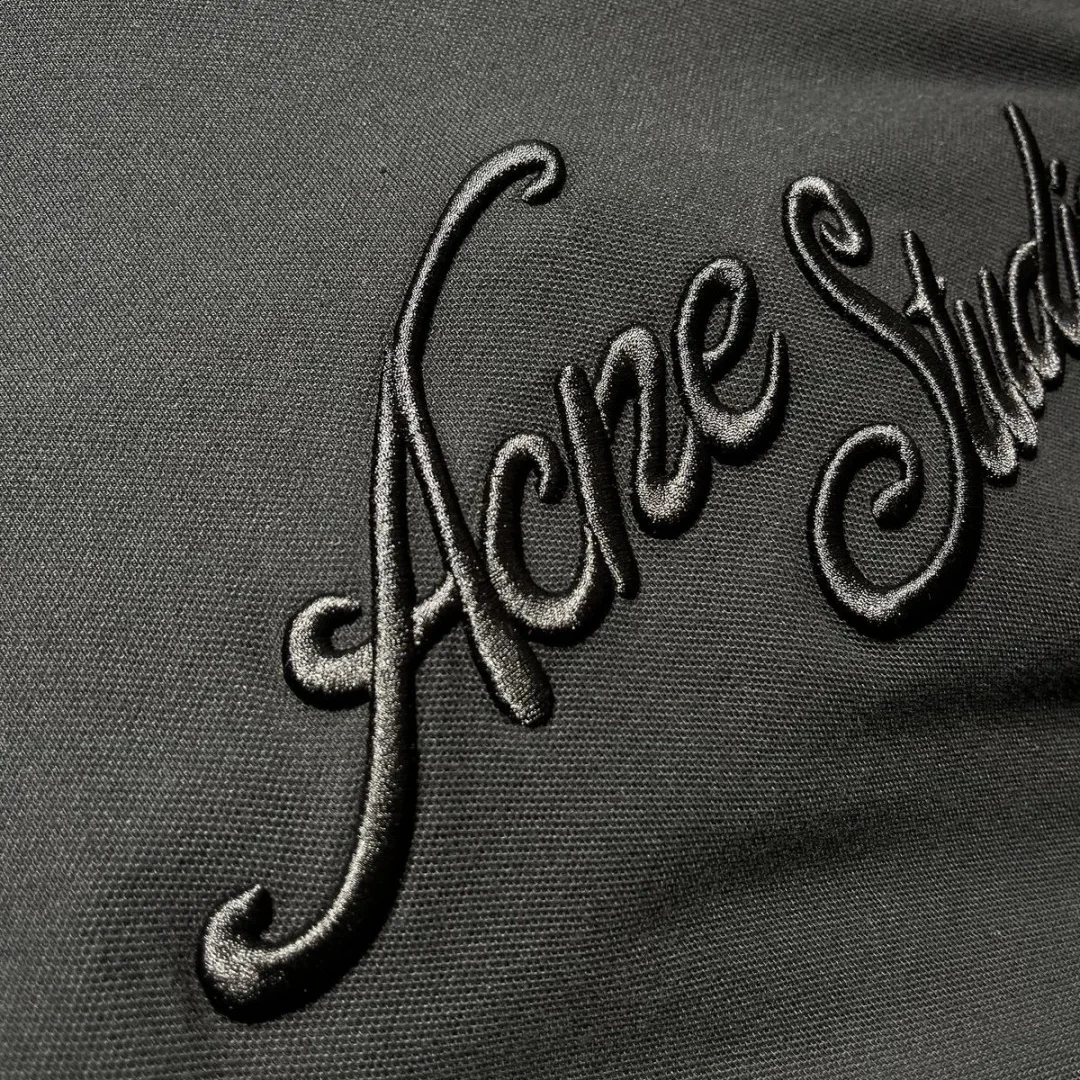
Fabric weight, stretch, surface texture, wash route, and placement all change the recommendation. For custom hoodie manufacturing, heavyweight fleece can support small embroidered marks well, while large embroidery on lightweight knits can pull the fabric. Screen printing is common on cotton and fleece, but thick coverage should be reviewed for breathability and stretch.
Use a tech pack or reference photos to show the artwork, placement, target dimensions, and intended garment finish before sampling.
When to Choose Screen Printing
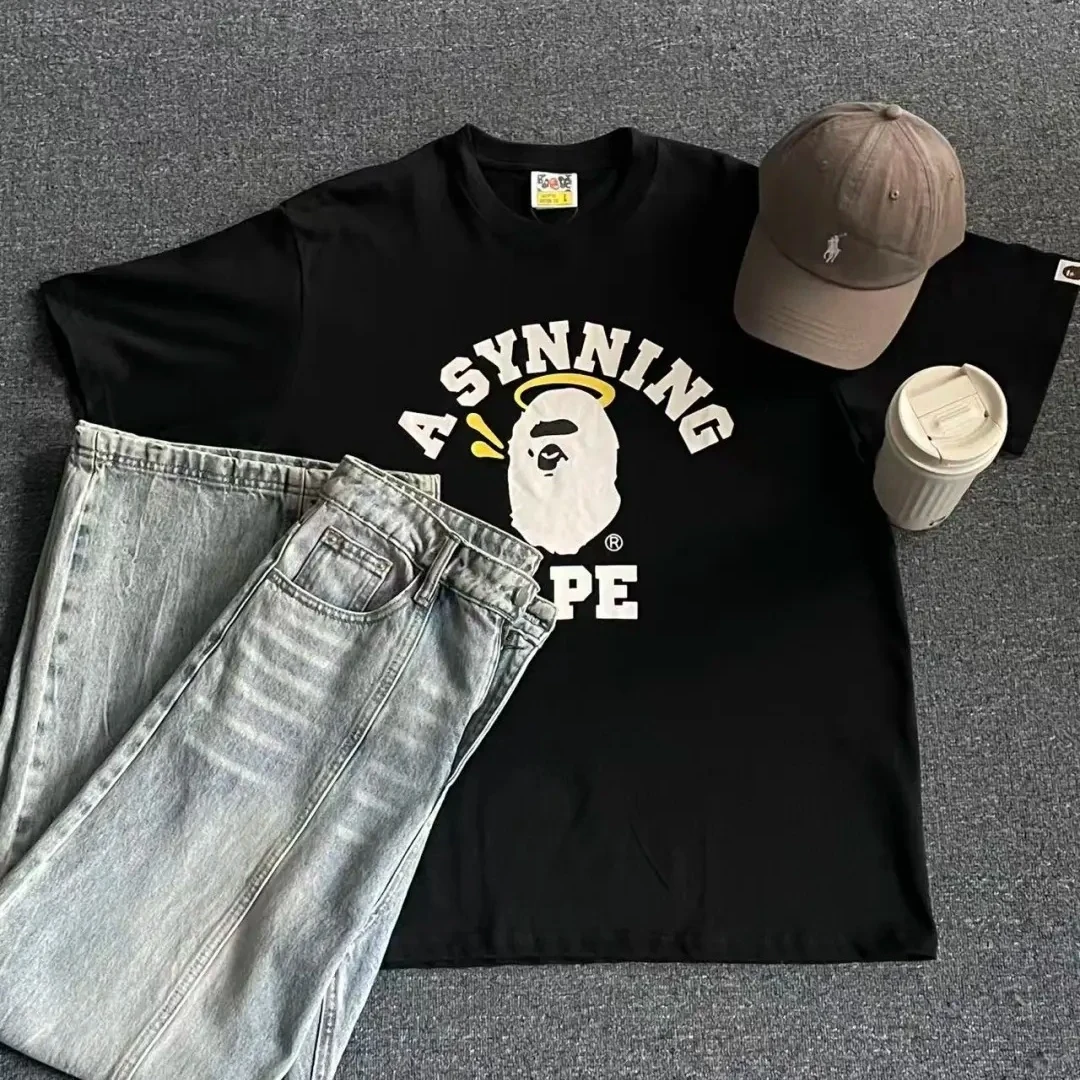
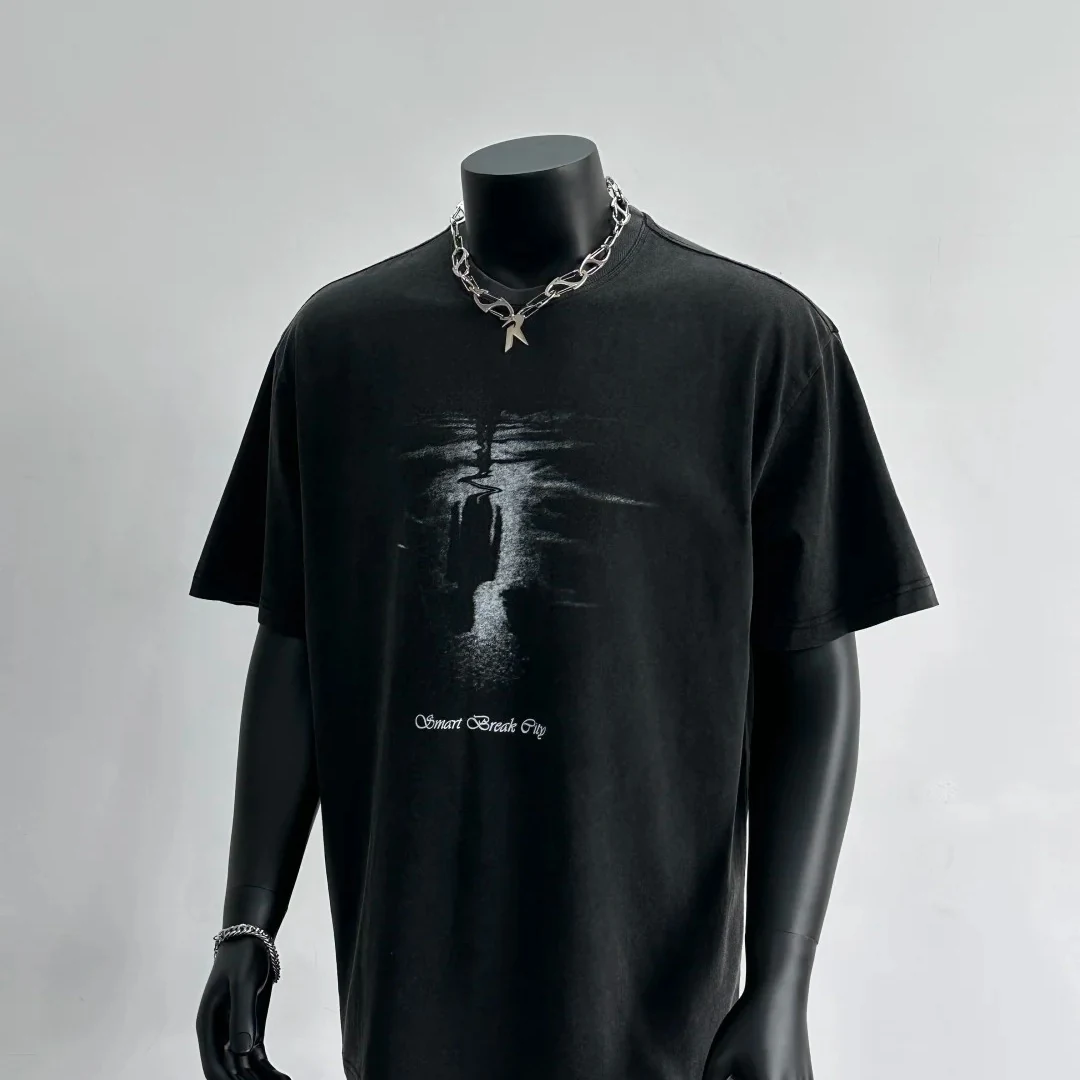
Choose screen printing when the main visual is large, colorful, detailed, or repeated across a bulk order. It is especially useful for graphic T-shirts, streetwear hoodies, back prints, and artwork that needs gradients or a more flexible printed surface.
When to Choose Embroidery
Choose embroidery when the artwork is small, logo-based, and intended to feel premium or tactile. It works particularly well for chest marks, sleeve details, caps, woven outerwear, and heavyweight fleece, provided the stitch density and backing are sampled against the real fabric.
Can You Combine Both Methods?
Yes. A hoodie can use screen printing for a main graphic and embroidery for a smaller logo or detail. Test the combined placement on the actual fabric because embroidery changes the hand feel and a large print can affect breathability. For a broader overview of decoration routes, see our four hoodie printing methods guide.
Review custom trims and finishing options alongside the decoration plan when labels, patches, wash effects, or packaging details are part of the product.
Typical production planning for screen printing and embroidery
| Planning item | Current baseline |
|---|---|
| Typical MOQ | 50+ pcs per style; the final route depends on artwork size, placement, and garment category. |
| Sample development | 7-14 days after artwork, fabric, placement, and the screen or stitch plan are confirmed. |
| Bulk production after approval | 4-8 weeks after garment and decoration approval, with the production specification locked. |
| What can change it | Artwork size, color count, stitch count, backing, fabric stretch, wash route, order quantity, material availability, and approval speed. |
These are planning ranges, not fixed promises. Final timing depends on the fabric, process, order quantity, and confirmation speed.
Review custom T-shirt manufacturing for the garment route behind the decoration.
FAQ
Is screen printing cheaper than embroidery?
Screen printing is often more cost-efficient for repeat artwork in larger quantities because the setup cost is spread across the order. Embroidery can be cost-effective for small logos, but its cost rises with stitch count, design size, thread changes, and density.
Does embroidery last longer than screen printing?
Embroidery does not automatically last longer than screen printing. Both can perform well when they suit the fabric and are correctly produced. Embroidery needs appropriate stitch density and backing; screen printing needs the right ink system, curing, and wash testing.
Can screen printing and embroidery be used on the same hoodie?
Yes. A hoodie can use screen printing for a main graphic and embroidery for a smaller logo or detail. Test the combined placement on the actual fabric because embroidery changes the hand feel and a large print can affect breathability.
Need help choosing between screen printing and embroidery?
Send your artwork, garment type, quantity, and target price for a production recommendation.
Get a Decoration Recommendation