
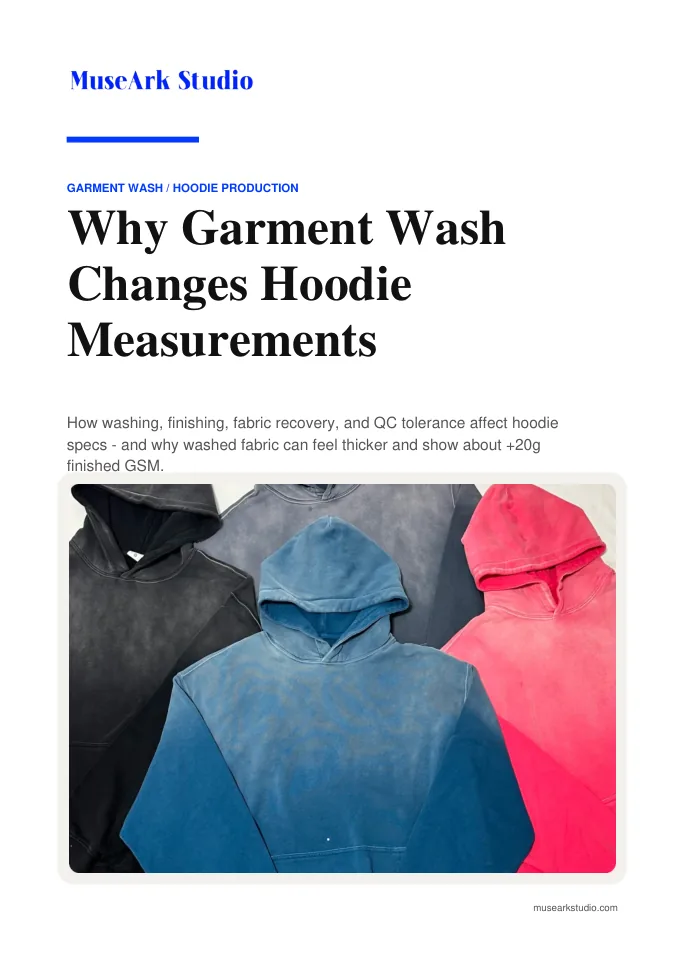
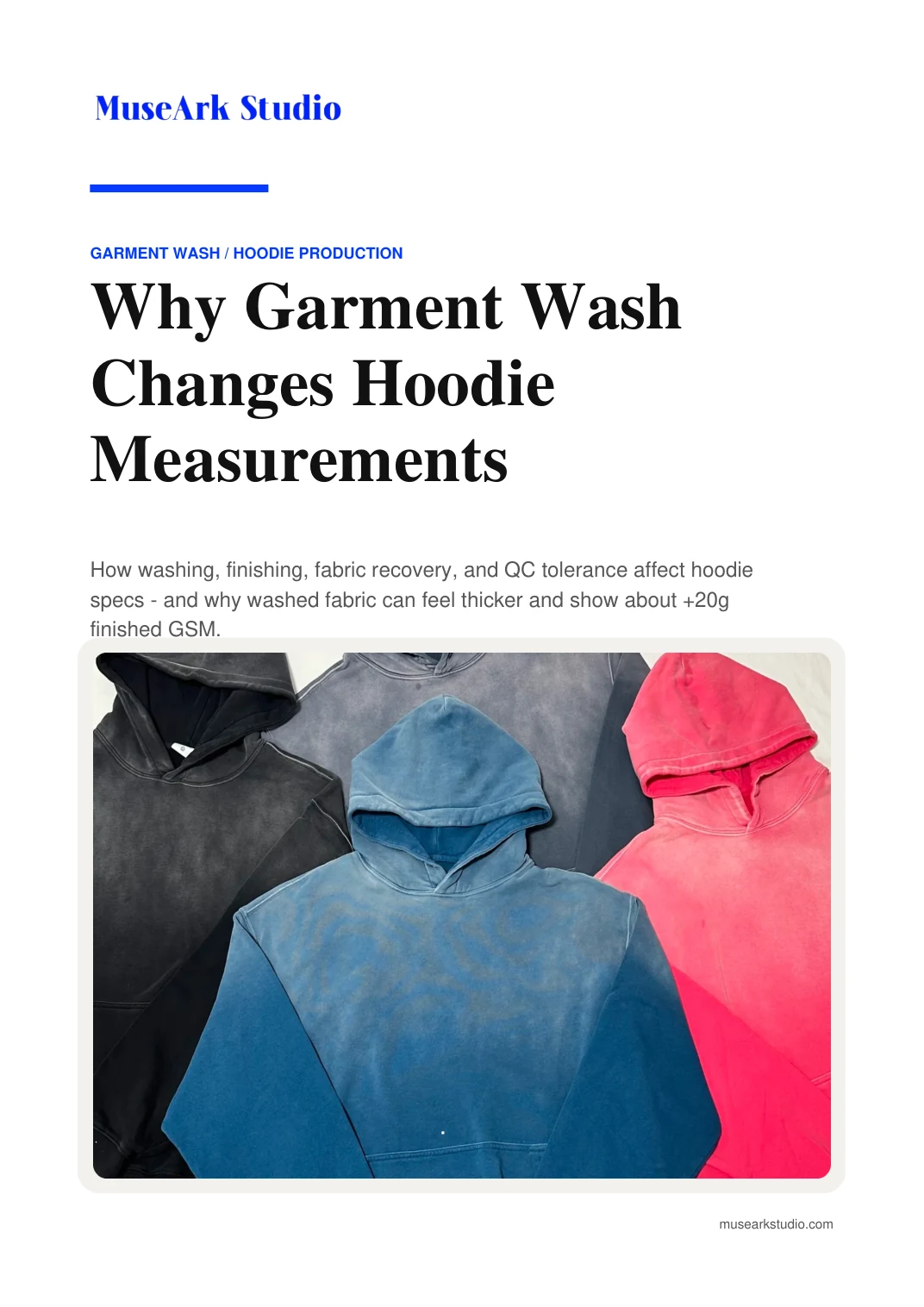
How washing, finishing, fabric recovery, and QC tolerance affect hoodie specs - and why washed fabric can feel thicker and show about +20g finished GSM.
Quick Answer: How Garment Wash Changes Hoodie Measurements
Garment wash can change body length, chest width, sleeve length, rib openings and hood opening. Final hoodie specifications should be based on the garment dimensions measured after washing and resting flat, not only on the dimensions sewn before wash.
There is no universal shrinkage percentage. The actual movement depends on the fabric, construction, wash recipe and drying method, so the factory should confirm it with the real PP sample and bulk fabric.
01 / THE CORE IDEA
Production takeaway
The measurement you sew is not always the measurement you ship.
The correct bulk spec is not simply the pattern spec. It is the pattern spec plus expected movement through sewing and washing, plus the after-wash GSM target.
For premium hoodies, garment wash should be treated as product engineering, not only as a finishing treatment.
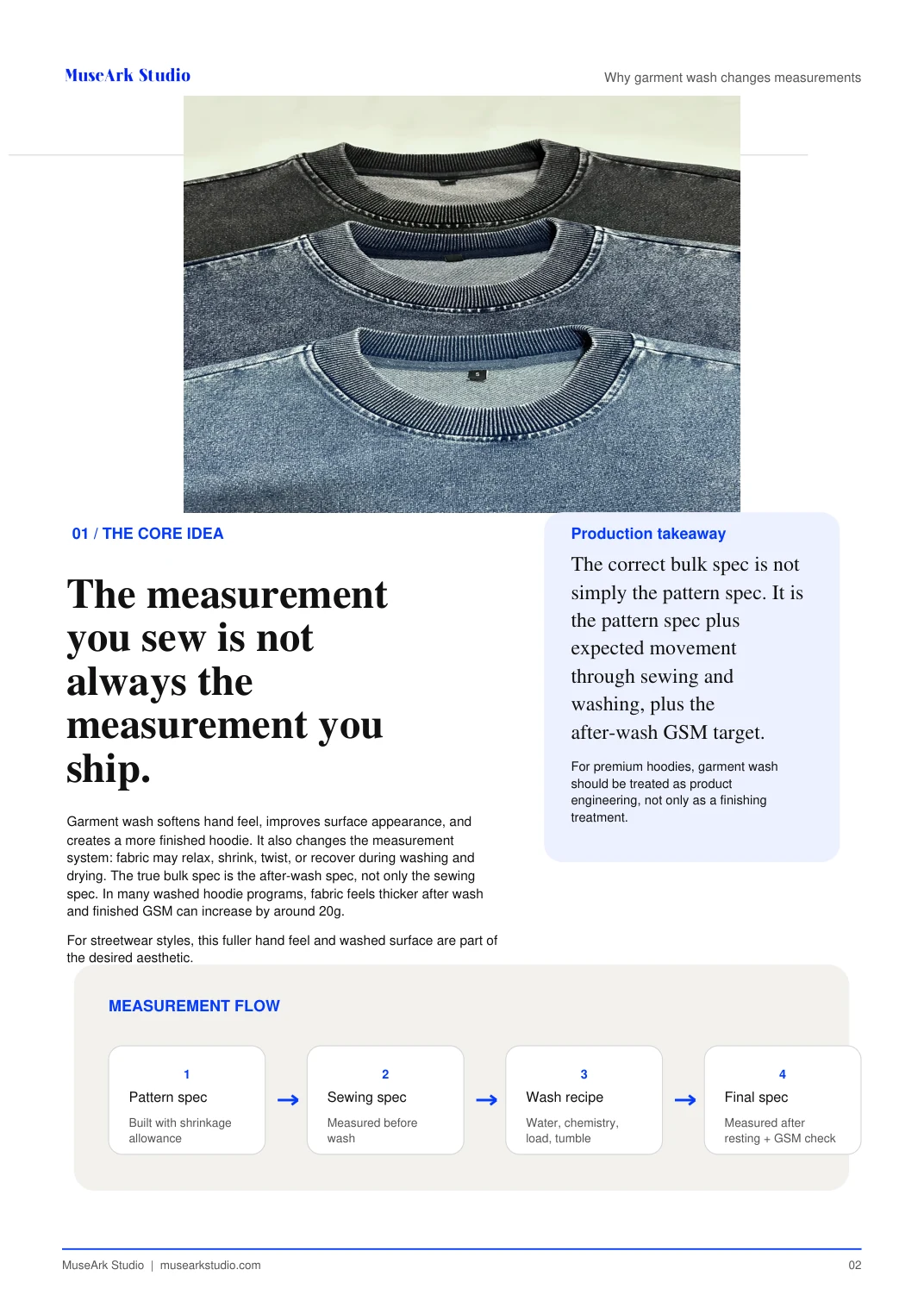
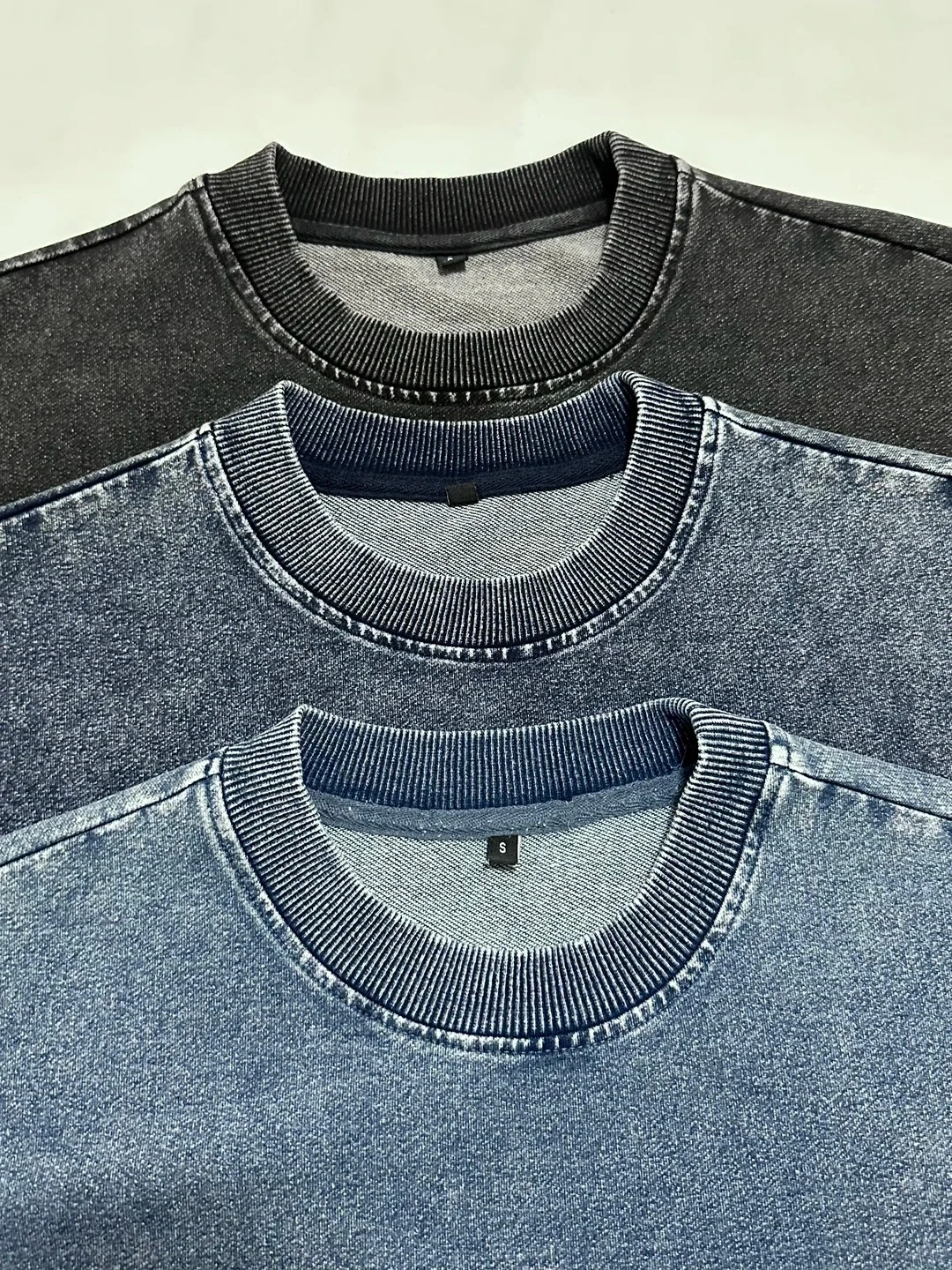
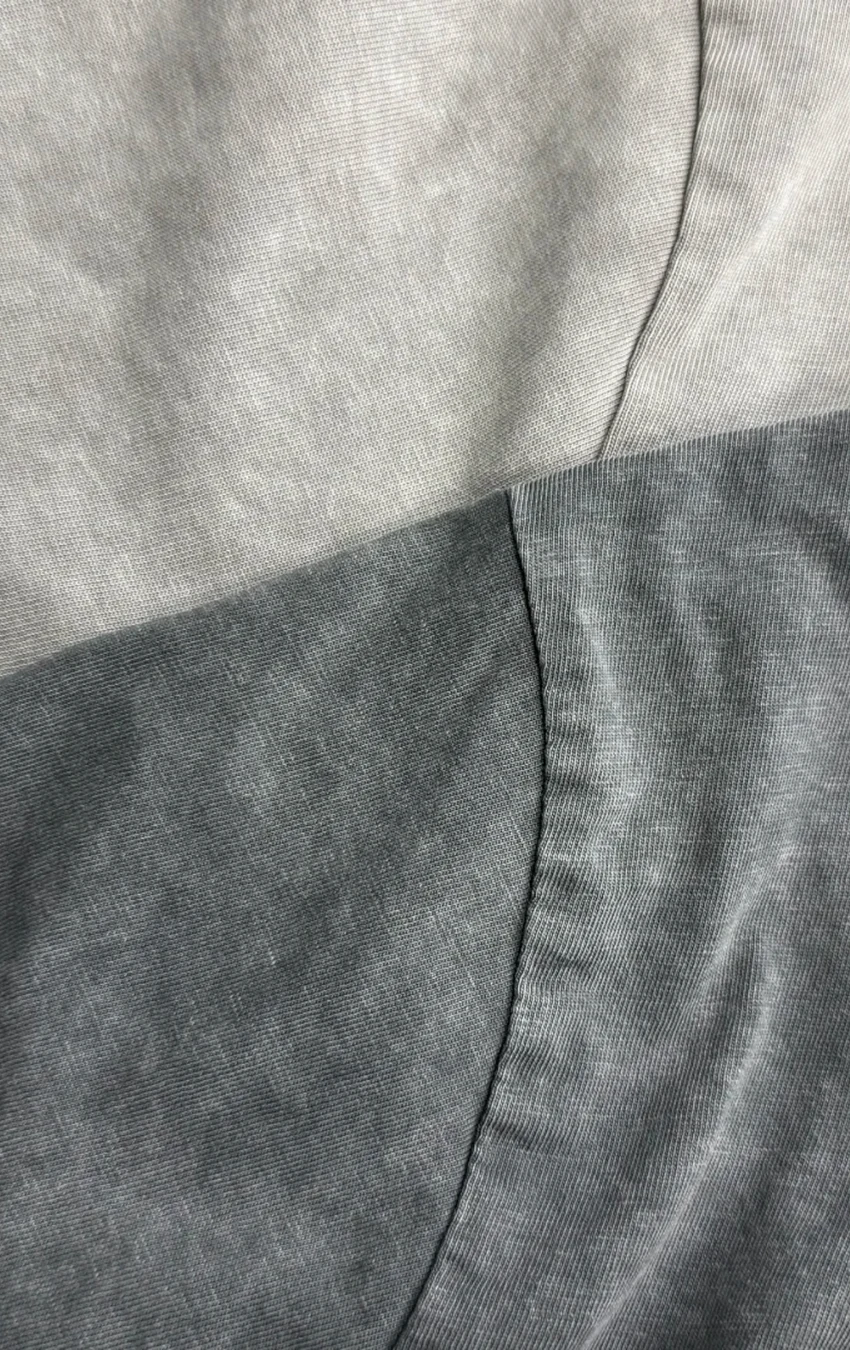
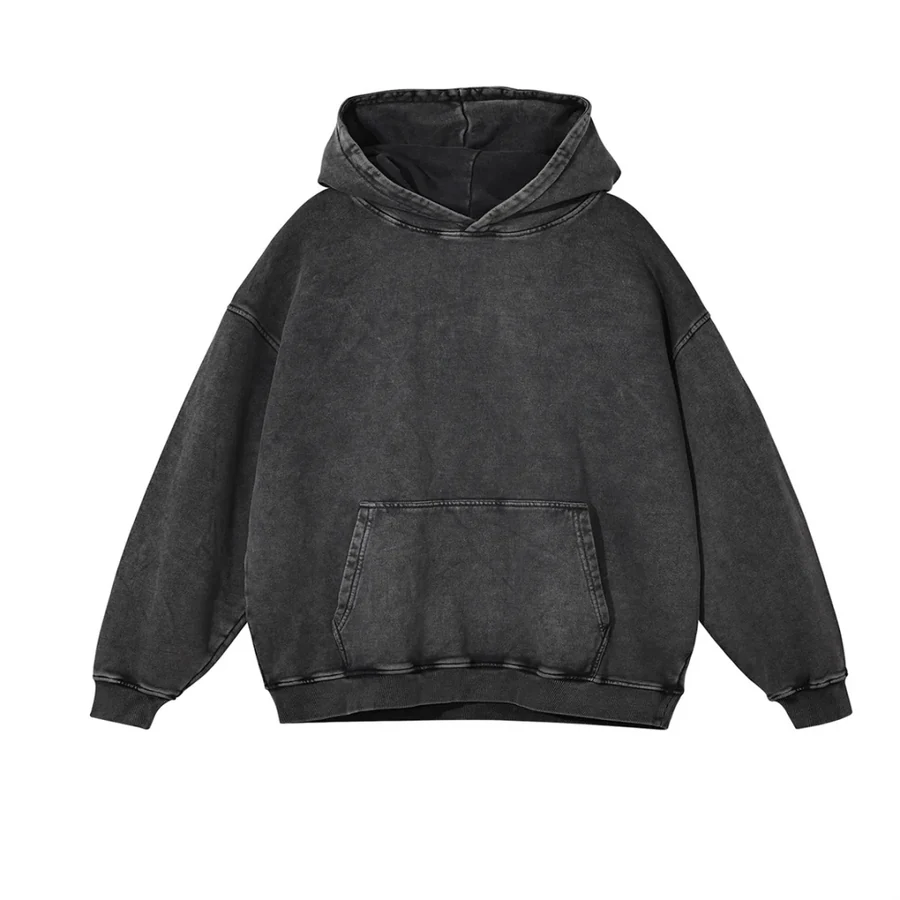
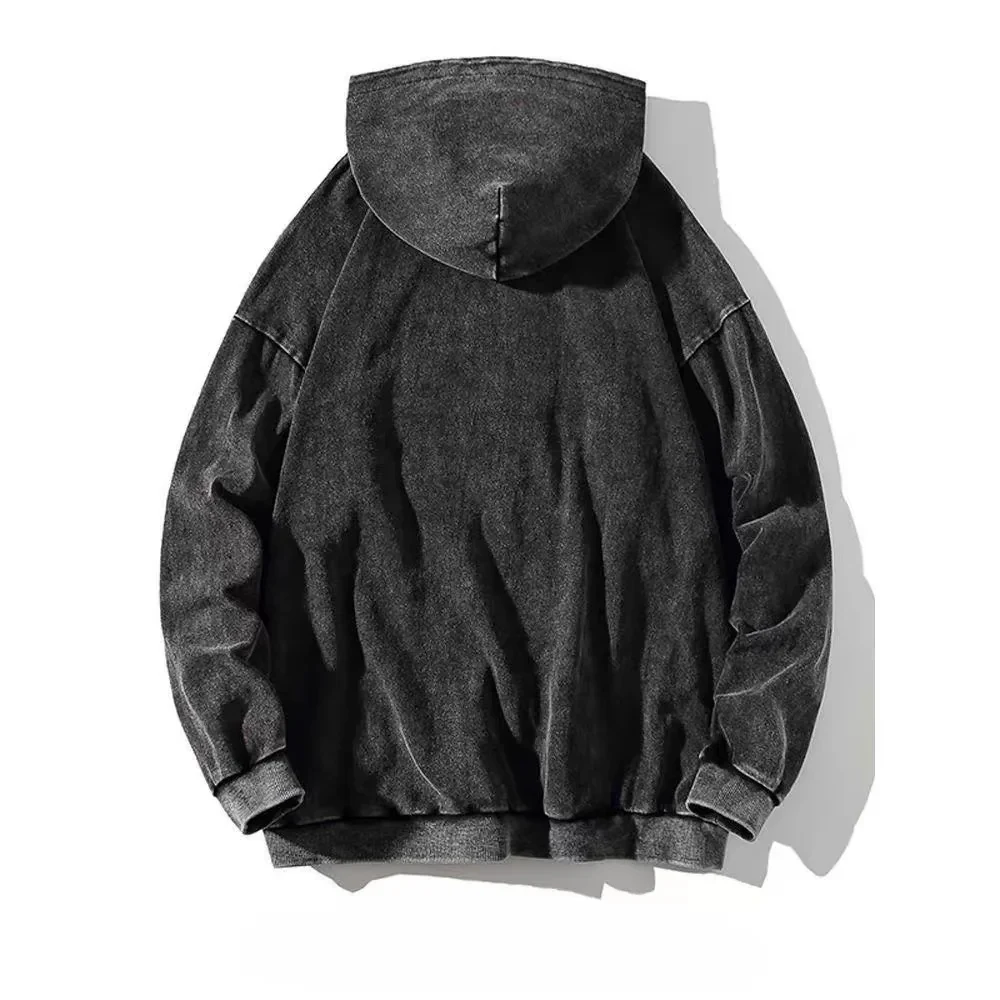
Garment wash softens hand feel, improves surface appearance, and creates a more finished hoodie. It also changes the measurement system: fabric may relax, shrink, twist, or recover during washing and drying. The true bulk spec is the after-wash spec, not only the sewing spec. In many washed hoodie programs, fabric feels thicker after wash and finished GSM can increase by around 20g.
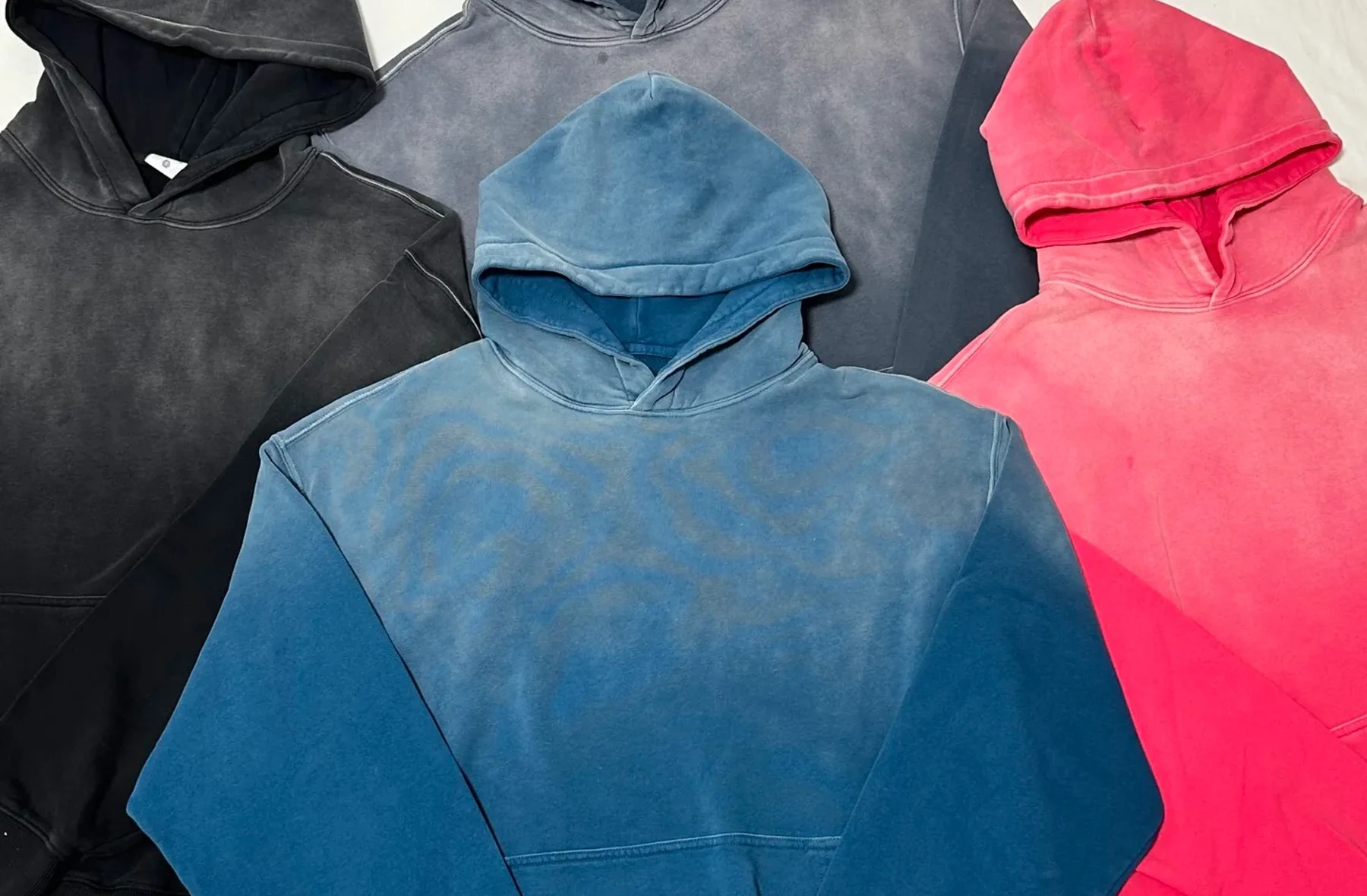
Different wash processes can produce different surface, color and hand-feel results. Garment Dye, Pigment Wash, Enzyme Wash: What's the Difference?
For streetwear styles, this fuller hand feel and washed surface are part of the desired aesthetic.
MEASUREMENT FLOW
| 1 Pattern spec | 2 Sewing spec | 3 Wash recipe | 4 Final spec |
|---|---|---|---|
| Built with shrinkage allowance | Measured before wash | Water, chemistry, load, tumble | Measured after resting + GSM check |
02 / MEASUREMENT POINTS
Where hoodie measurements usually move after wash
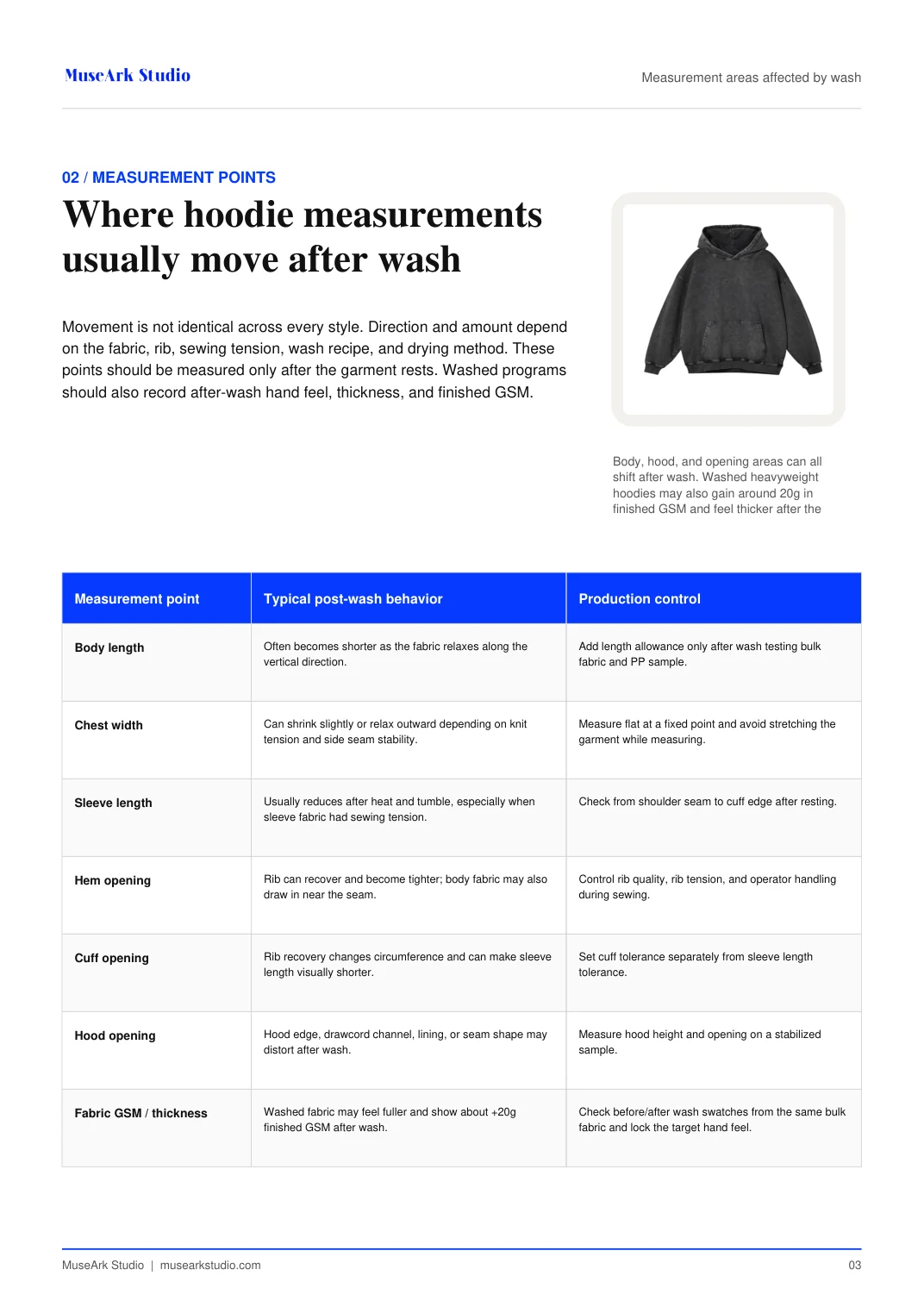
Movement is not identical across every style. Direction and amount depend on the fabric, rib, sewing tension, wash recipe, and drying method. These points should be measured only after the garment rests. Washed programs should also record after-wash hand feel, thickness, and finished GSM.
Body, hood, and opening areas can all shift after wash. Washed heavyweight hoodies may also gain around 20g in finished GSM and feel thicker after the bulk wash.
| Measurement point | Typical post-wash behavior | Production control | When to check | What to lock |
|---|---|---|---|---|
| Body length | Often becomes shorter as the fabric relaxes along the vertical direction. | Add length allowance only after wash testing bulk fabric and PP sample. | PP sample, size set, final QC | Wash recipe, drying method, resting time, allowed tolerance |
| Chest width | Can shrink slightly or relax outward depending on knit tension and side seam stability. | Measure flat at a fixed point and avoid stretching the garment while measuring. | PP sample, size set, final QC | Wash recipe, drying method, resting time, allowed tolerance |
| Sleeve length | Usually reduces after heat and tumble, especially when sleeve fabric had sewing tension. | Check from shoulder seam to cuff edge after resting. | PP sample, size set, final QC | Wash recipe, drying method, resting time, allowed tolerance |
| Hem opening | Rib can recover and become tighter; body fabric may also draw in near the seam. | Control rib quality, rib tension, and operator handling during sewing. | PP sample, size set, final QC | Wash recipe, drying method, resting time, allowed tolerance |
| Cuff opening | Rib recovery changes circumference and can make sleeve length visually shorter. | Set cuff tolerance separately from sleeve length tolerance. | PP sample, size set, final QC | Wash recipe, drying method, resting time, allowed tolerance |
| Hood opening | Hood edge, drawcord channel, lining, or seam shape may distort after wash. | Measure hood height and opening on a stabilized sample. | PP sample, size set, final QC | Wash recipe, drying method, resting time, allowed tolerance |
| Fabric GSM / thickness | Washed fabric may feel fuller and show about +20g finished GSM after wash. | Check before/after wash swatches from the same bulk fabric and lock the target hand feel. | PP sample, size set, final QC | Wash recipe, drying method, resting time, allowed tolerance |
03 / WHY RESULTS VARY
The same wash can create different measurement results.
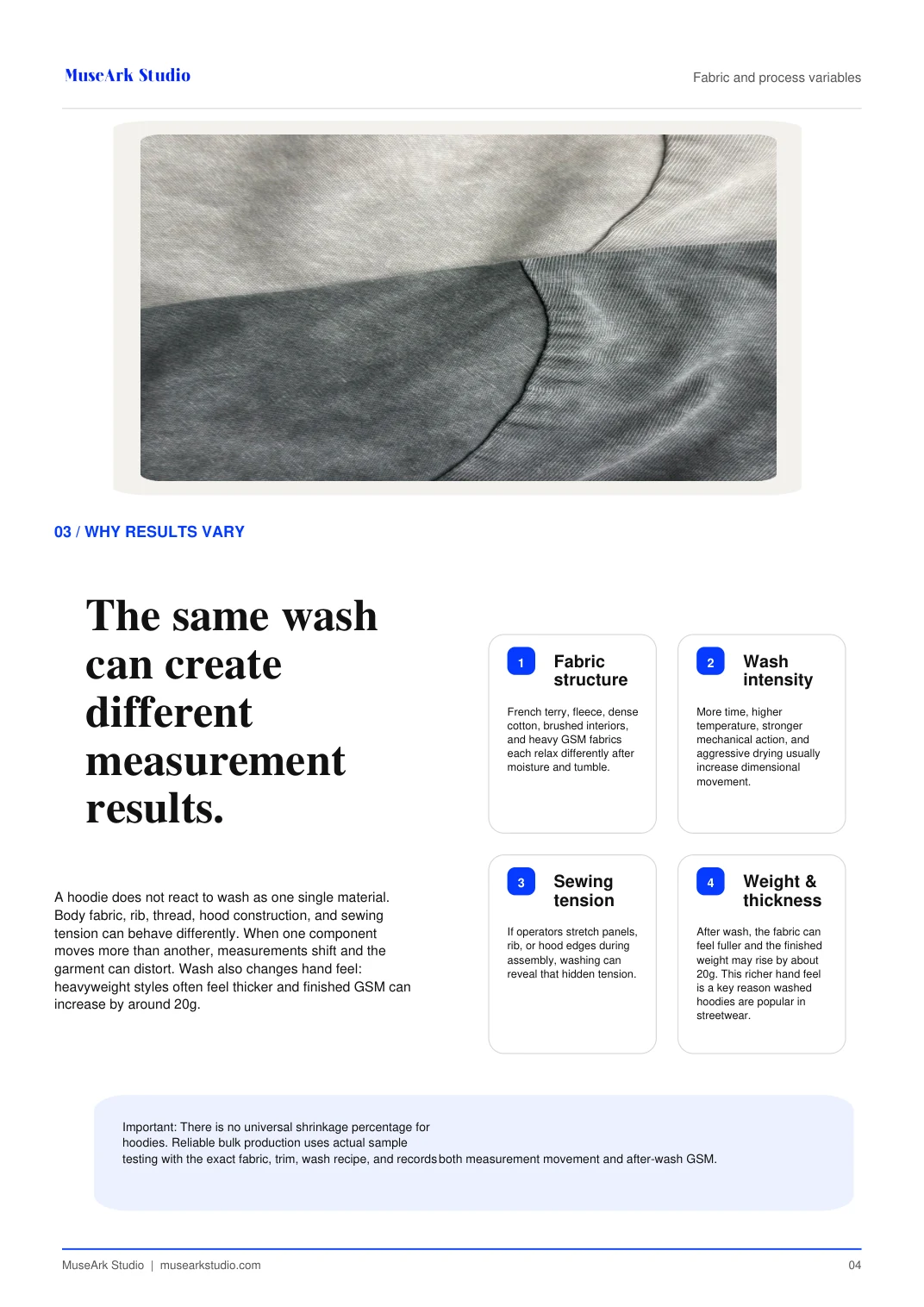
A hoodie does not react to wash as one single material. Body fabric, rib, thread, hood construction, and sewing tension can behave differently. When one component moves more than another, measurements shift and the garment can distort. Wash also changes hand feel: heavyweight styles often feel thicker and finished GSM can increase by around 20g.
Fabric structure
French terry, fleece, dense cotton, brushed interiors, and heavy GSM fabrics each relax differently after moisture and tumble.
Wash intensity
More time, higher temperature, stronger mechanical action, and aggressive drying usually increase dimensional movement.
Sewing tension
If operators stretch panels, rib, or hood edges during assembly, washing can reveal that hidden tension.
Weight & thickness
After wash, the fabric can feel fuller and the finished weight may rise by about 20g. This richer hand feel is a key reason washed hoodies are popular in streetwear.
Fabric weight sets part of the starting point, but it does not replace after-wash testing. 400 vs 500 GSM Hoodies explains how weight affects structure and hand feel before a wash process is finalized.
Important: There is no universal shrinkage percentage for hoodies. Reliable bulk production uses actual sample testing with the exact fabric, trim, wash recipe, and records both measurement movement and after-wash GSM.
Factory Handoff Checklist
- Fabric composition and unwashed GSM.
- Target wash effect and reference images.
- Post-wash target measurements and allowed tolerance.
- Rib, hood shape and drawcord requirements.
- Target after-wash hand feel and finished GSM.
- Lock the bulk wash recipe only after PP sample approval.
What Information Does a Factory Need Before Sampling? covers the broader input a factory needs before turning this wash direction into a workable sample.
04 / BULK PRODUCTION CONTROL
How to keep final hoodie measurements consistent
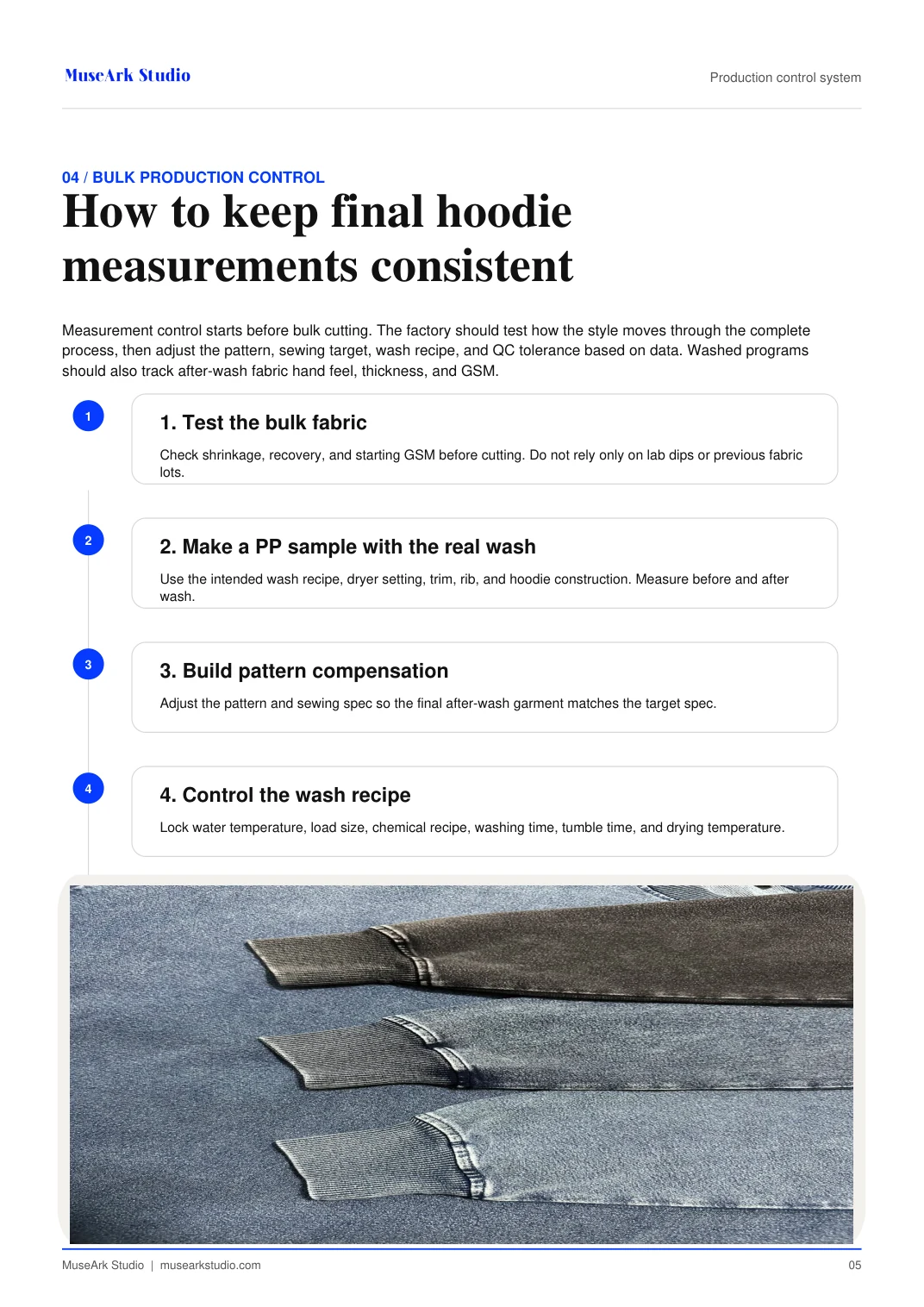
Measurement control starts before bulk cutting. The factory should test how the style moves through the complete process, then adjust the pattern, sewing target, wash recipe, and QC tolerance based on data. Washed programs should also track after-wash fabric hand feel, thickness, and GSM.
- Test the bulk fabric: Check shrinkage, recovery, and starting GSM before cutting. Do not rely only on lab dips or previous fabric lots.
- Make a PP sample with the real wash: Use the intended wash recipe, dryer setting, trim, rib, and hoodie construction. Measure before and after wash.
- Build pattern compensation: Adjust the pattern and sewing spec so the final after-wash garment matches the target spec.
- Control the wash recipe: Lock water temperature, load size, chemical recipe, washing time, tumble time, and drying temperature.
A Real Hoodie Production Timeline shows where PP approval, bulk production and final QC fit into the wider hoodie workflow.
05 / FINAL MEASUREMENT QC
Control the spec after wash, not only before wash.
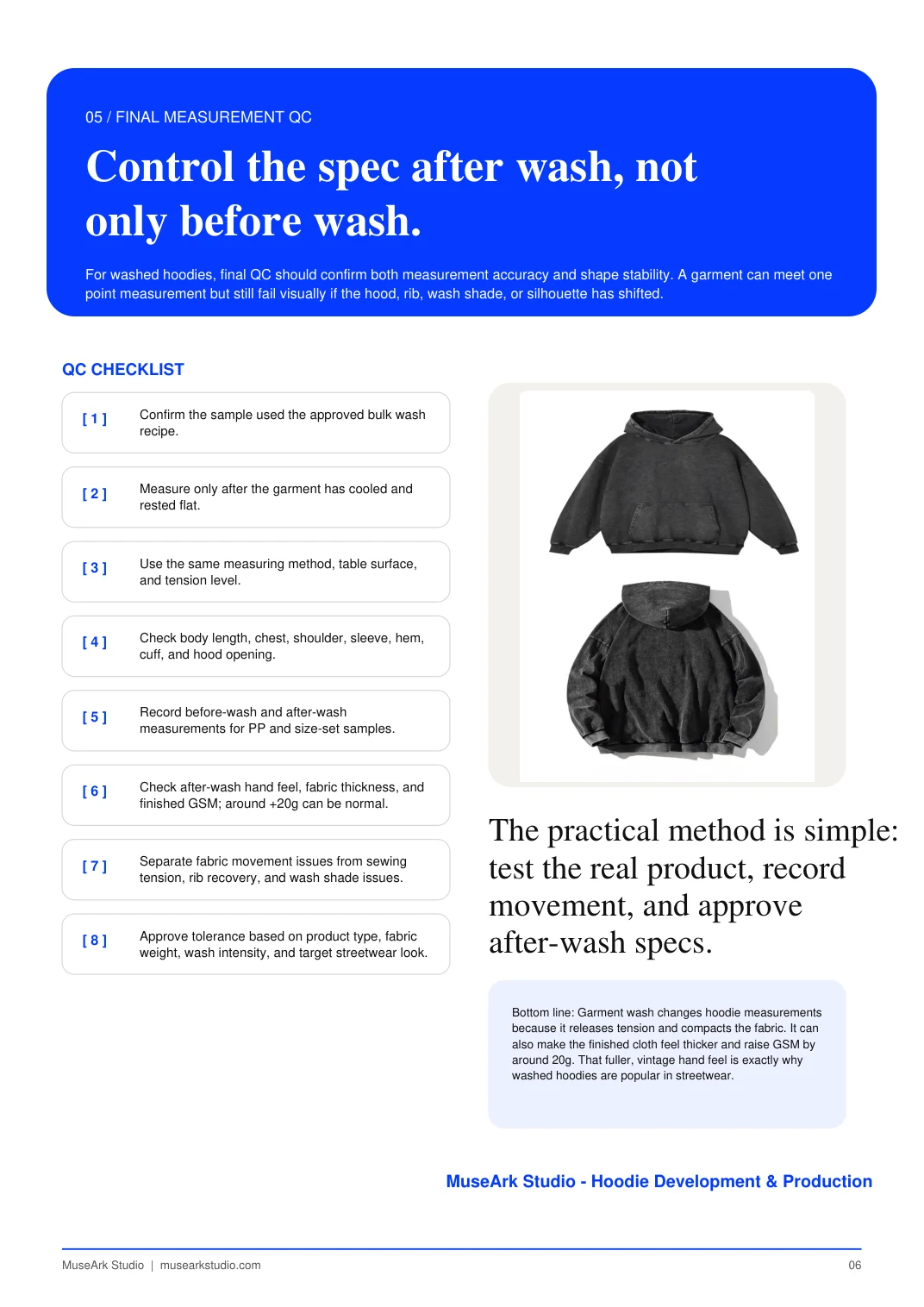
For washed hoodies, final QC should confirm both measurement accuracy and shape stability. A garment can meet one point measurement but still fail visually if the hood, rib, wash shade, or silhouette has shifted.
QC CHECKLIST
- Confirm the sample used the approved bulk wash recipe.
- Measure only after the garment has cooled and rested flat.
- Use the same measuring method, table surface, and tension level.
- Check body length, chest, shoulder, sleeve, hem, cuff, and hood opening.
- Record before-wash and after-wash measurements for PP and size-set samples.
- Check after-wash hand feel, fabric thickness, and finished GSM; around +20g can be normal.
- Separate fabric movement issues from sewing tension, rib recovery, and wash shade issues.
- Approve tolerance based on product type, fabric weight, wash intensity, and target streetwear look.
The practical method is simple: test the real product, record movement, and approve after-wash specs.
Bottom line: Garment wash changes hoodie measurements because it releases tension and compacts the fabric. It can also make the finished cloth feel thicker and raise GSM by around 20g. That fuller, vintage hand feel is exactly why washed hoodies are popular in streetwear.
For a production partner that can coordinate fabric, wash development, sampling and bulk control, see our custom hoodie manufacturing program.
Washed Hoodie FAQ
Does garment wash shrink hoodies?
Garment wash can change hoodie dimensions, including body length, chest, sleeves, rib openings and hood opening. The result varies by fabric, construction, wash recipe and drying method, so it should be confirmed with an actual washed sample rather than a universal shrinkage percentage.
Should hoodie measurements be checked before or after wash?
Check both, but approve the final specification after the washed garment has cooled and rested flat. Before-wash measurements help the factory build pattern compensation, while after-wash measurements show the dimensions that will be shipped.
Why can a washed hoodie feel thicker or show a higher finished GSM?
Washing and drying can compact the fabric and create a fuller hand feel. In some hoodie programs, finished GSM can increase by around 20g, but the actual result must be checked against the specific bulk fabric and approved wash recipe.
MuseArk Studio - Hoodie Development & Production