
A practical English guide to four commonly used decoration methods in apparel production: Rubber Print, Heat Transfer, Embossing, and Puff Print. Each method creates a different look, touch, and production value - and the right choice depends on your design goal.
RUBBER PRINT HEAT TRANSFER EMBOSSING PUFF PRINT
In short
Choose Rubber Print for vivid color and durability, Heat Transfer for sharp detail and small custom runs, Embossing for subtle texture and a premium hand feel, and Puff Print for soft raised graphics with playful 3D impact.
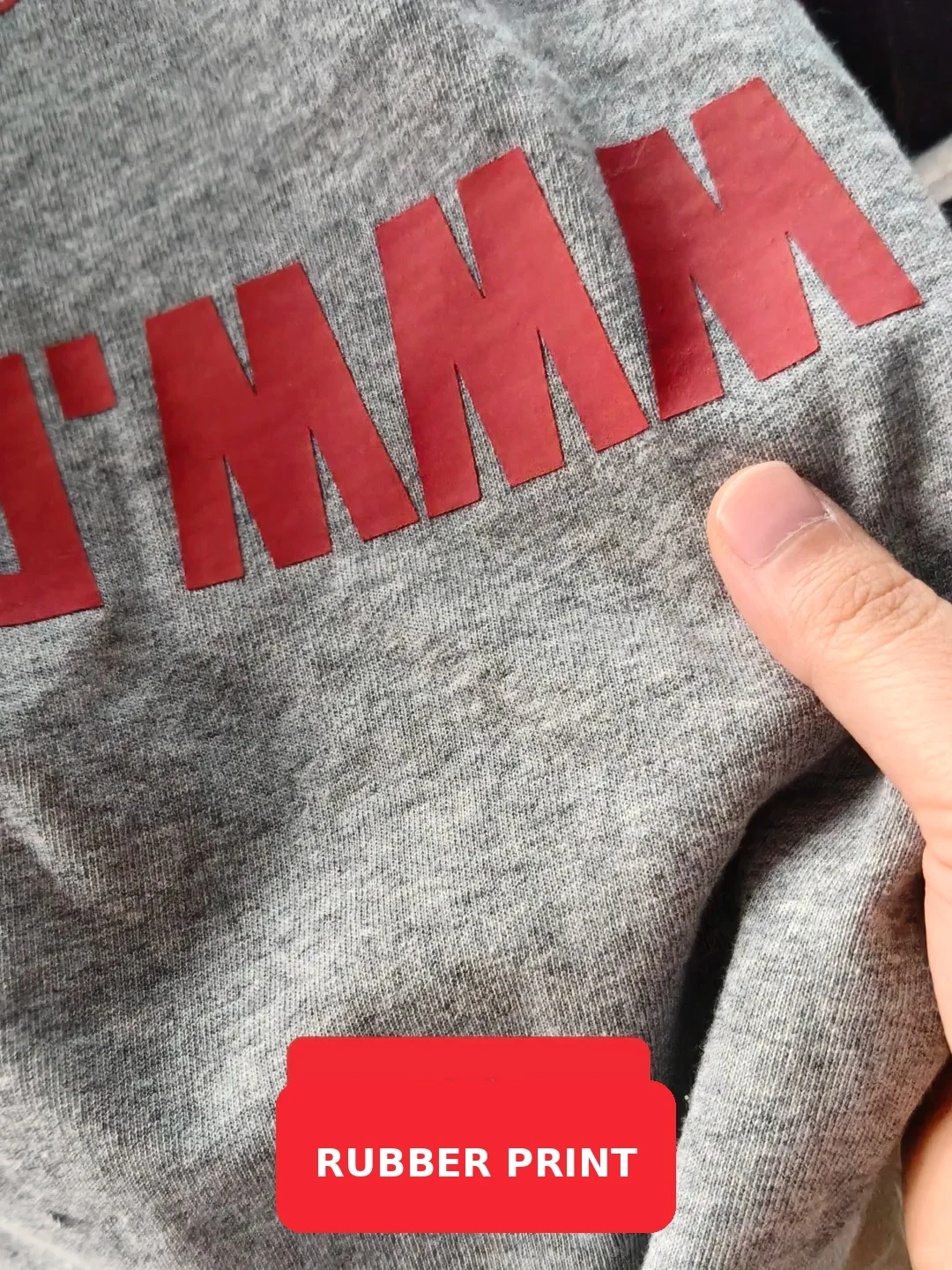
01 Rubber Print
A bold, durable method with a smooth raised surface.
What it is
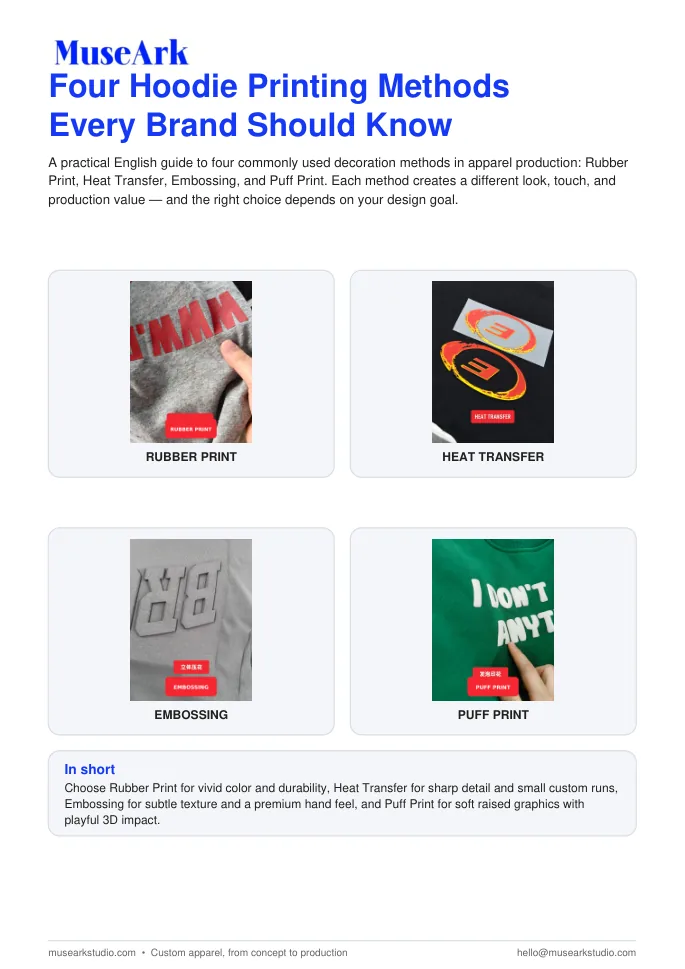
Rubber print uses a rubber-like print paste to build a slightly raised layer on the garment surface. It looks bold on fabric and feels like a soft coating sitting on top of the knit.
Why brands use it
- Smooth surface with visible thickness and a lightly raised hand feel.
- Bright, saturated color that stands out well on casual and athletic garments.
- Good wash resistance and abrasion resistance for repeated wear.
Best for
- Streetwear T-shirts and hoodies
- Sportswear logos and bold graphic placements
- Designs that need color impact and durability
Quick tip
If you want vivid color, clear visibility, and a tough surface that holds up well, rubber print is usually the safest pick.
Rubber print is commonly applied through screen-printing processes. For a direct comparison with embroidery, see our Screen Printing vs Embroidery guide.
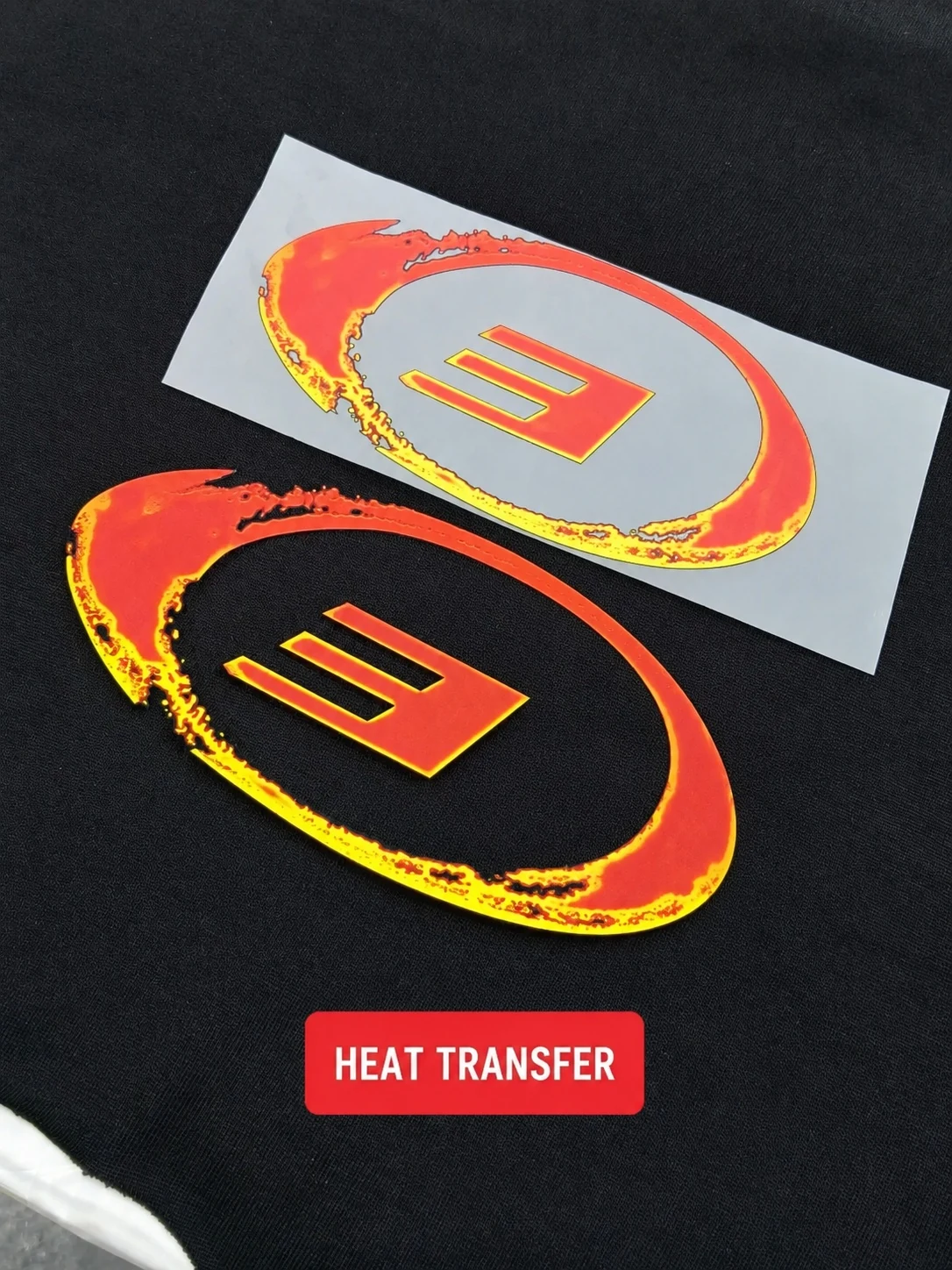
02 Heat Transfer
An efficient way to apply detailed graphics with crisp edges.
What it is
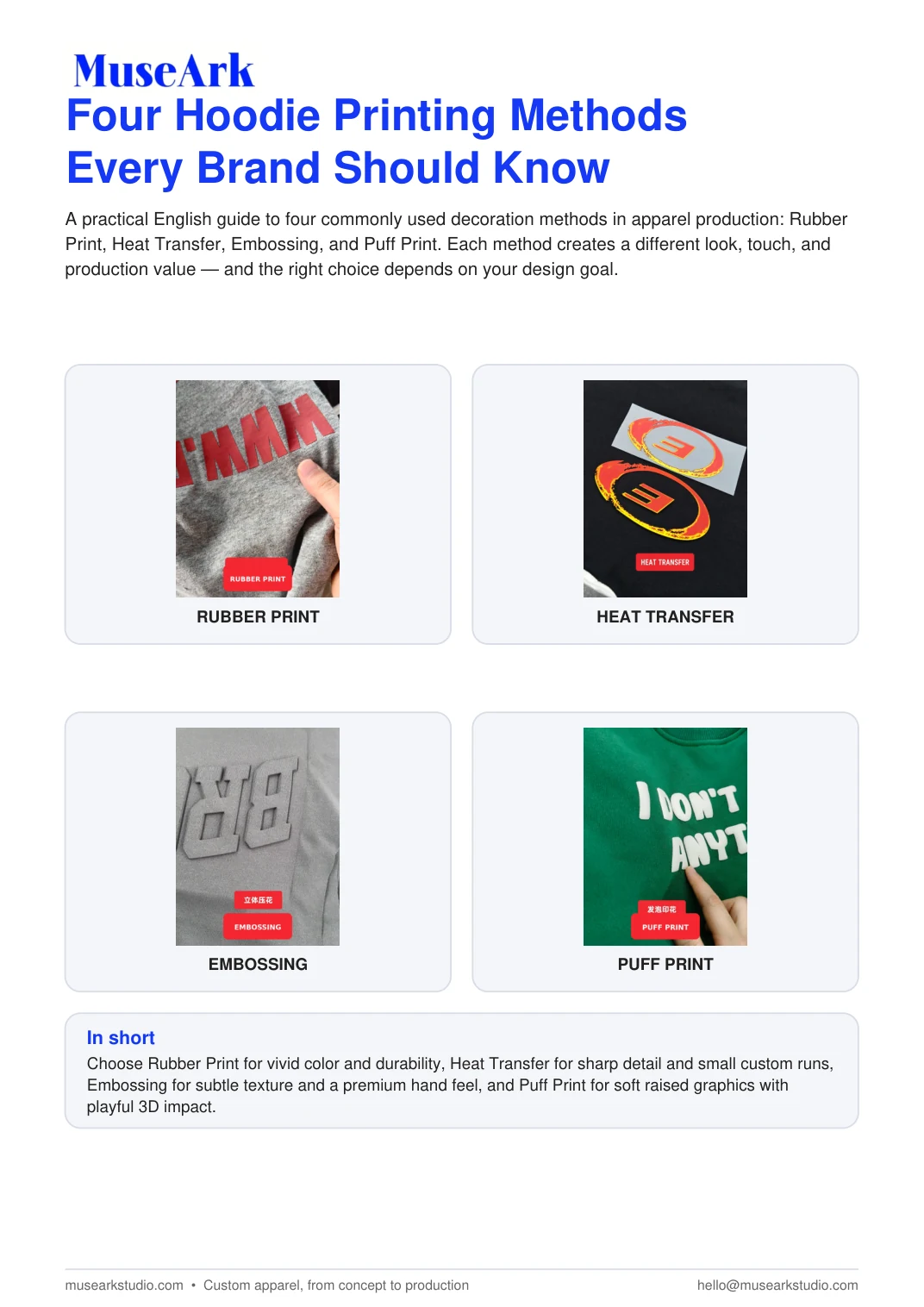
Heat transfer starts by printing the artwork on a transfer film first. The design is then pressed onto the garment with heat and pressure, creating a clean and well-defined result.
Why brands use it
- Very sharp edges and clean graphic separation.
- Handles complex color blends and detailed artwork well.
- Useful for small-batch customization and styles with many fine details.
Best for
- Custom runs and short production orders
- Logos or illustrations with gradients and small details
- Designs that need a sticker-like clean finish
Quick tip
Choose heat transfer when detail matters most - especially for multi-color graphics, sample development, or low-volume customization.
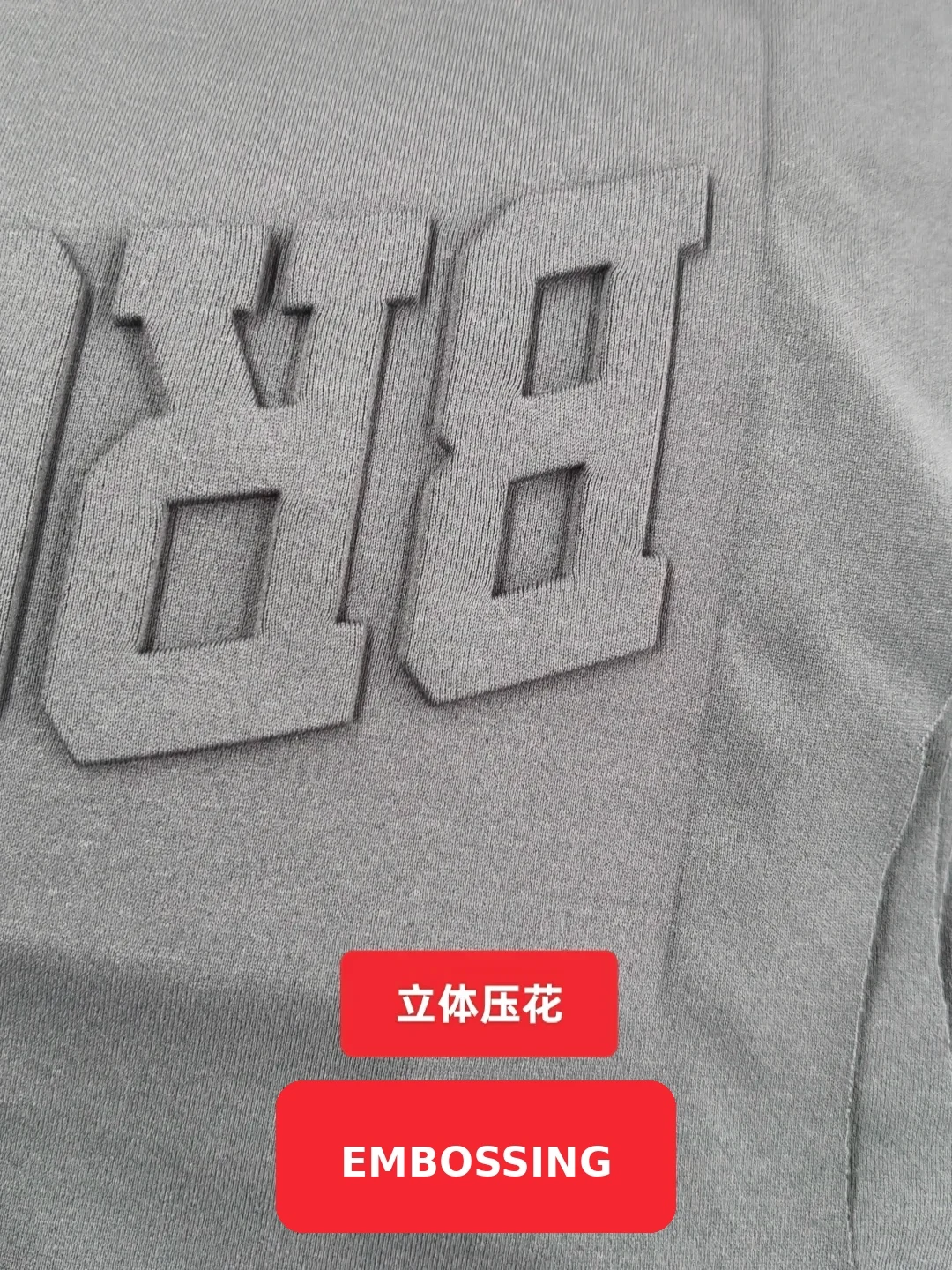
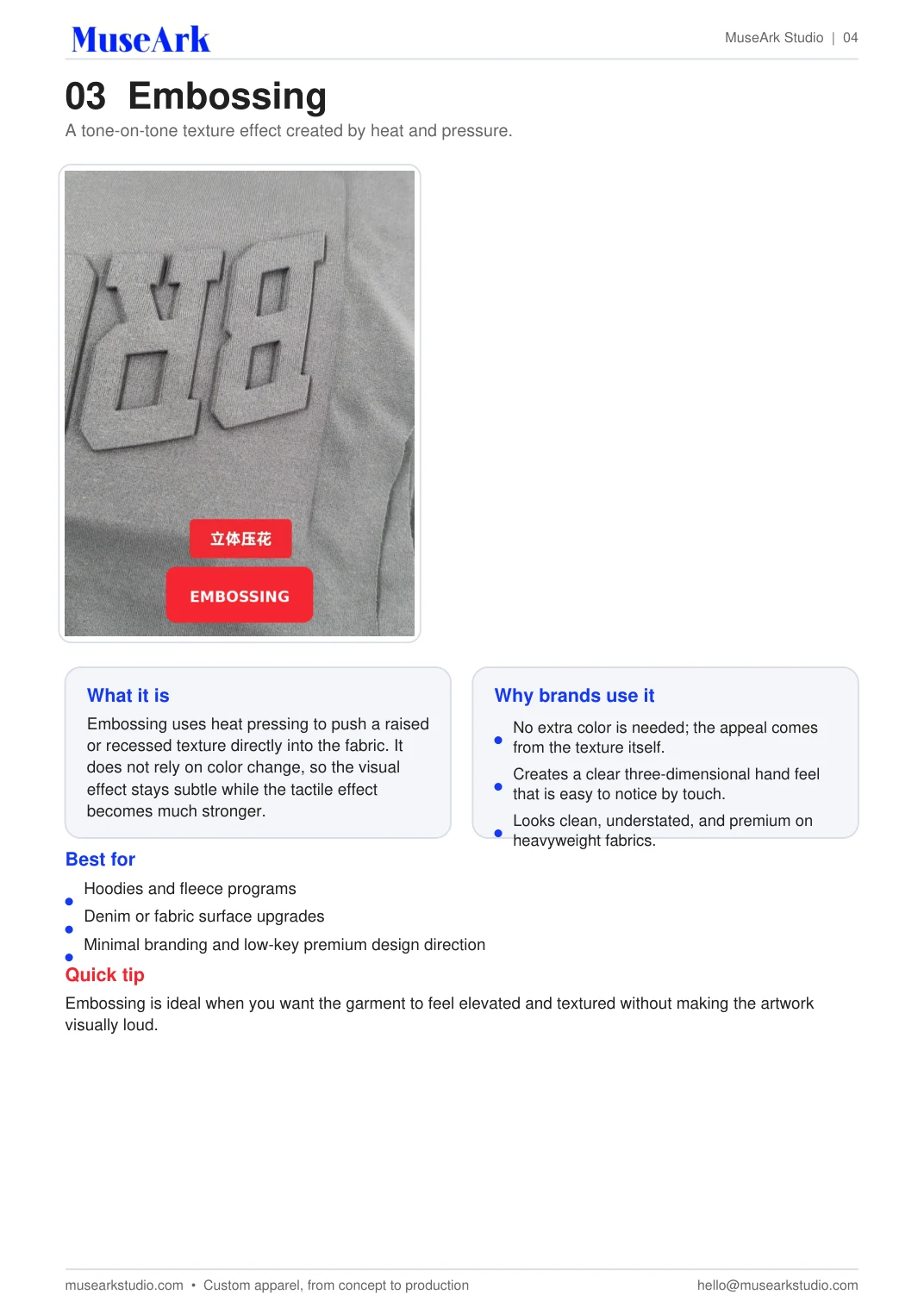
03 Embossing
A tone-on-tone texture effect created by heat and pressure.
What it is
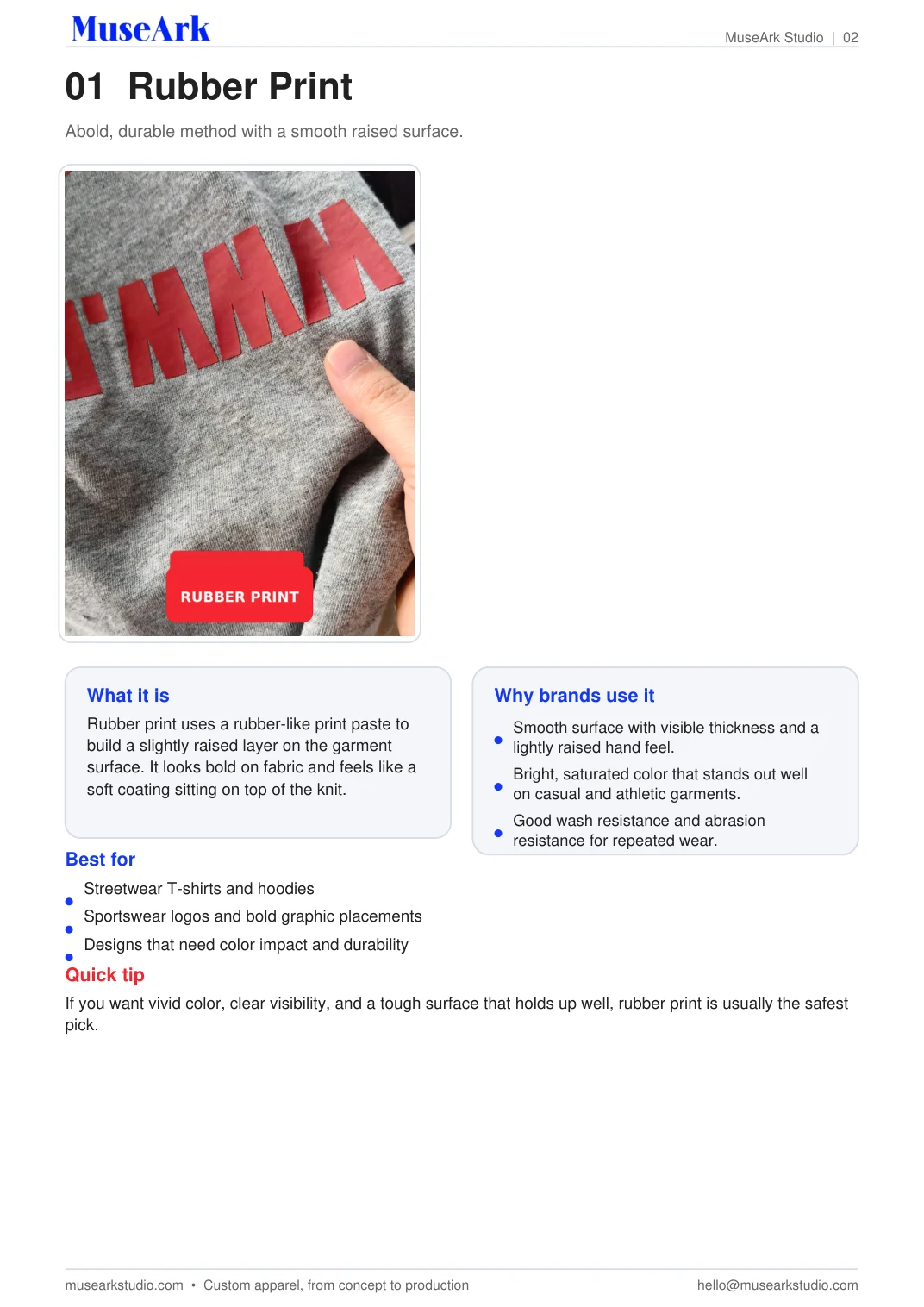
Embossing uses heat pressing to push a raised or recessed texture directly into the fabric. It does not rely on color change, so the visual effect stays subtle while the tactile effect becomes much stronger.
Why brands use it
- No extra color is needed; the appeal comes from the texture itself.
- Creates a clear three-dimensional hand feel that is easy to notice by touch.
- Looks clean, understated, and premium on heavyweight fabrics.
Best for
- Hoodies and fleece programs
- Denim or fabric surface upgrades
- Minimal branding and low-key premium design direction
Quick tip
Embossing is ideal when you want the garment to feel elevated and textured without making the artwork visually loud.
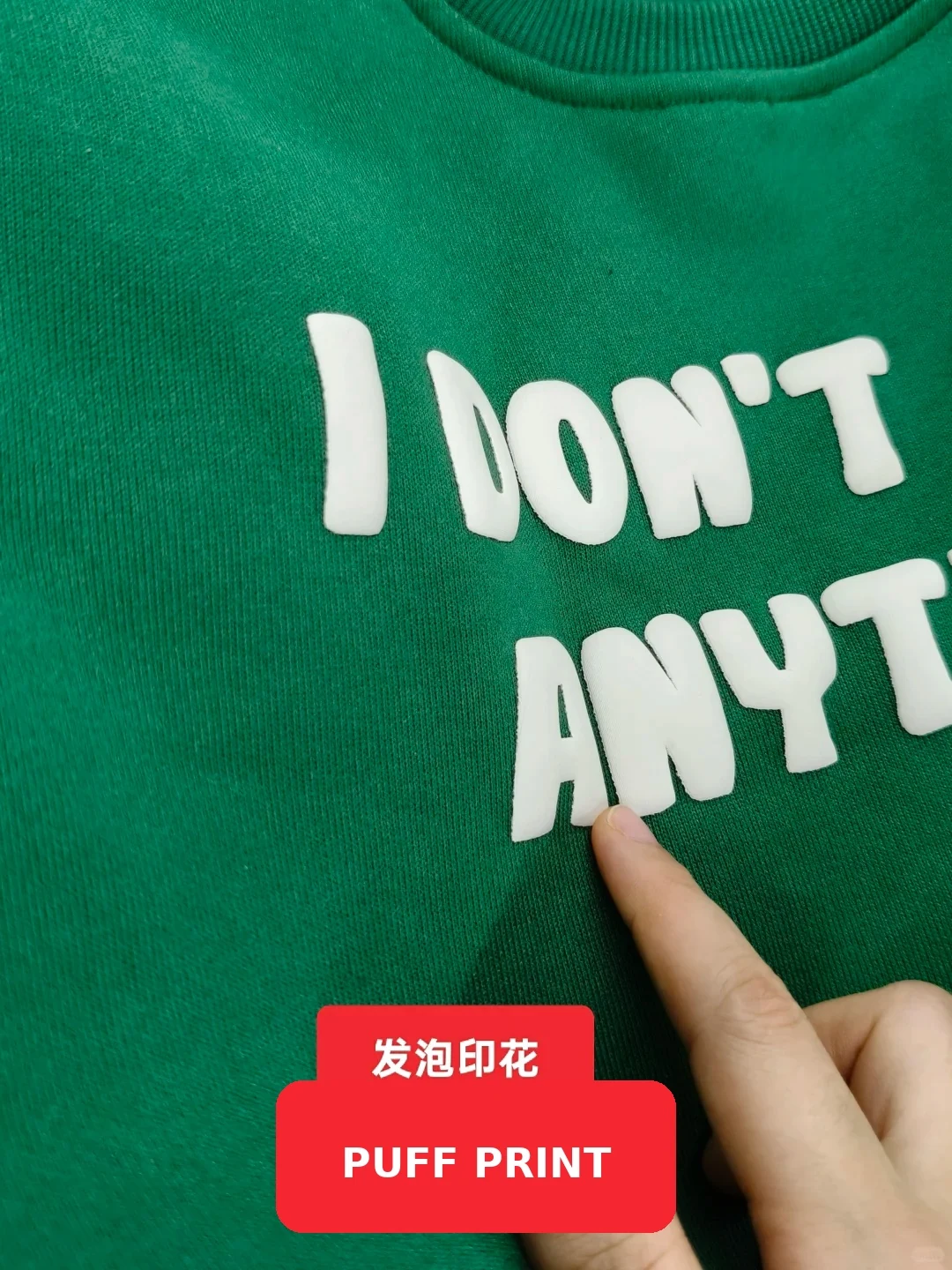
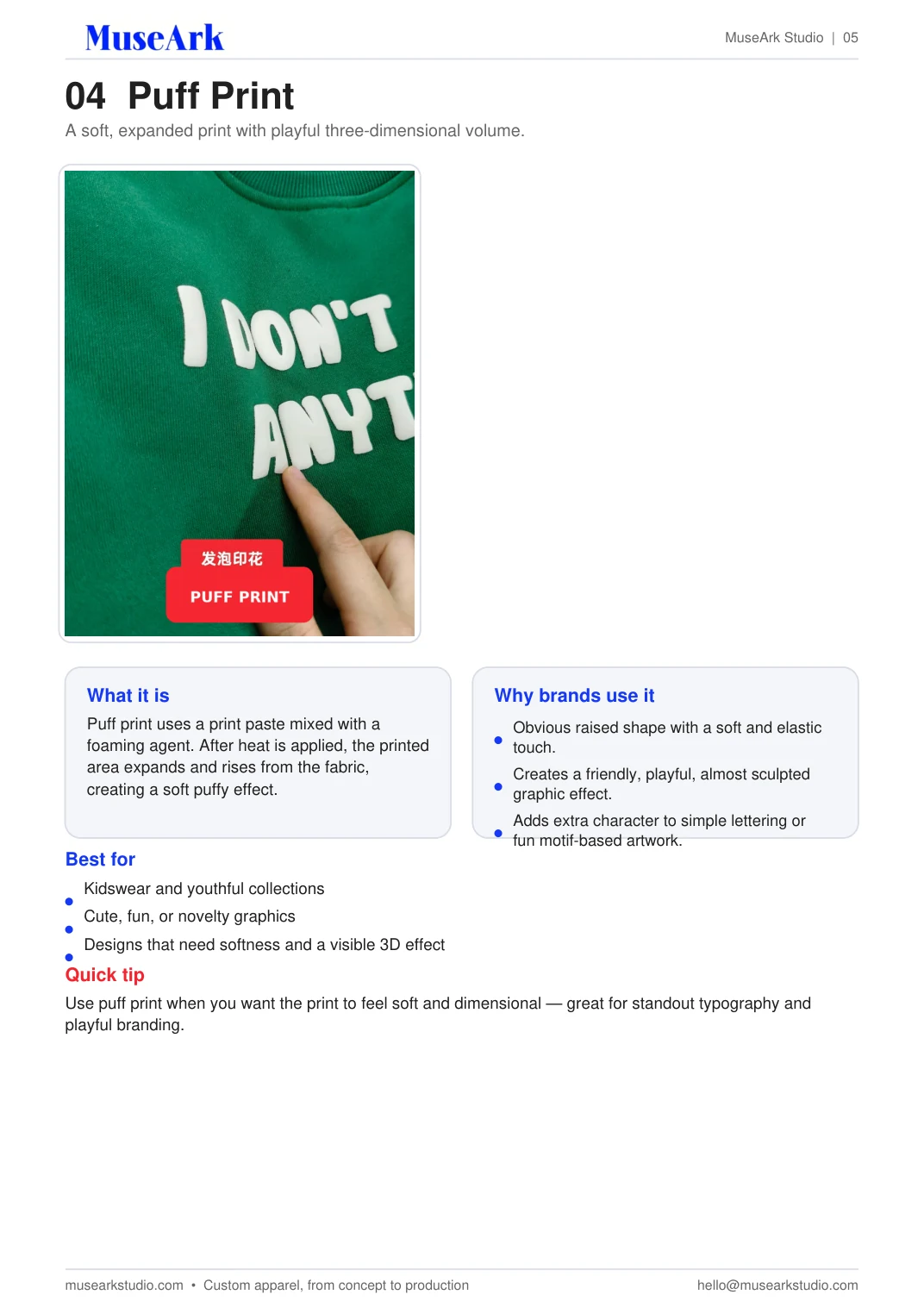
04 Puff Print
A soft, expanded print with playful three-dimensional volume.
What it is
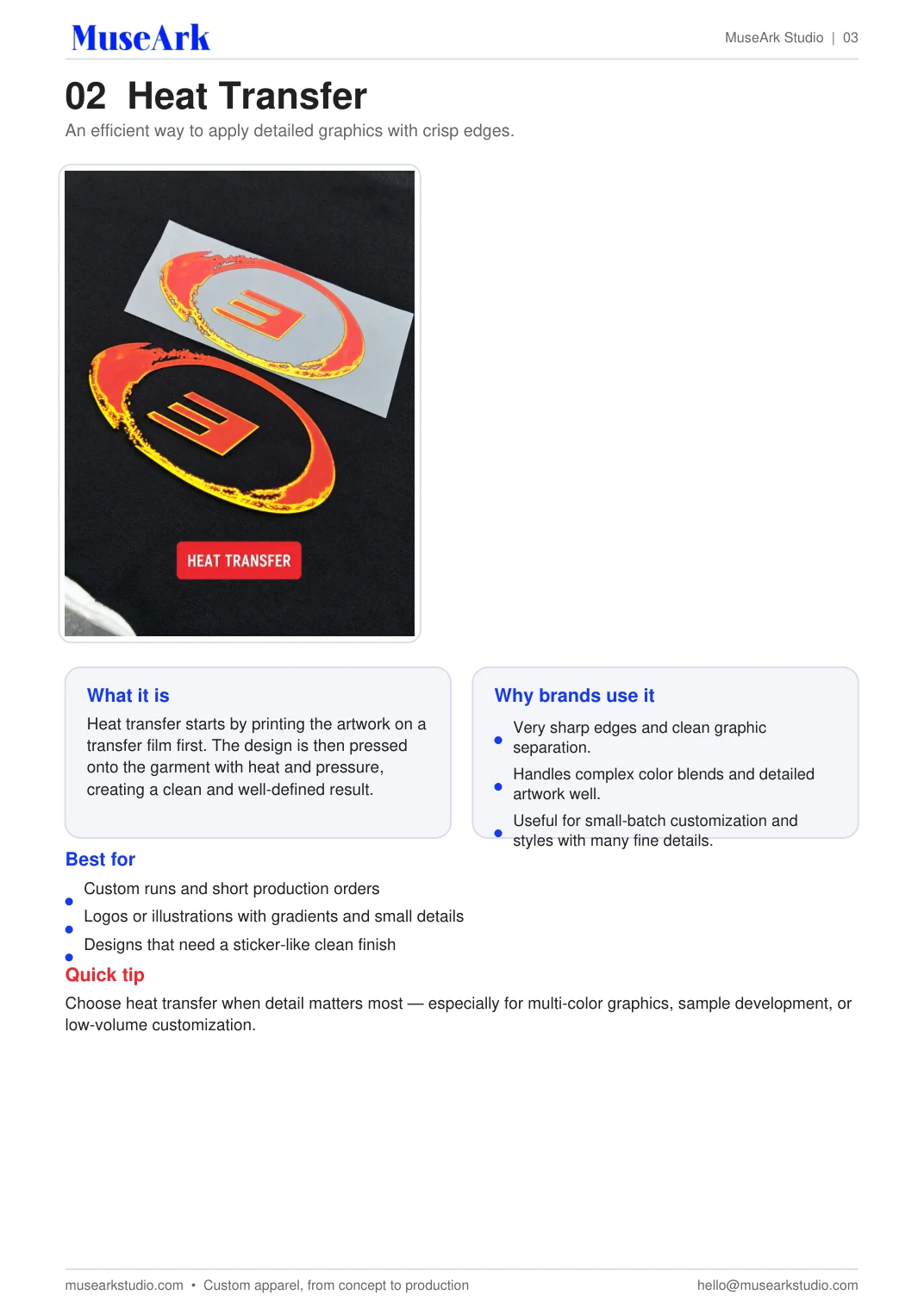
Puff print uses a print paste mixed with a foaming agent. After heat is applied, the printed area expands and rises from the fabric, creating a soft puffy effect.
Why brands use it
- Obvious raised shape with a soft and elastic touch.
- Creates a friendly, playful, almost sculpted graphic effect.
- Adds extra character to simple lettering or fun motif-based artwork.
Best for
- Kidswear and youthful collections
- Cute, fun, or novelty graphics
- Designs that need softness and a visible 3D effect
Quick tip
Use puff print when you want the print to feel soft and dimensional - great for standout typography and playful branding.
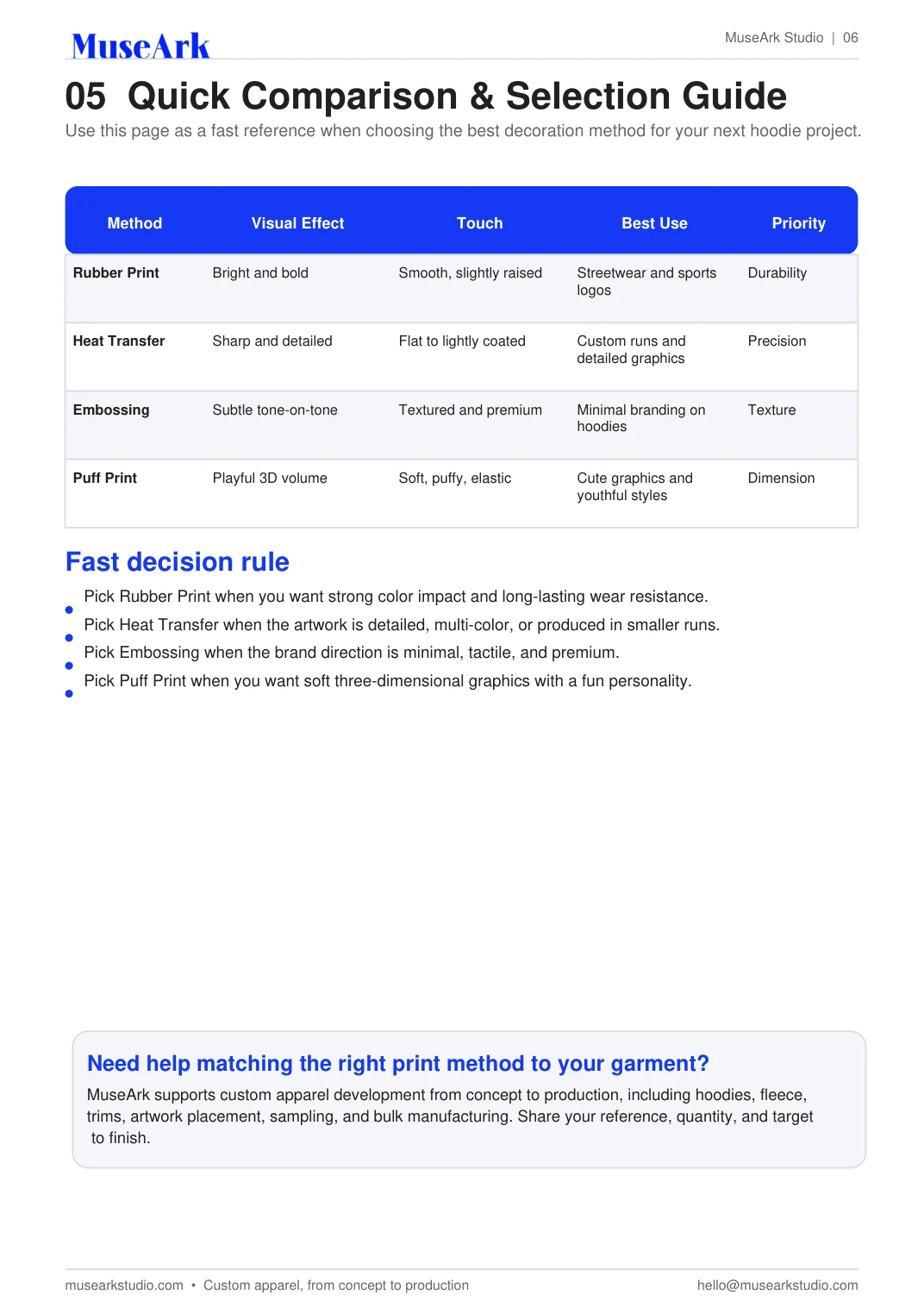
05 Quick Comparison & Selection Guide
Use this comparison to match the decoration method to your artwork, handfeel target, order size, and wash requirements before sampling.
| Method | Best for | Feel | Detail | Fabric / fit considerations | Cost and production notes |
|---|---|---|---|---|---|
| Rubber Print | Logos and solid-color graphics | Slightly rubberized | Medium | Review breathability for large coverage | Suited to stable bulk production |
| Heat Transfer | Multi-color and photo-style graphics | Surface film feel | High | Test wash resistance and stretch | Useful for complex, smaller-run artwork |
| Embossing | Premium tone-on-tone effects | Raised or recessed texture | Low to medium | Depends on fabric thickness and surface | Suited to simple, elevated branding |
| Puff Print | Dimensional type and graphics | Expanded and raised | Medium | Use large coverage carefully | Control expansion and cracking risk |
Performance depends on fabric, artwork, production setup, and wash testing. Confirm the final method on a sample before bulk production.
Fast decision rule
- Pick Rubber Print when you want strong color impact and long-lasting wear resistance.
- Pick Heat Transfer when the artwork is detailed, multi-color, or produced in smaller runs.
- Pick Embossing when the brand direction is minimal, tactile, and premium.
- Pick Puff Print when you want soft three-dimensional graphics with a fun personality.
Need help choosing the right print method for your fabric, artwork, quantity, and target price? Explore our custom trims and finishing options or send us your artwork for a production recommendation.
For teams developing a full fleece program, see our custom hoodie manufacturing capabilities before confirming fabric, decoration, and finishing together.
Typical production planning for hoodie decoration
| Planning item | Current baseline |
|---|---|
| Typical MOQ | 50+ pcs per style for a focused hoodie decoration route. |
| Sample development | 7-14 days after artwork, fabric, and placement are confirmed. Puff, embossing, and color-heavy routes can need an extra strike-off or approval. |
| Bulk production after approval | 4-8 weeks after garment, decoration, color, and wash approvals are locked. |
| What can change it | Artwork complexity, color count, transfer or print setup, raised effects, embroidery, wash compatibility, order quantity, material availability, and approval speed. |
These are planning ranges, not fixed promises. Final timing depends on the fabric, process, order quantity, and confirmation speed.
FAQ
Which hoodie printing method lasts the longest?
There is no single longest-lasting method for every hoodie. Rubber print can be highly durable when the ink system, curing, fabric, and wash testing are controlled. The final result also depends on artwork coverage, garment care, and production setup.
Is puff print suitable for heavyweight fleece?
Yes, puff print can work on heavyweight fleece when the paste, artwork coverage, and curing conditions are matched to the fabric. Test samples first, especially for large print areas, because excessive expansion can affect hand feel and create cracking risk over time.
Can heat transfer be used on washed or garment-dyed hoodies?
Heat transfer can be used on washed or garment-dyed hoodies, but it needs fabric-specific testing. The finished surface, residual chemicals, dye migration, stretch, and wash route can all affect adhesion and color stability. Apply and test the transfer on the finished garment before bulk production.
Need a print method recommendation?
Send your artwork, fabric direction, quantity, and target price for a production review.
Get a Printing Method Recommendation