
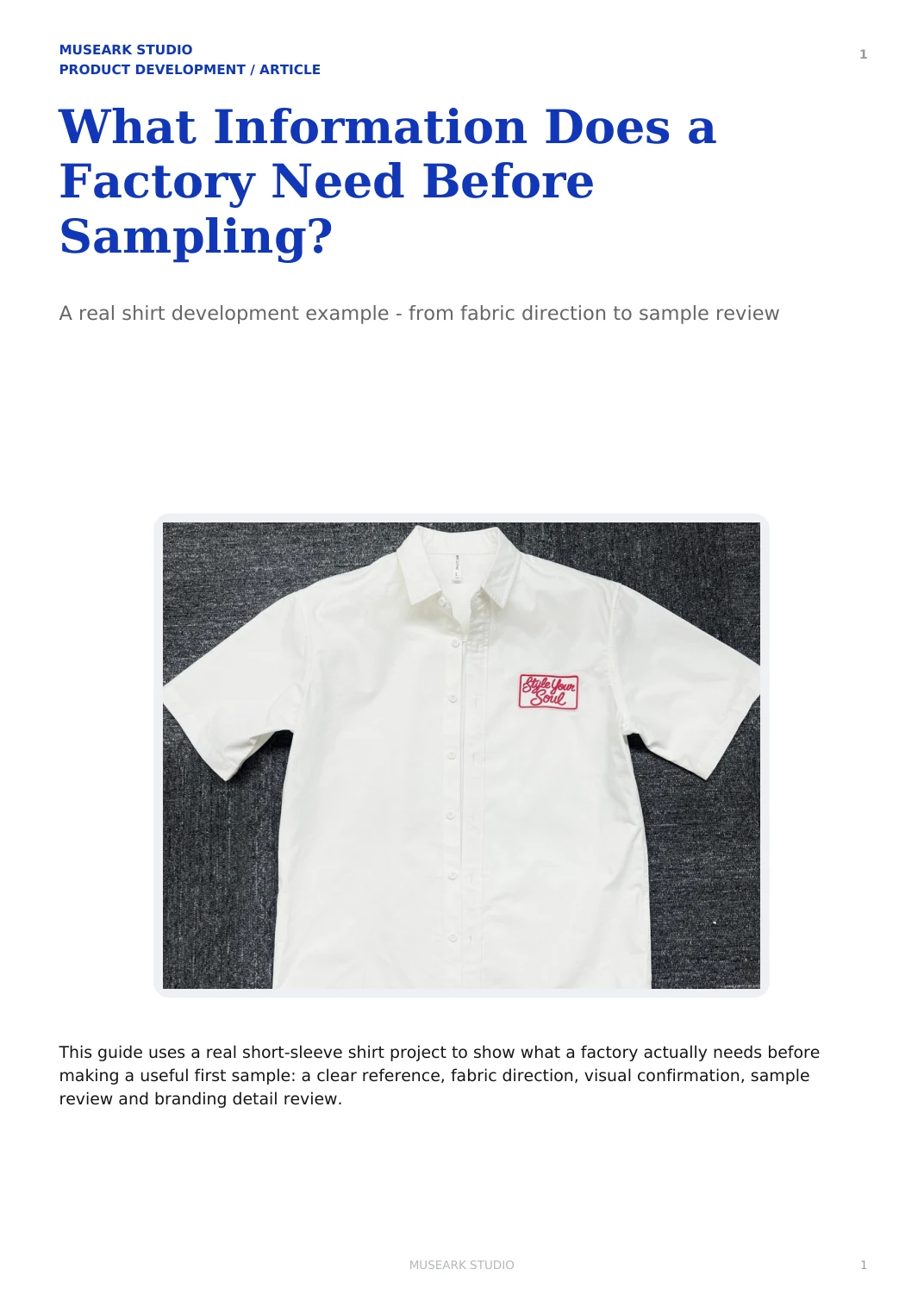
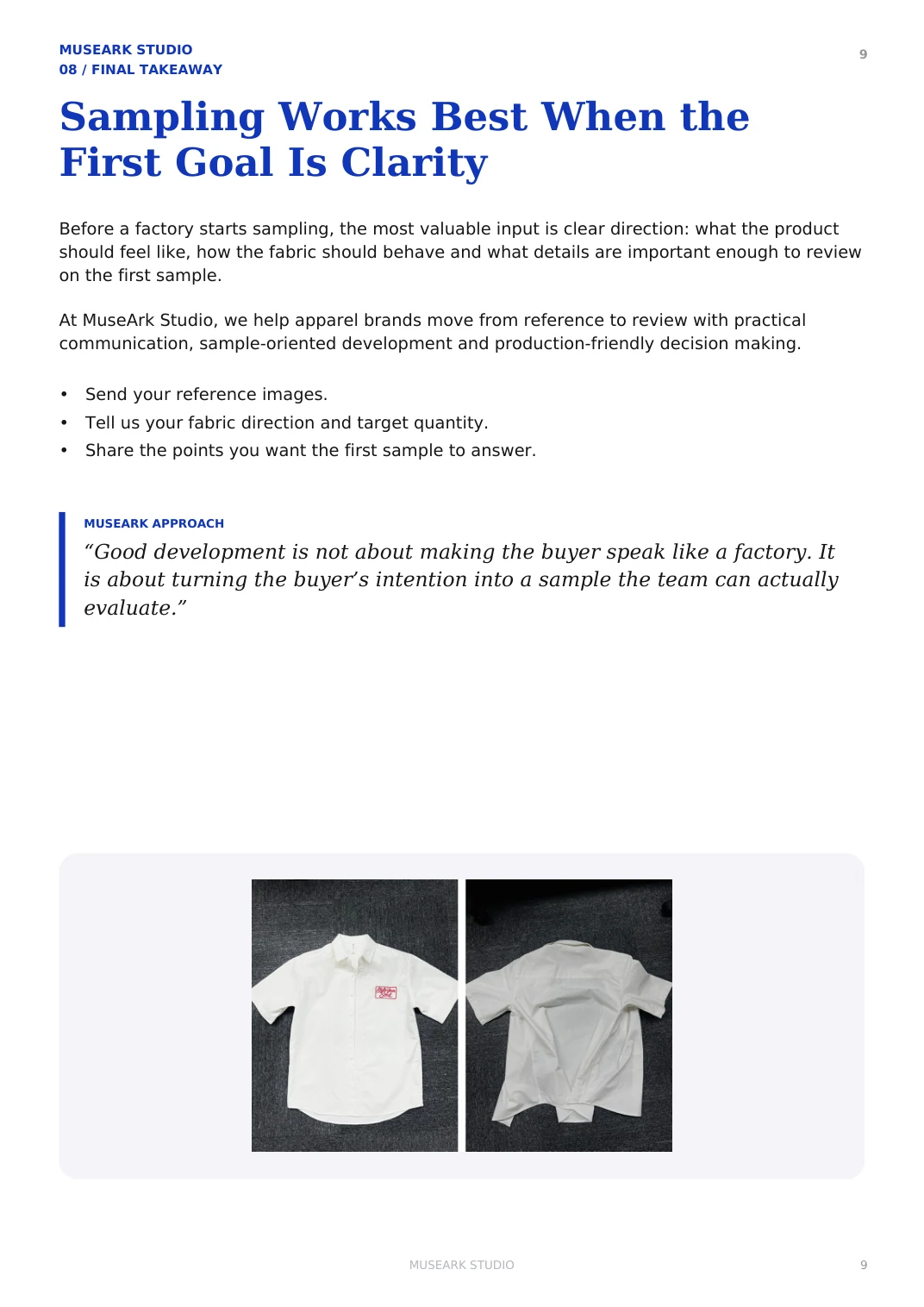
This guide uses a real short-sleeve shirt project to show what a factory actually needs before making a useful first sample: a clear reference, fabric direction, visual confirmation, sample review and branding detail review.
What Information Does a Factory Need Before Sampling? Quick Checklist
- Reference: Images that show the intended style, details and overall direction.
- Product category: The item you want to develop, such as a shirt, hoodie or jacket.
- Fabric: Target composition, weight, color and preferred handfeel or drape.
- Fit: The silhouette, size direction and any key measurements or proportions.
- Branding: Logo artwork, decoration method and placement notes.
- Quantity: Estimated sample and bulk quantity, even if it is a range.
- Target delivery date: Your desired sample approval date and production window.
- Destination market: The shipping country or market for packing and delivery requirements.
01 / START WITH DIRECTION
A Reference Image Is a Starting Point
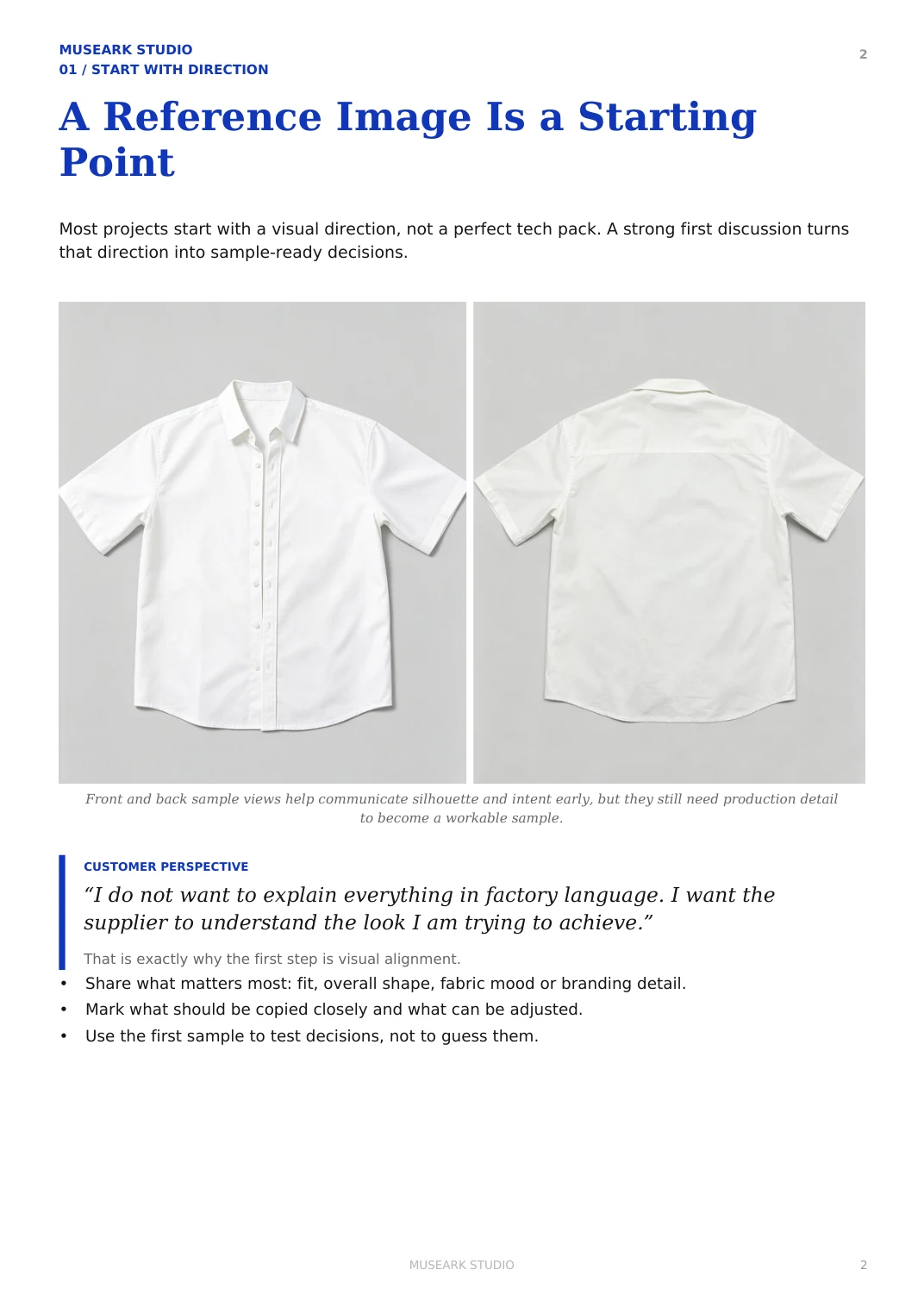
Most projects start with a visual direction, not a perfect tech pack. A strong first discussion turns that direction into sample-ready decisions.
A tech pack can make this handoff more precise.
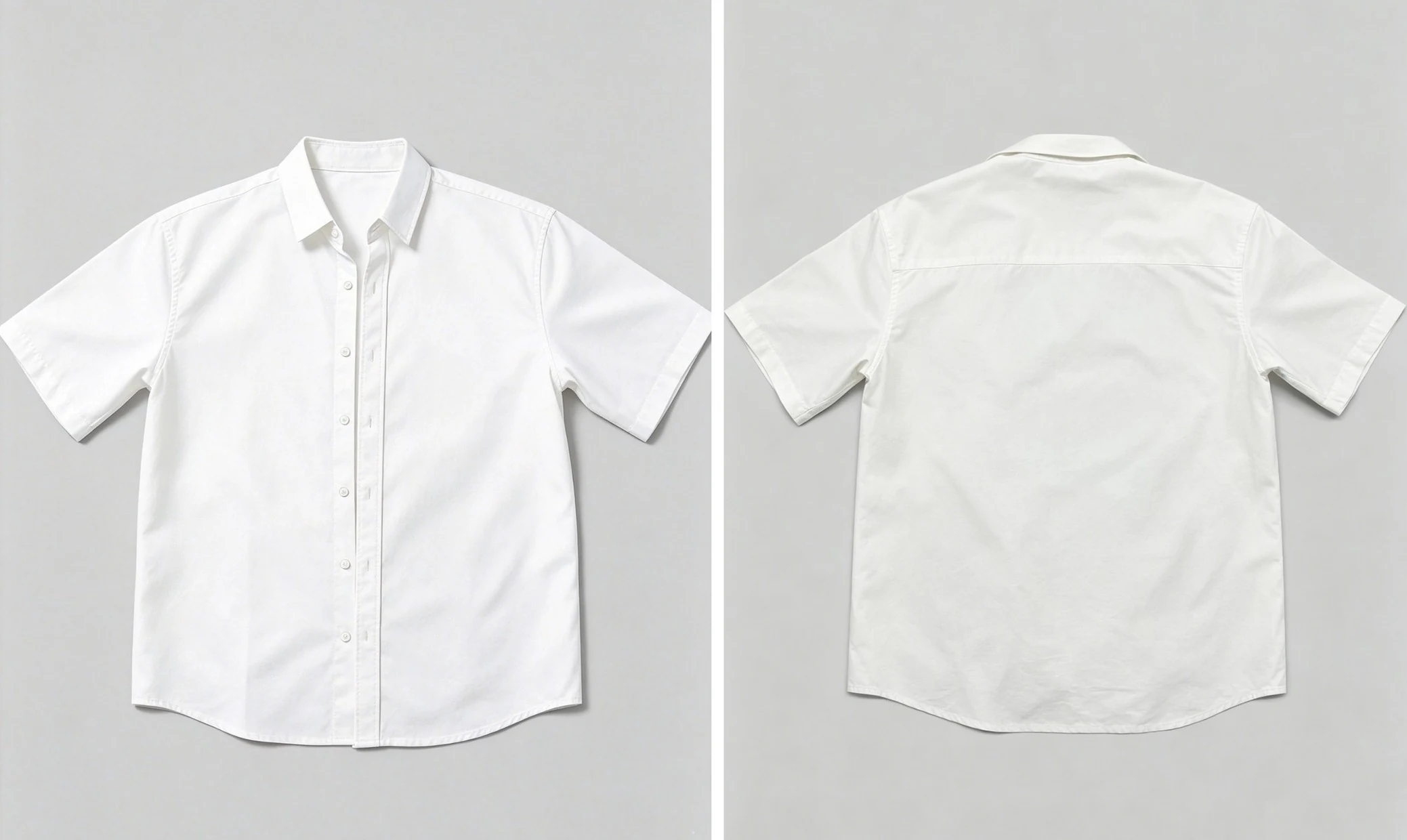
Front and back sample views help communicate silhouette and intent early, but they still need production detail to become a workable sample.
CUSTOMER PERSPECTIVE
I do not want to explain everything in factory language. I want the supplier to understand the look I am trying to achieve.
That is exactly why the first step is visual alignment.
- Share what matters most: fit, overall shape, fabric mood or branding detail.
- Mark what should be copied closely and what can be adjusted.
- Use the first sample to test decisions, not to guess them.
02 / CONFIRM FABRIC DIRECTION
GSM and Composition Are Only the Starting Point
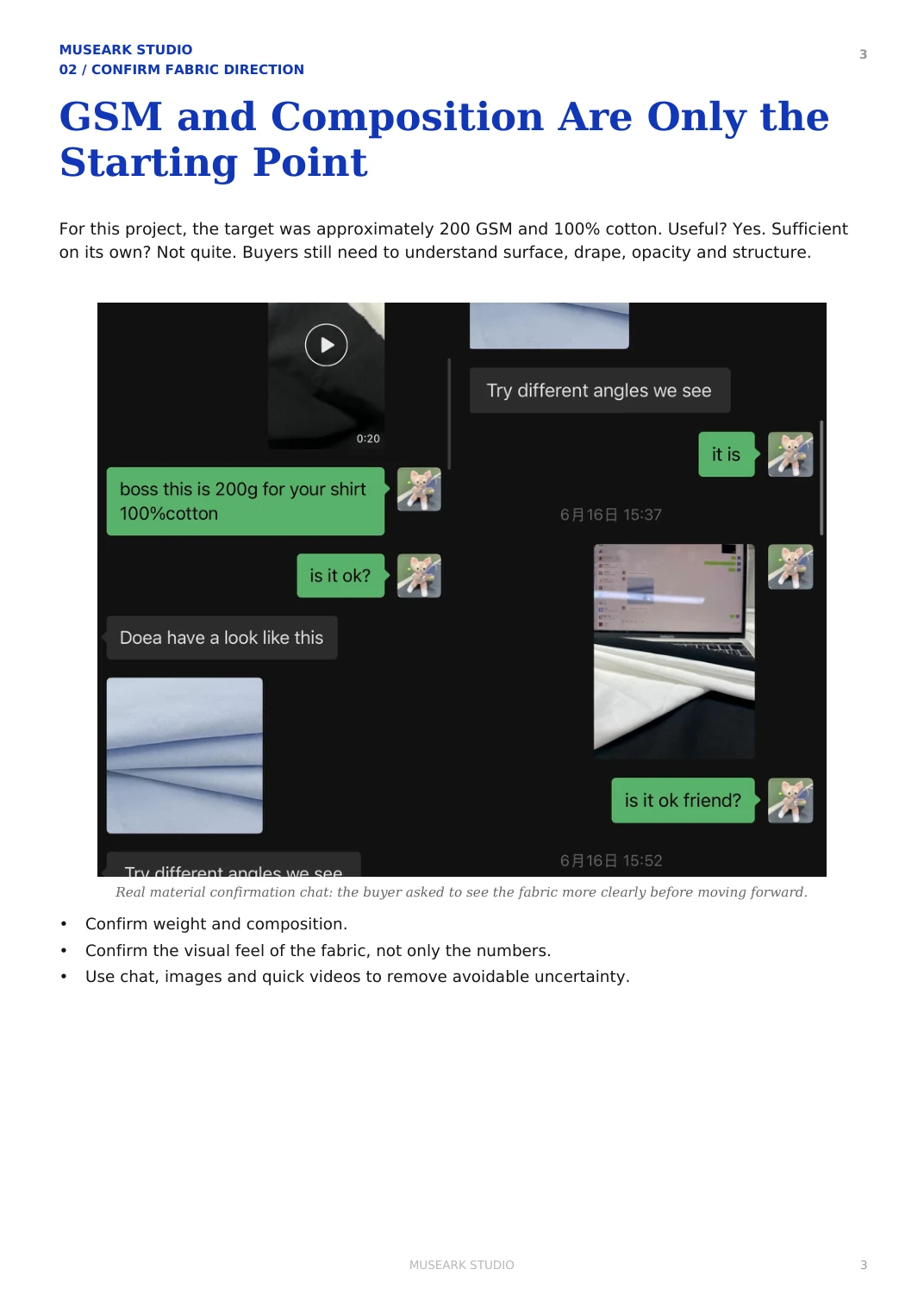
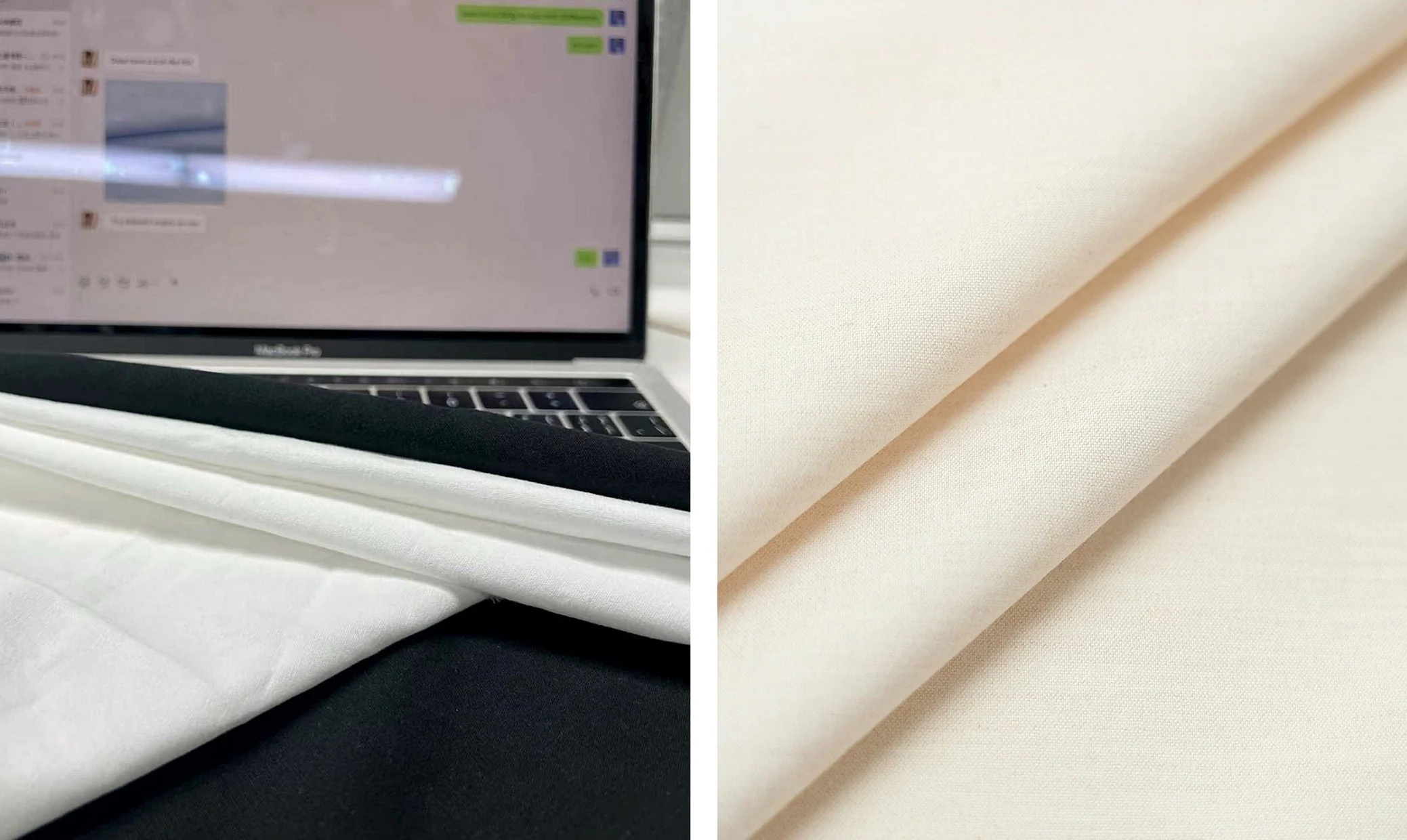
For this project, the target was approximately 200 GSM and 100% cotton. Useful? Yes. Sufficient on its own? Not quite. Buyers still need to understand surface, drape, opacity and structure.
Real material confirmation chat: the buyer asked to see the fabric more clearly before moving forward.
- Confirm weight and composition.
- Confirm the visual feel of the fabric, not only the numbers.
- Use chat, images and quick videos to remove avoidable uncertainty.
03 / SHOW THE MATERIAL CLEARLY
Different Angles Help a Remote Buyer Decide Faster
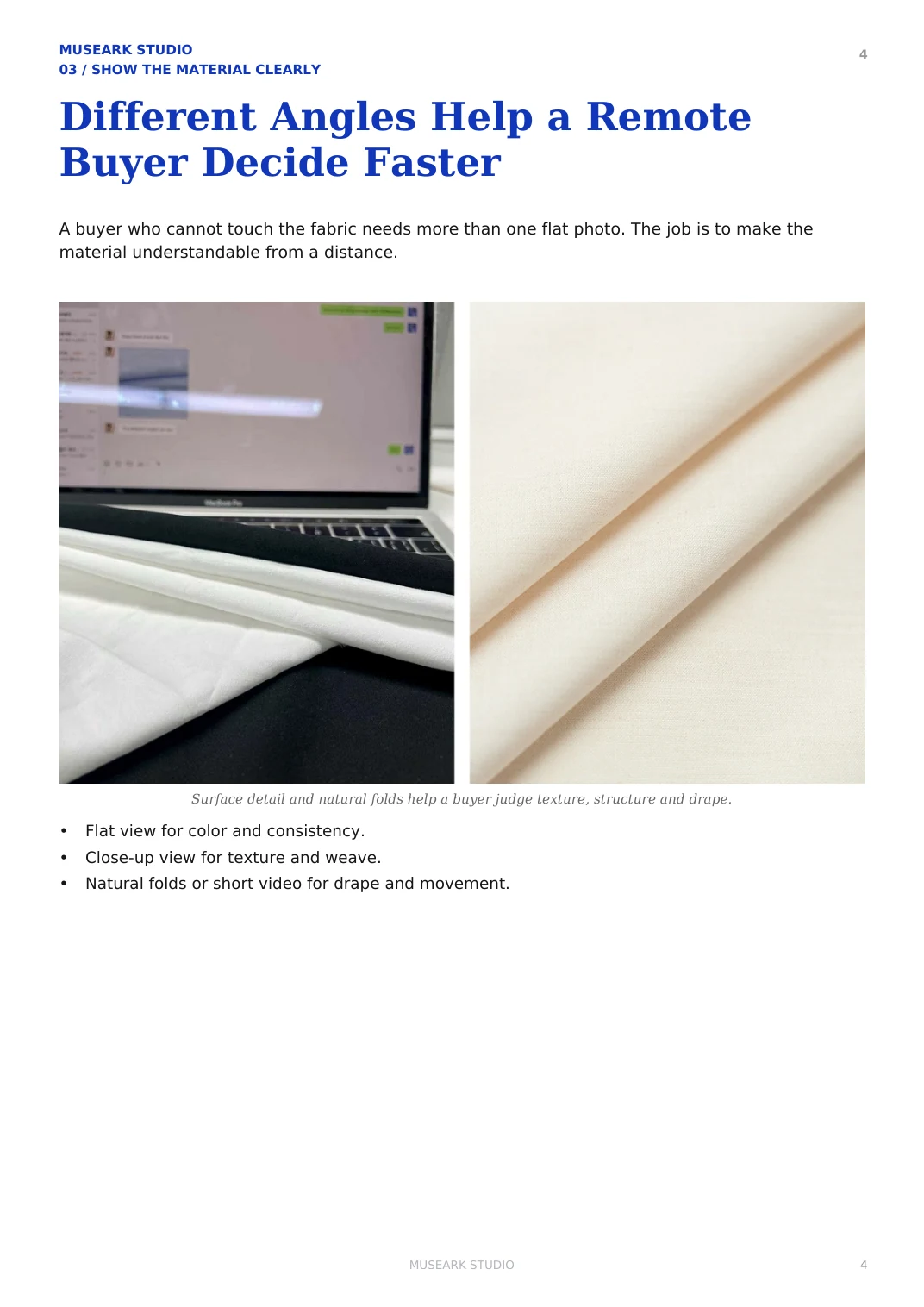
A buyer who cannot touch the fabric needs more than one flat photo. The job is to make the material understandable from a distance.
Surface detail and natural folds help a buyer judge texture, structure and drape.
- Flat view for color and consistency.
- Close-up view for texture and weave.
- Natural folds or short video for drape and movement.
04 / REVIEW THE SAMPLE IN MOTION
Video Answers Questions a Photo Cannot
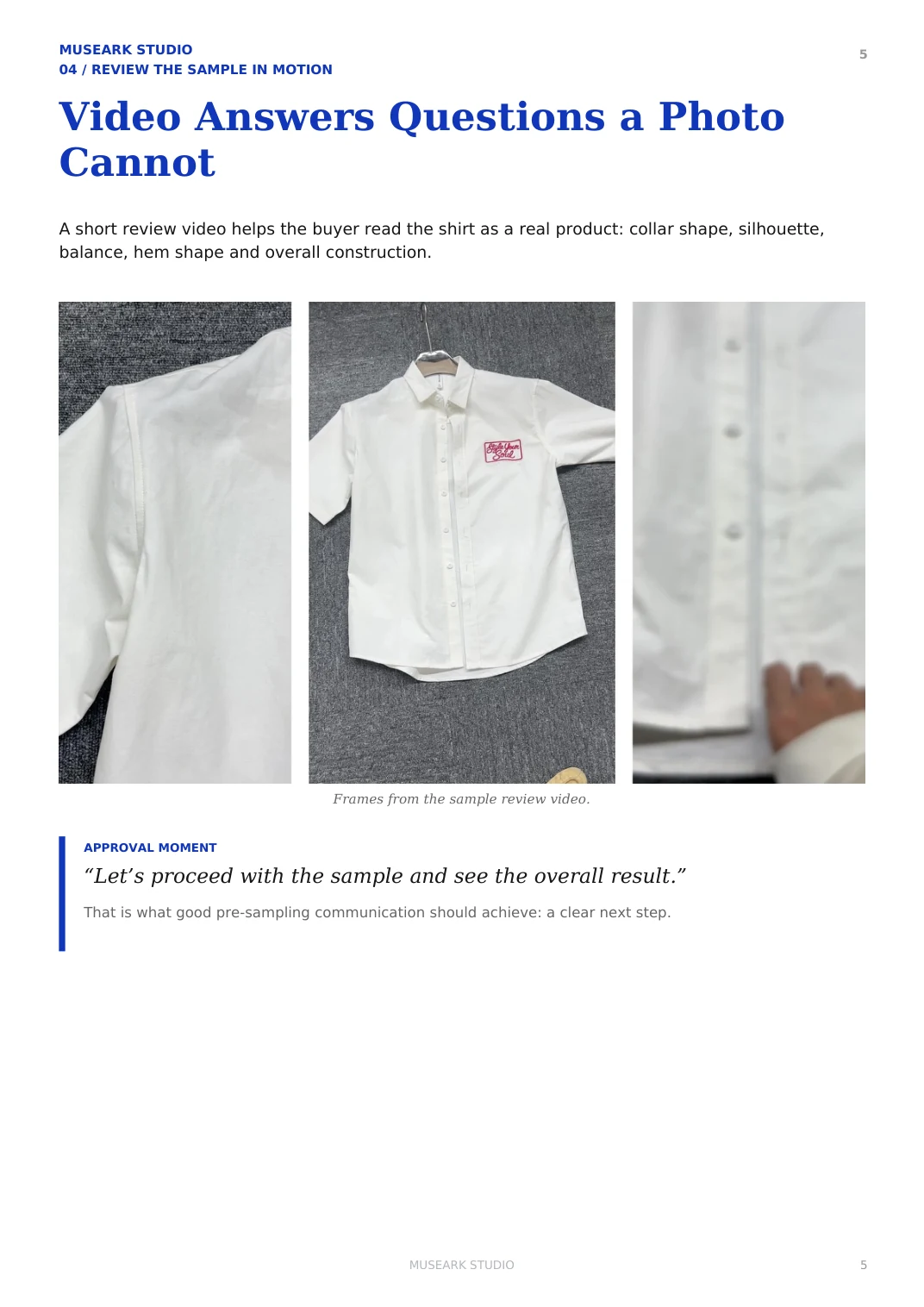
A short review video helps the buyer read the shirt as a real product: collar shape, silhouette, balance, hem shape and overall construction.
Frames from the sample review video.
APPROVAL MOMENT
Let's proceed with the sample and see the overall result.
That is what good pre-sampling communication should achieve: a clear next step.
05 / CHECK THE FIRST SAMPLE
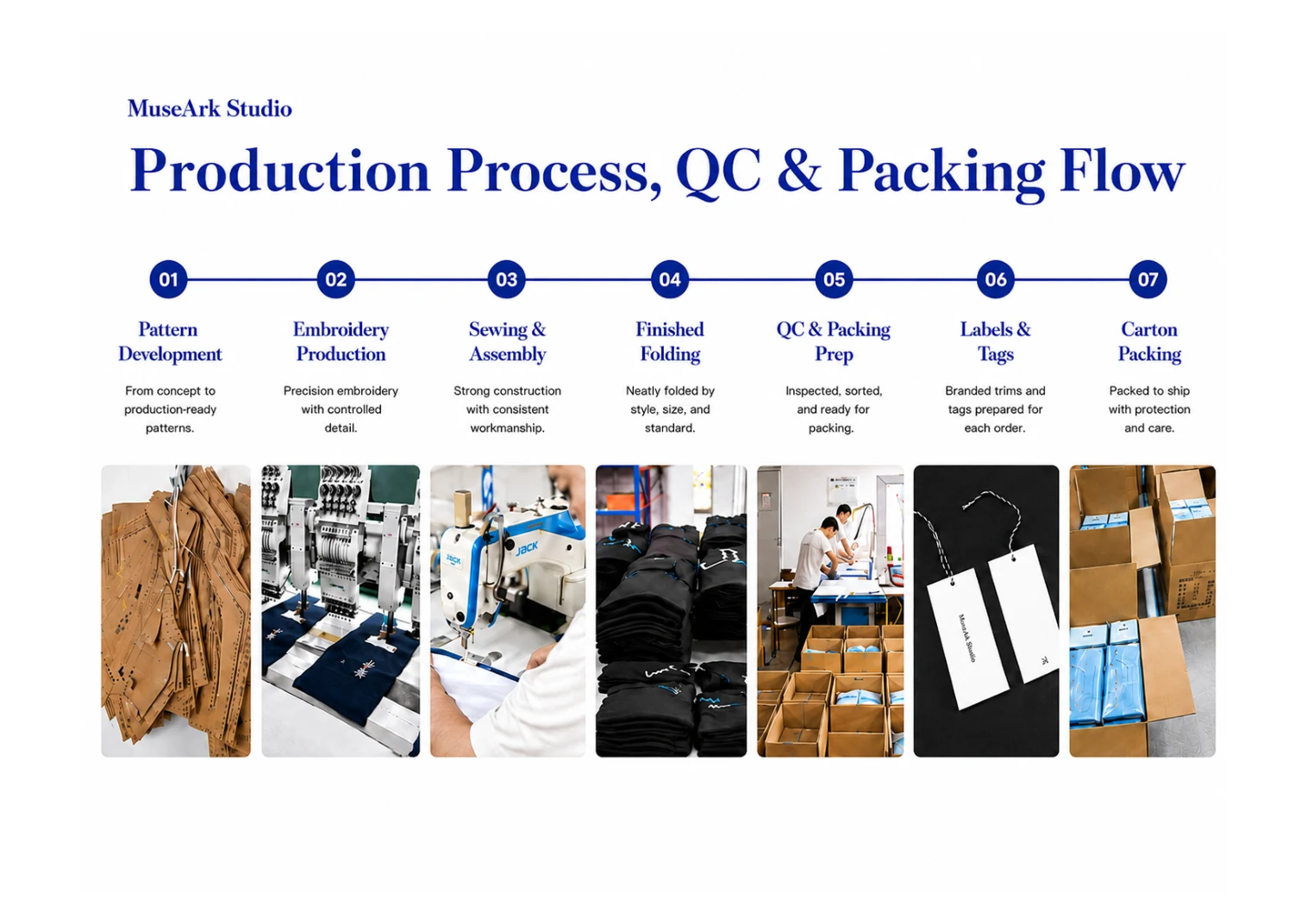
See how a sample moves into bulk production and QC.
What Should a Brand Look at First?
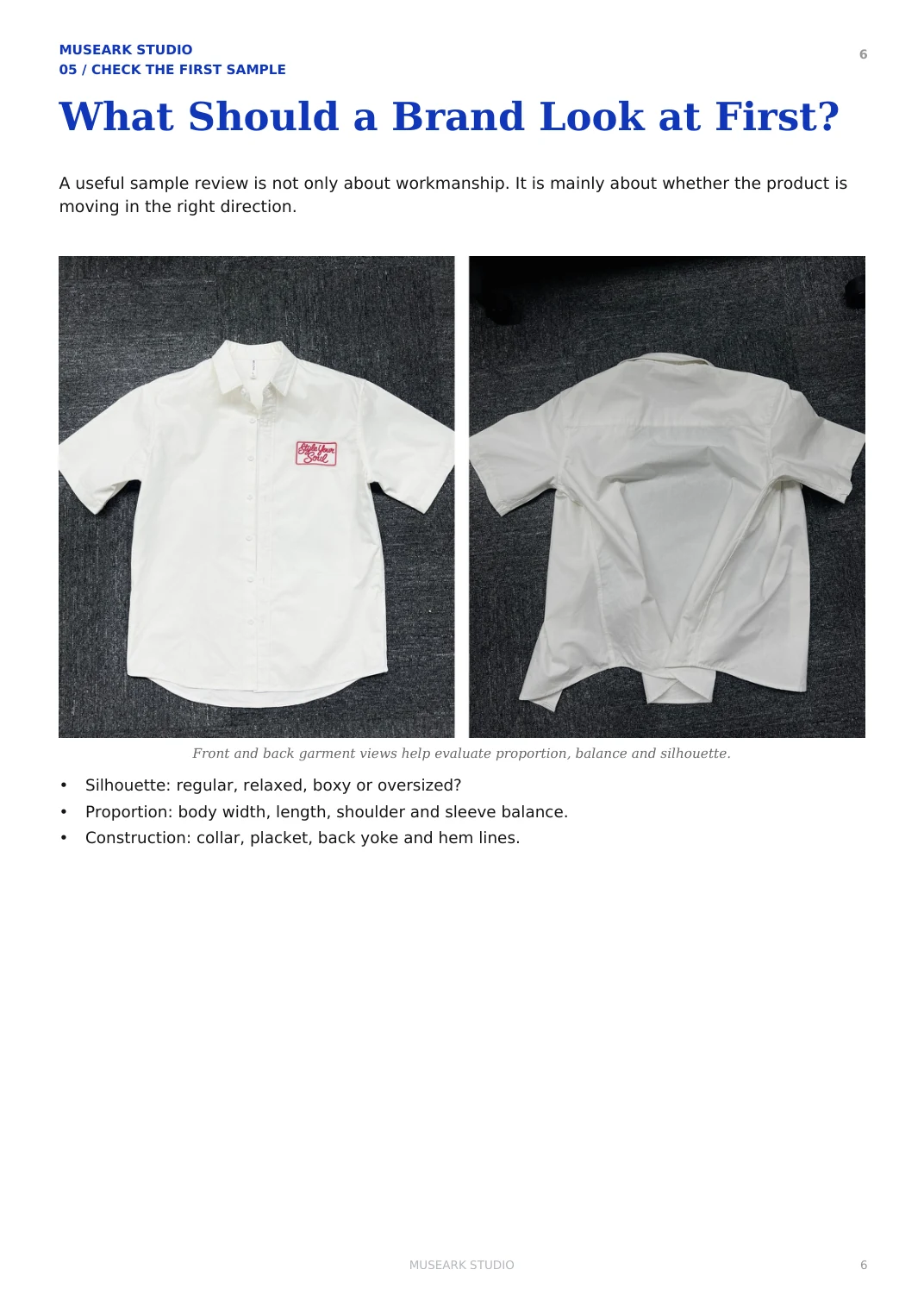
A useful sample review is not only about workmanship. It is mainly about whether the product is moving in the right direction.
Front and back garment views help evaluate proportion, balance and silhouette.
- Silhouette: regular, relaxed, boxy or oversized?
- Proportion: body width, length, shoulder and sleeve balance.
- Construction: collar, placket, back yoke and hem lines.
06 / REVIEW BRANDING DETAILS
Embroidery Should Be Checked at Real Scale
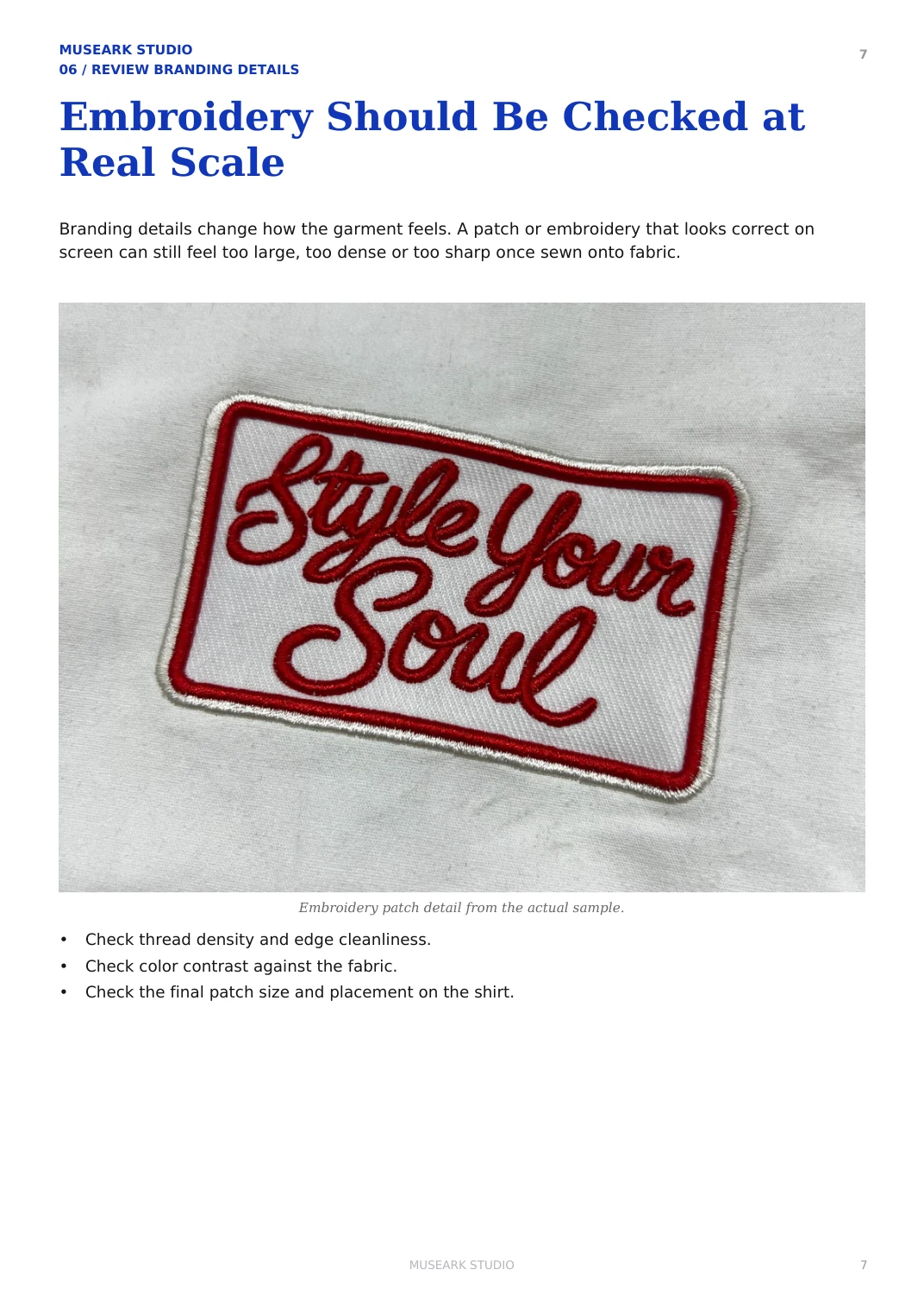
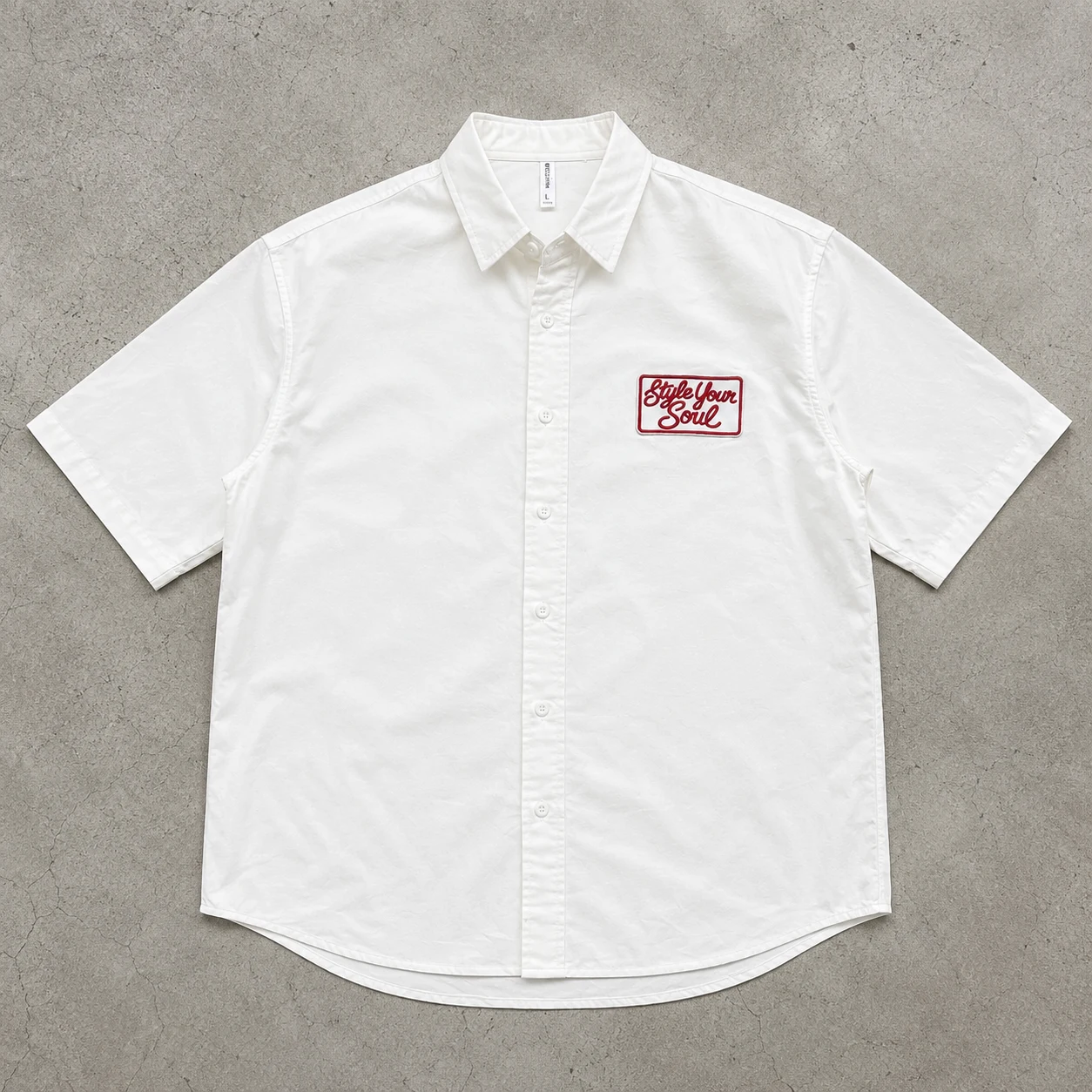
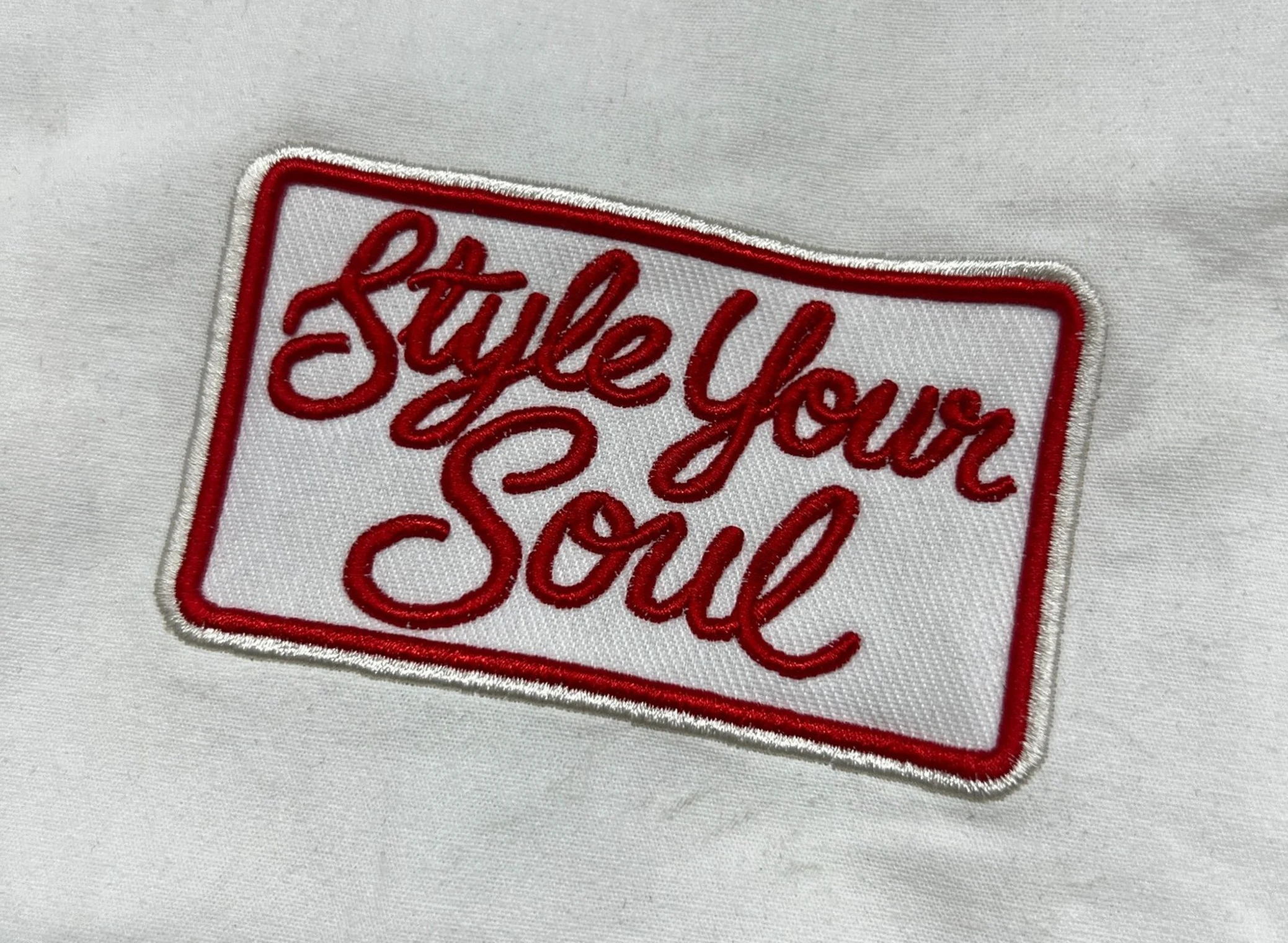
Branding details change how the garment feels. A patch or embroidery that looks correct on screen can still feel too large, too dense or too sharp once sewn onto fabric.
Embroidery patch detail from the actual sample.
- Check thread density and edge cleanliness.
- Check color contrast against the fabric.
- Check the final patch size and placement on the shirt.
07 / INFORMATION CHECKLIST
What Should You Send Before Sampling?
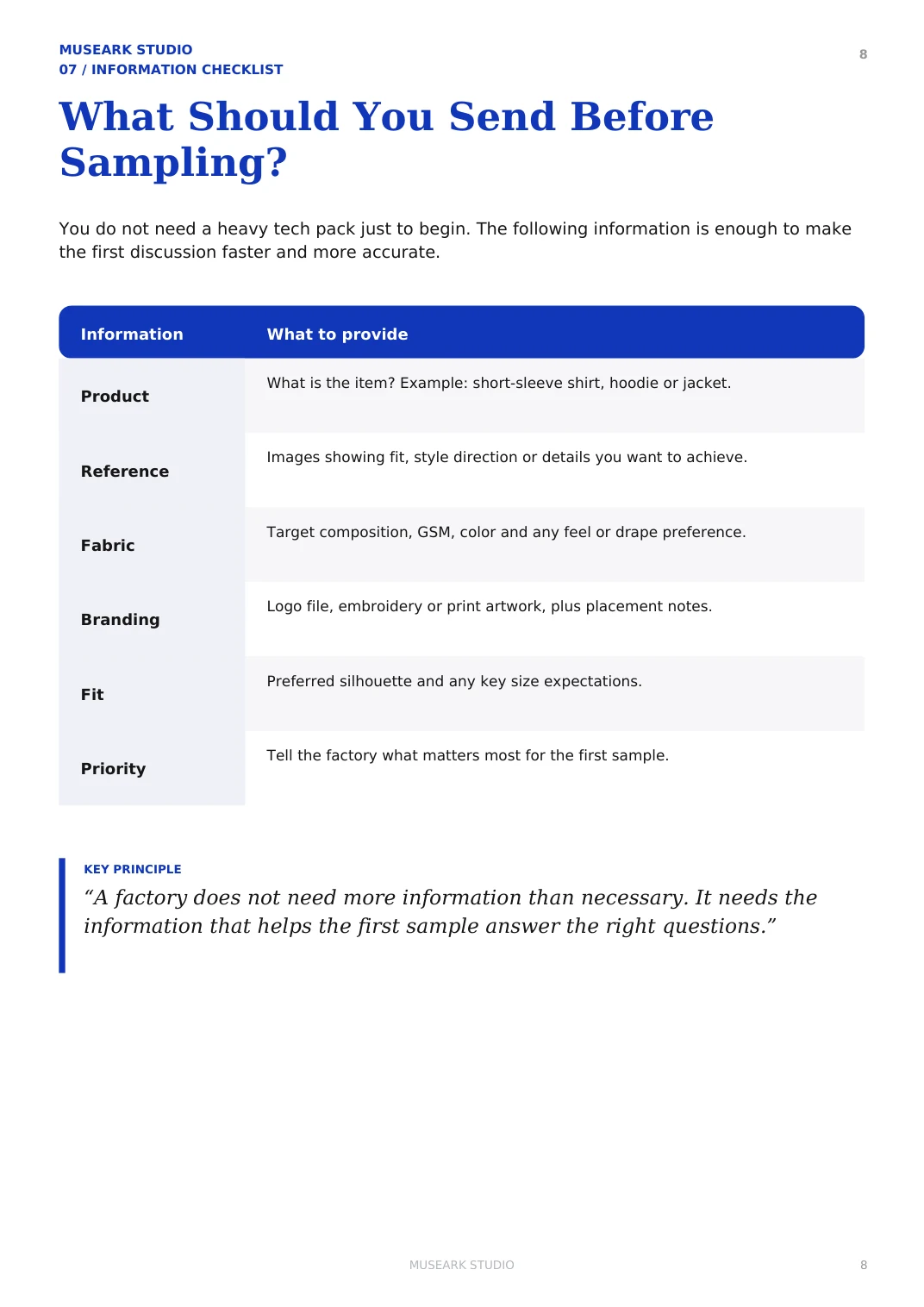
You do not need a heavy tech pack just to begin. The following information is enough to make the first discussion faster and more accurate.
See the difference between a tech pack and reference photos.
| Information | What to provide |
|---|---|
| Product | What is the item? Example: short-sleeve shirt, hoodie or jacket. |
| Reference | Images showing fit, style direction or details you want to achieve. |
| Fabric | Target composition, GSM, color and any feel or drape preference. |
| Branding | Logo file, embroidery or print artwork, plus placement notes. |
| Fit | Preferred silhouette and any key size expectations. |
| Priority | Tell the factory what matters most for the first sample. |
| Quantity | Estimated sample and bulk quantity, even if it is a range. |
| Timing | Target sample approval date and desired production window. |
| Destination | Shipping country or market, so the factory can plan packing and delivery requirements. |
KEY PRINCIPLE
A factory does not need more information than necessary. It needs the information that helps the first sample answer the right questions.
08 / FINAL TAKEAWAY
Sampling Works Best When the First Goal Is Clarity
Before a factory starts sampling, the most valuable input is clear direction: what the product should feel like, how the fabric should behave and what details are important enough to review on the first sample.
At MuseArk Studio, we help apparel brands move from reference to review with practical communication, sample-oriented development and production-friendly decision making.
- Send your reference images.
- Tell us your fabric direction and target quantity.
- Share the points you want the first sample to answer.
Ready to review your first sample direction?
Send your reference images, fabric target, estimated quantity and delivery goal.
MUSEARK APPROACH
Good development is not about making the buyer speak like a factory. It is about turning the buyer's intention into a sample the team can actually evaluate.
Sampling FAQ
Can I start sampling without a tech pack?
Yes. Clear reference images, product direction, fabric preferences, fit notes and branding details can be enough to begin a focused first sample. A tech pack becomes more useful when the design needs precise measurements, construction specifications or several revisions.
Do I need to choose the fabric before contacting a factory?
No. You can contact a factory with a fabric target, such as composition, weight, color, handfeel or reference material. The factory can then help confirm suitable options before sampling.
What quantity should I share before requesting a quote?
Share your estimated sample and bulk quantity, even as a range. This helps the factory assess material sourcing, decoration, production planning and the most relevant quote.